Physical Address
304 North Cardinal St.
Dorchester Center, MA 02124
Physical Address
304 North Cardinal St.
Dorchester Center, MA 02124

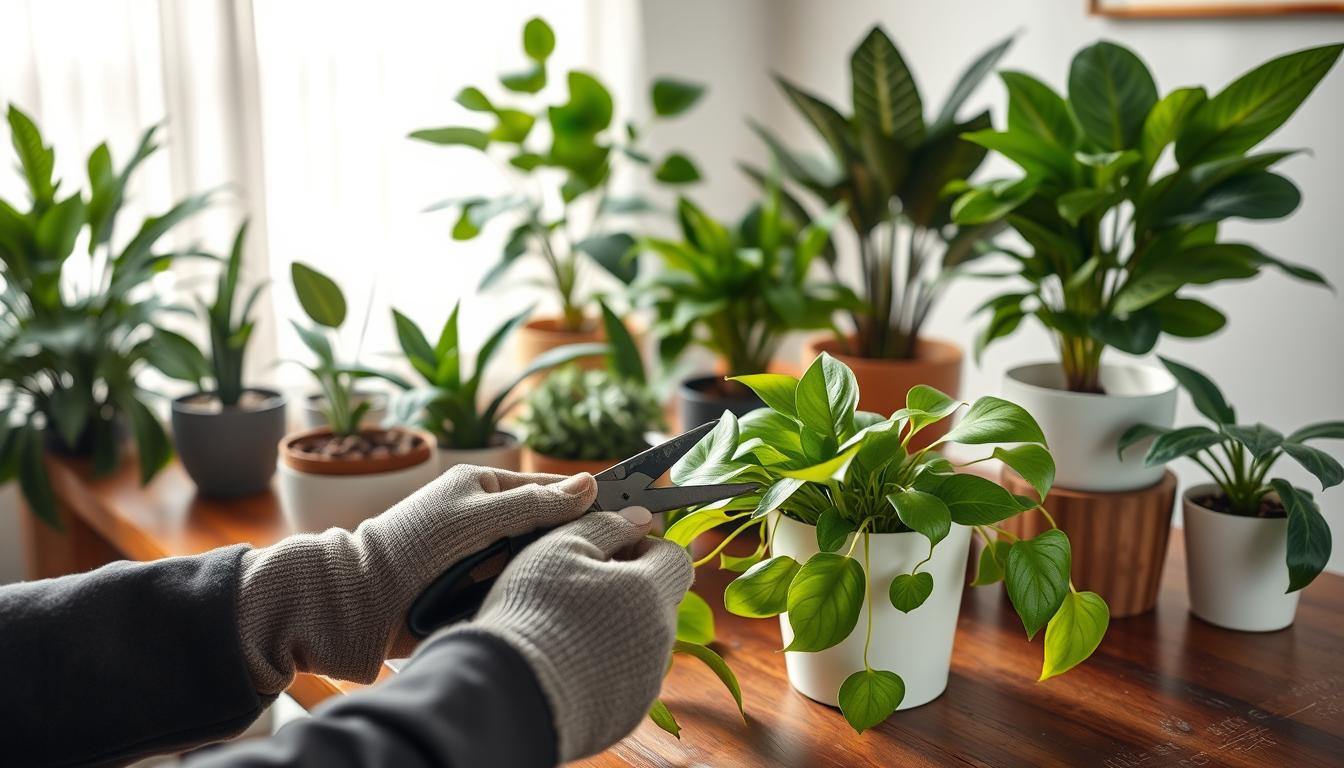
Winter brings a chill, and my houseplants look tired and too big. I was scared to start pruning, fearing I’d hurt them. But I learned that trimming is key to keeping them healthy and happy.
Pruning is more than just cutting plants. It’s about giving them a fresh start. Your guide to pruning houseplants is about careful shaping and keeping them healthy during winter. By knowing which plants can handle pruning, you’ll make your indoor garden flourish.
Winter is a great time to refresh your plants’ growth. Learning when and how to prune safely helps them grow strong and healthy. This guide will show you how to prune like a pro, even if you’re new to plant care.
Pruning is key in indoor plant care. It can make your houseplants look better and stay healthy. When done right, pruning is a powerful tool for keeping your indoor plants looking great.
Pruning is more than just cutting off extra parts. It’s a smart way to keep your plants healthy and looking good.
Pruning indoor plants means cutting off certain parts to help them grow better. This includes:
The aim is to help your plant grow stronger. By cutting off some parts, you guide your plant’s energy to its healthiest spots.
Regular pruning has many benefits for your indoor plants. Here are some reasons why it’s important:
Learning about pruning techniques will make you a better indoor gardener. Your plants will stay healthy and beautiful all year.
If a stem turns yellow, you can prune it at the base. For more nuanced shaping cuts, check our guide on what’s safe to trim in winter.
Pruning houseplants in winter needs careful thought. Most indoor plants slow down in cold months. This affects how you should prune them.
Experts say to prune less during this time. This helps avoid stressing the plants.
“Pruning during the plant’s active growing season encourages new growth, versus slower to no growth when the plant is dormant,” says plant expert Lee Miller.
While spring and summer are best for big pruning, winter isn’t a total stop. You can do some light trimming carefully.
Winter pruning should focus on keeping things simple. Follow these tips:
| Winter Pruning Action | Recommended Approach |
|---|---|
| Dead Leaf Removal | Always safe, promotes plant health |
| Light Shaping | Minimal trimming acceptable |
| Major Cuts | Postpone until spring growth |
Your main goal in winter pruning is to preserve. Don’t cut more than 10-20% of the plant. This way, you avoid stressing it too much. Wait for warmer months when your plants can grow back fast.
Pruning indoor plants safely begins with the right tools and preparation. You need the right tools and to clean them well. This keeps your plants healthy and stops diseases.
Each indoor plant needs its own pruning tools. Your safe winter trimming kit should have:
Choose pruning tools with sharp blades for clean cuts. Dull tools can damage plant tissue and create entry points for infections.
Cleaning your pruning tools is key to stop disease spread. Follow these important steps:
| Disinfection Method | Preparation | Application |
|---|---|---|
| Bleach Solution | 1 part bleach to 9 parts water | Soak tools for 5 minutes |
| Rubbing Alcohol | 70% isopropyl alcohol | Wipe tools thoroughly |
Always disinfect your pruning tools before starting, between plants, and after trimming diseased foliage. This keeps your indoor plants safe from disease during pruning.
Learning to prune indoor plants well needs careful watching and precise methods. Before you start, step back and look at your plant’s structure and health. Knowing when and how to prune is key to good indoor plant care.
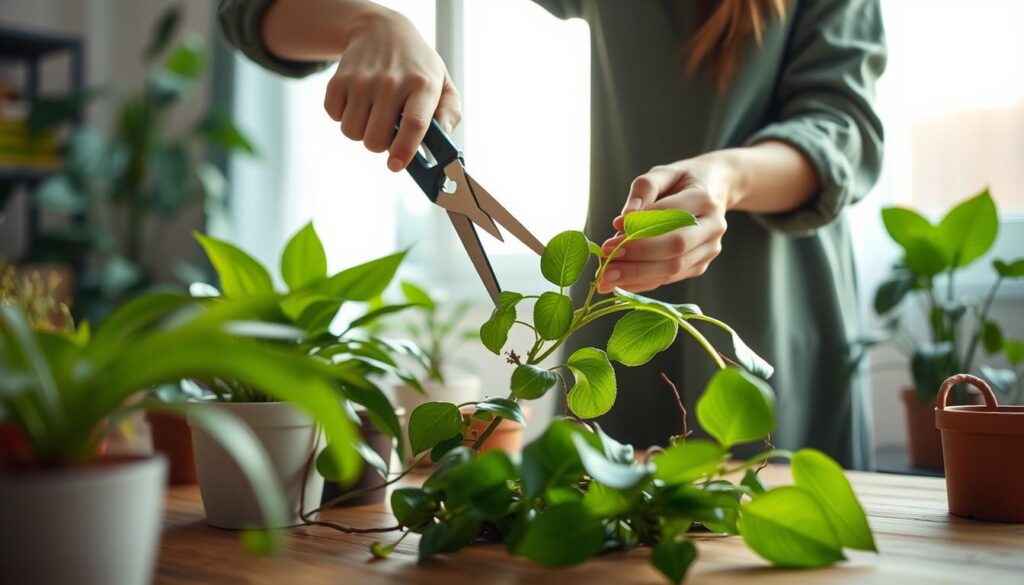
When you prune, always think about the shape you want your plant to be. Cut stems in a way that encourages new growth and keeps the plant balanced. Remove:
| Pruning Technique | Purpose | Best Practice |
|---|---|---|
| Node Cutting | Stimulate New Growth | Cut just above leaf node |
| Angle Cutting | Prevent Water Accumulation | 45-degree angle away from node |
| Selective Removal | Maintain Plant Health | Remove max 1/3 of plant |
Every cut you make affects your plant’s future. Take your time, think carefully, and your indoor plants will thank you with lush, healthy leaves.
Pruning indoor plants needs a deep understanding of their growth patterns. Before you start, learn how plants grow and react to pruning. Success in pruning depends on knowing key growth traits and using careful techniques.
Plant growth follows specific biological rules for successful pruning. Stems and branches grow from nodes, which are key for new growth. These nodes have latent buds – tiny growth points ready to grow with the right pruning.
Every stem has a dominant bud at the tip, controlling vertical growth. Knowing this helps you prune better. Look for these important growth signs:
Always follow the one-third rule when pruning indoor plants. This rule prevents stress and ensures healthy growth. Here’s how to prune safely:
| Pruning Amount | Plant Response |
|---|---|
| Less than 1/3 of plant | Minimal stress, healthy regrowth |
| Exactly 1/3 of plant | Moderate stimulation, controlled growth |
| More than 1/3 of plant | High risk of plant damage |
Your goal is to promote balanced, healthy growth while keeping the plant’s natural shape. By carefully cutting branches and understanding growth patterns, your indoor plants will flourish.
Winter is the time to trim your houseplants carefully. Not all plants can handle the cold, but some can be safely trimmed during this season. It’s important to choose the right plants and know how to trim them.
When you trim your plants in winter, do it lightly. You want to keep their shape and remove any dead parts. This helps them stay healthy.
| Plant Type | Pruning Recommendations | Winter Trimming Safety |
|---|---|---|
| Holiday Cactus | Pinch back after blooming | Very Safe |
| Jade Plant | Remove leggy branches | Safe |
| Rubber Plant | Control height, encourage branching | Moderately Safe |
| Pothos | Trim near nodes | Very Safe |
For safe trimming in winter, keep your plants warm and bright. Use clean, sharp tools. Cut just above where leaves meet stems to help them grow back strong.
Knowing which plants to avoid pruning is key to good indoor plant care. Some houseplants are very sensitive to trimming. It’s important to know which plants to leave alone to keep them healthy and looking good.
Not every houseplant can handle pruning well. Some have special growth habits that make cutting risky. It’s important to know which plants are delicate to avoid harming them.
Palms and Norfolk Island pines are very sensitive to pruning. They grow from a single point called the apical meristem. Cutting this point can permanently stop growth and even kill the plant.
Orchids need careful handling when it comes to pruning. Most types can’t be trimmed a lot without harming the plant. Your care tips for orchids should focus on keeping things simple.
Be careful with plants like snake plants, ZZ plants, and some succulents too. Always remove only dead, damaged, or sick parts. This helps keep the healthy growth going.
Pruning indoor plants needs a special touch, depending on their growth. Your guide should highlight the differences between vines and tree-form plants.
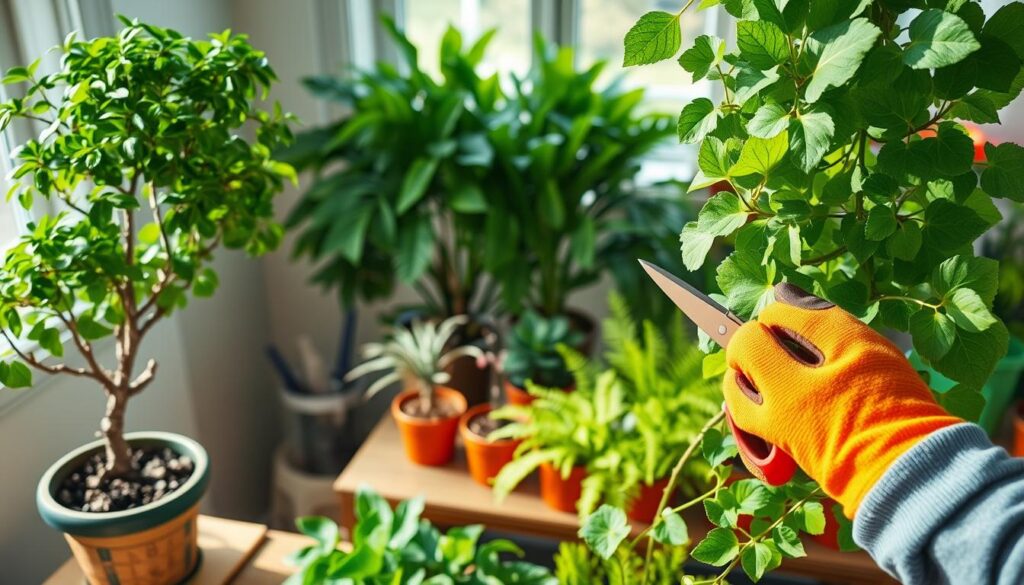
Vines need a certain pruning method to look their best. They should be trimmed often to avoid becoming too long and to grow fuller. For vines like pothos or philodendron, use these techniques:
Tree-form plants, like Ficus and Dracaenas, grow up and need pruning to control their height and shape.
| Plant Type | Pruning Goal | Key Technique |
|---|---|---|
| Vines | Encourage bushier growth | Trim below leaf nodes |
| Tree-form Plants | Control height and branching | Cut top growing point |
For tree-form plants, cutting the top growth point makes them branch out. This turns a single-stemmed plant into a multi-branched one. Pruning also improves air flow and keeps the plant looking good.
Remember, the key to successful pruning is understanding your plant’s unique growth habits and responding accordingly.
Learning these pruning methods will help your indoor plants stay healthy, lively, and beautiful all year.
Turning your pruning sessions into a chance to grow new plants is exciting. Instead of throwing away healthy stems, you can make new plants. This way, you can grow more plants or share them with friends.
Propagation lets you easily multiply your favorite houseplants. You can use two main methods: water rooting and direct soil propagation. Both are simple and effective.
Water propagation is a simple way to grow new plants. Here’s how to do it:
Plants like Pothos, Philodendrons, and Monsteras root well in water. Roots grow in 1-4 weeks, depending on the plant and conditions.
Some plants do better in soil, like succulents and cacti. Here are tips for soil propagation:
Plants like Jade, Snake Plants, and ZZ Plants thrive in soil. For woody plants, using rooting hormone can help.
Winter pruning houseplants needs patience, knowledge, and gentle care. Your journey with indoor plants doesn’t stop after one trim. It grows with each careful step and observation.
Every plant is different, and knowing this helps you get better at pruning. This knowledge builds your confidence in caring for your plants.
Pruning should be a thoughtful act. Use sharp, clean tools and understand each plant’s growth. This way, you’ll go from unsure to skilled in no time.
Try not to make big cuts in winter. Instead, remove dead or yellow leaves. This keeps your plants healthy.
Your houseplants are strong friends that will thank you for your care. Some plants, like pothos and philodendrons, do well with light pruning. Others need to be left alone.
By knowing these differences, your indoor garden will flourish all year. It doesn’t matter what season it is.
See pruning as a chance to grow, for both your plants and your gardening skills. With time, you’ll know when and how to prune. Winter pruning will become a fun part of caring for your plants.
Your plants will show their appreciation with lively, healthy growth all year long.