Physical Address
304 North Cardinal St.
Dorchester Center, MA 02124
Physical Address
304 North Cardinal St.
Dorchester Center, MA 02124

I remember the first time I successfully propagated a dracaena plant. It was like discovering a magical secret of plant care. This secret transformed my home into a lush green sanctuary. Propagating dracaena is more than a gardening technique. It’s a way to bring new life to your indoor spaces, creating beautiful green companions from a single parent plant.
Whether you’re a seasoned plant enthusiast or a curious beginner, propagating dracaena is incredibly rewarding. These architectural plants offer a great chance to multiply your collection with minimal effort. Dracaena propagation lets you rescue leggy plants, create thoughtful gifts, and expand your indoor garden without spending a lot.
In this comprehensive guide, you’ll learn the secrets of successfully propagating dracaena through stem cuttings. I’ll guide you through every step, from selecting the perfect cutting to nurturing your new plant until it thrives. Get ready to enhance your plant care skills and fill your home with beautiful, vibrant dracaena plants.
Dracaena plants are amazing houseplants from western and tropical Africa. They have bold leaves that grow in a unique way. Learning to propagate them can make your indoor gardening more fun and rewarding.
Propagating dracaena plants is a great way for garden lovers to grow their collection. These plants grow tall with bare stems. This happens as lower leaves drop off, creating a cool look.
There are many good reasons to learn how to propagate dracaena:
Another effective method for indoor gardeners is propagating snake plant in water, which can simplify the propagation process and enhance success rates.
There are lots of benefits to growing dracaena from cuttings:
| Benefit | Description |
|---|---|
| Cost-Effective | Create multiple plants from one parent without spending money |
| Quick Results | Visible growth in 2-8 weeks |
| Genetic Consistency | New plants identical to the parent |
| Gift Potential | Easy to share with fellow plant enthusiasts |
Learning to propagate dracaena lets you create fuller, bushier plants. By planting multiple cuttings together, you can make your indoor space look amazing. This method helps your plants grow like they do in nature.
Timing is key for dracaena propagation. The best time is in spring and summer when your plant grows most. These seasons offer the best conditions for successful reproduction.
In spring and summer, your dracaena is at its peak. It makes more energy through photosynthesis, which is great for roots. Propagating during these months boosts your success chances.
While spring and summer are best, you can try all year. Choose a healthy parent plant with green leaves and firm stems. Pruning your houseplants is a great time to propagate.
| Season | Propagation Difficulty | Root Development Time |
|---|---|---|
| Spring/Summer | Easy | 2-4 weeks |
| Fall/Winter | Moderate | 4-8 weeks |
Keep the temperature between 70-80°F and ensure enough light, especially in cooler months. Don’t propagate stressed plants with pests or environmental issues.
Starting to propagate dracaena needs careful planning and the right tools. Having the right equipment is key to success. This guide will help you get everything ready for growing new plants.
Choosing the right cutting tools is important for effective dracaena propagation. You’ll need:
Clean tools stop disease and help make precise cuts. These cuts are vital for healthy root growth.
The right container and growing medium are crucial. Choose containers with good drainage, about four inches in diameter.
| Container Type | Drainage Quality | Recommended Use |
|---|---|---|
| Plastic nursery pots | Excellent | Primary propagation |
| Recycled containers | Good (with added holes) | Budget-friendly option |
| Ceramic pots | Moderate | Decorative propagation |
For the growing medium, mix:
Rooting hormone is optional but boosts your chances of success. Products like Bonide Bontone II Rooting Powder can:
To use rooting hormone, dip the cutting’s base into the powder, tap off excess, and plant immediately. This step can greatly improve your success rate.
Starting to propagate dracaena means picking the right stem cuttings. The health and growth of your new plant depend on these cuttings. It’s important to choose the best cutting from your parent plant.
The best cuttings come from the newest growth. This type of cutting roots faster and has more energy. Use sharp, clean tools to cut just below a leaf node. This method increases your chances of success.
| Cutting Characteristic | Ideal Condition |
|---|---|
| Color | Bright green |
| Stem Flexibility | Soft and pliable |
| Leaf Condition | Vibrant, no yellowing |
After cutting, remove most leaves, leaving a small cluster at the top. This helps the cutting focus on growing roots. Some people put cuttings in water right away. Others let them dry for an hour before planting.
Dracaena propagation is a fun way for gardeners to grow more plants. It’s great for both newbies and seasoned plant lovers. Learning how to propagate dracaena makes it easy to multiply your favorite plants.
Choosing the right method for your dracaena is key. Each technique has its own benefits for growing healthy new plants.
Water propagation is perfect for beginners. It lets you see roots grow, making it both fun and educational.
Soil propagation is a natural way to grow dracaena. It helps create strong roots from the start.
Air layering is best for big dracaena plants. It’s a more advanced method that promotes root growth while the cutting stays attached.
| Propagation Method | Difficulty Level | Estimated Rooting Time |
|---|---|---|
| Water Propagation | Beginner | 2-8 weeks |
| Soil Propagation | Intermediate | 4-8 weeks |
| Air Layering | Advanced | 1-3 months |
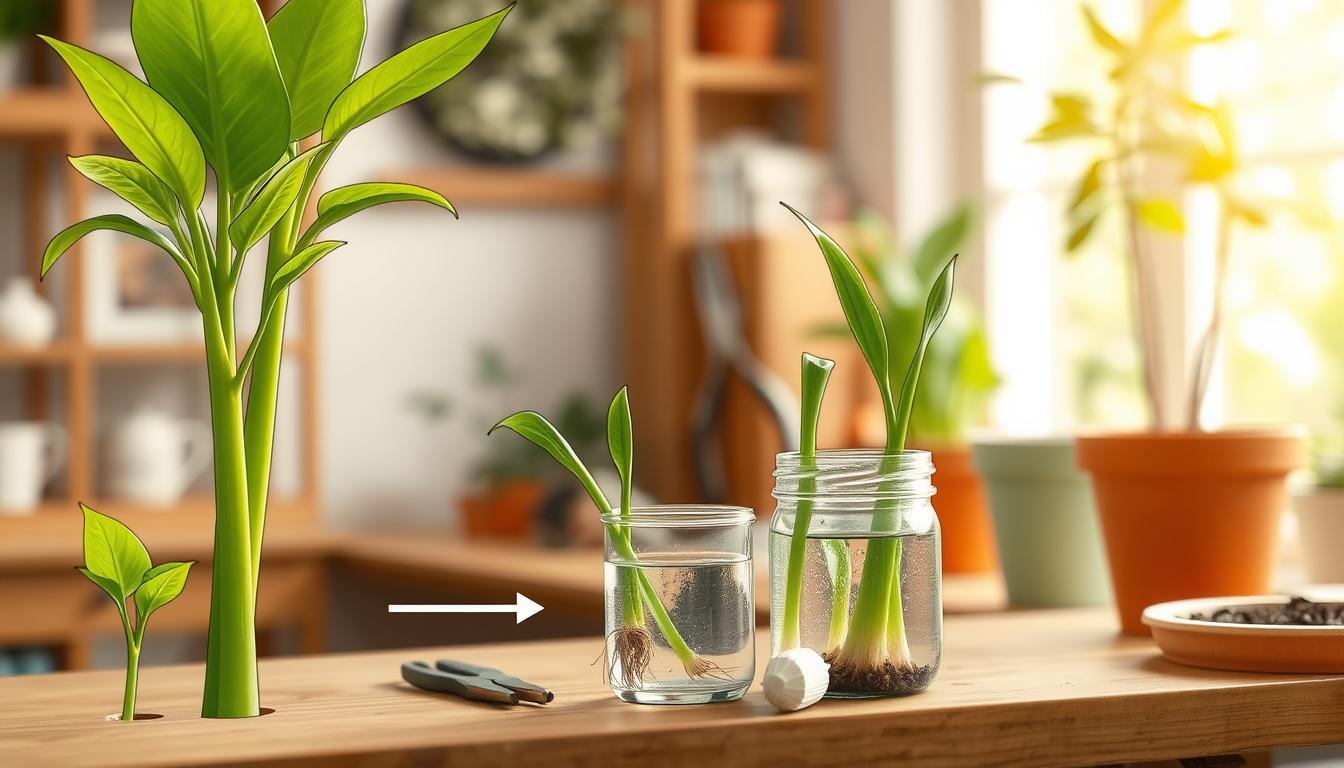
Dracaena propagation through water rooting is fun and easy for plant lovers. This method lets you see roots grow and understand the whole process. Follow these simple steps to propagate dracaena with confidence.
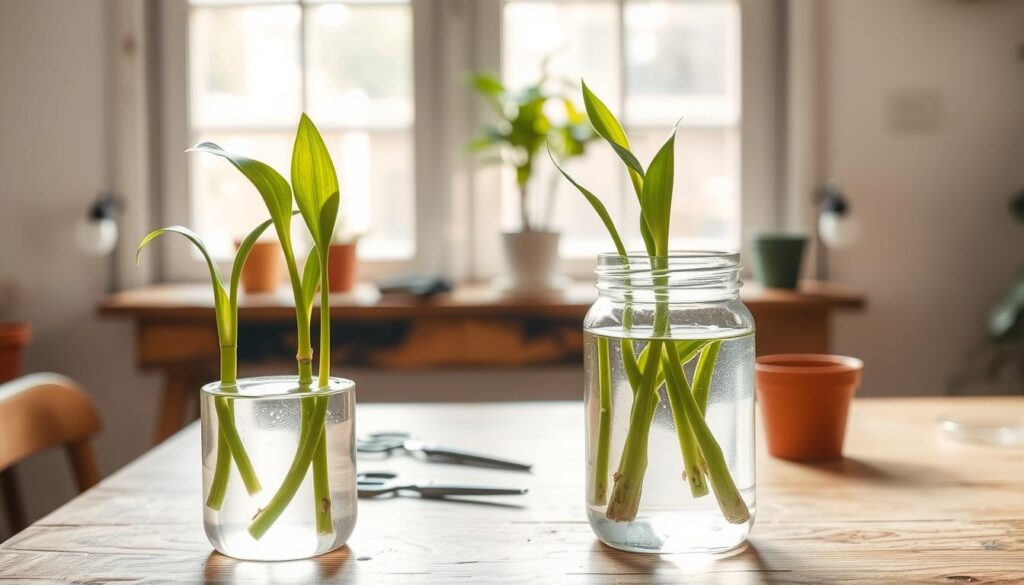
To start, pick a healthy stem cutting that’s 4-6 inches long. Here’s what to do next:
Water rooting takes time. Root development typically takes 2-8 weeks. You’ll see small white nodules turn into roots.
Pro tip: Change the water every 5-7 days to prevent bacterial growth and keep your cutting healthy.
Keep an eye on your cutting as it grows. Look for white, fuzzy roots around the leaf nodes. When roots are about one inch long, it’s time to move it to soil.
Some people keep their dracaena in water forever. They change the water and add diluted fertilizer regularly. With care, you can successfully grow dracaena in water.
Propagating dracaena in soil is a simple way to grow more plants. It needs careful preparation and attention to succeed.
Creating the right soil mix is key for dracaena propagation. It should drain well but hold moisture for roots.
Before planting, soak your soil mix. Do the squeeze test: squeeze a handful. It should hold its shape but not too tightly.
Proper planting is crucial for dracaena propagation. Use a four-inch pot and fill it halfway with mix.
| Planting Parameter | Recommended Setting |
|---|---|
| Stem Depth | 2-3 inches buried |
| Container Space | 1/2 inch at bottom |
| Moisture Level | Consistently damp |
Make a hole in the mix, put in the cutting, and press soil around it. Make sure it’s straight. Water gently to settle the soil.
Keep the soil moist but not too wet. Roots should grow in 4-8 weeks. New leaves mean you’ve done it right. Wait 2-3 months before moving it to a bigger pot.
When you propagate dracaena, it’s important to care for it well in the beginning. Your new dracaena cuttings need the right conditions to grow strong roots.
Light is key for dracaena growth. Put your cuttings in bright, indirect light. An east-facing window is perfect. But, avoid direct sunlight to protect the new growth.
Watering is a careful process. Water a little at a time. Check the pot’s weight to see if it’s dry. Add water slowly when it’s light.
Don’t fertilize too much at first. Wait for new growth. Then, use a weak fertilizer every two weeks. Gentle nutrition helps roots and leaves grow well.
Watch for pests like spider mites, mealybugs, or aphids. Use a damp cloth or insecticidal soap to get rid of them.
Remember: Patient, attentive care is the key to successful dracaena plant propagation.
To grow dracaena roots well, you need the right environment. Knowing what conditions are best will help you grow healthy plants.
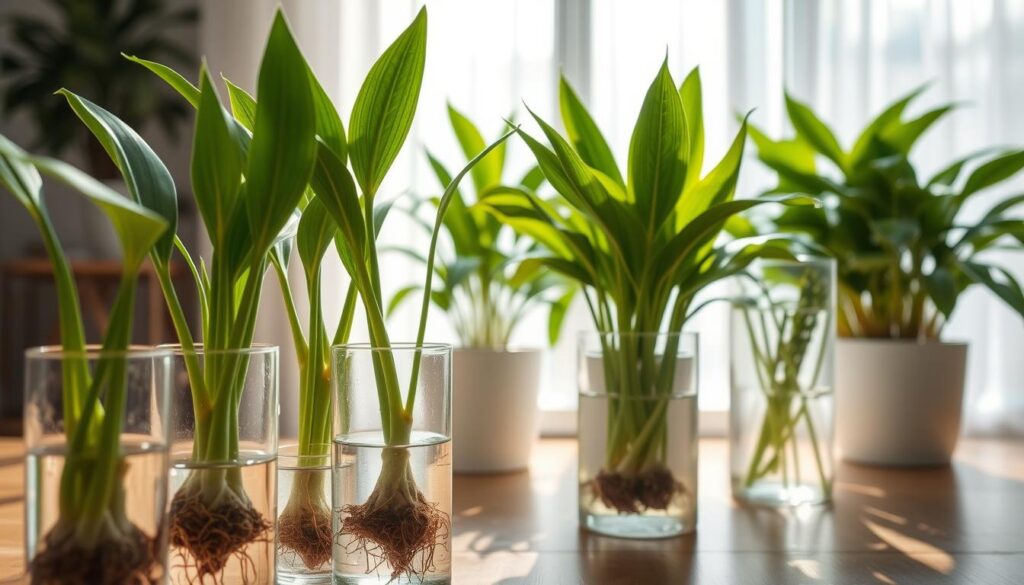
Three main things affect dracaena growth: light, temperature, and humidity. Each is important for new roots and keeping cuttings healthy.
Dracaena cuttings need bright, indirect sunlight. The right light is key for growing, but direct sun can harm new cuttings. Here’s what to do:
Dracaena, being tropical, needs specific temperatures and humidity to root well. Creating the right environment is key for successful propagation.
| Condition | Optimal Range | Impact on Propagation |
|---|---|---|
| Temperature | 70-80°F | Promotes active root development |
| Humidity | 50-60% | Prevents moisture loss |
For the best conditions, use a heating mat and create humidity trays. Also, keep away from drafts. Watch your cuttings and adjust their environment as needed for success.
Knowing when to transplant your propagated dracaena is key for its growth. After learning how to propagate dracaena, you’ll want to make sure your new plants do well in their new homes.
When to transplant depends on how you propagated the cuttings. For water-propagated cuttings, wait until the roots are about 1-2 inches long. Soil-propagated cuttings should show roots peeking from drainage holes before moving.
Transplanting steps for how to propagate dracaena cuttings include:
After transplanting, place your dracaena in indirect light. Expect some initial stress—drooping or slight yellowing is normal. Avoid fertilizing for 4 weeks to allow roots to establish.
Pro tip: For a fuller look, group multiple cuttings of different heights in a larger container after they’ve rooted successfully.
Dracaena marginata propagation can face many challenges. These issues might make even seasoned plant lovers give up. But, knowing these problems can help you succeed and learn from failures.
When you try to propagate dracaena, you might run into common problems. It’s important to know how to spot and fix these issues. This ensures your plants grow well.
Root rot is a big problem in dracaena propagation. It happens when there’s too much water and poor drainage. Look out for these signs:
To avoid root rot, follow these key steps:
Transplant shock can really hurt your dracaena marginata propagation. Look for signs like wilting leaves, yellowing, or slow growth.
| Symptom | Prevention Strategy |
|---|---|
| Wilting | Water thoroughly before transplanting |
| Yellowing Leaves | Maintain consistent environmental conditions |
| Stunted Growth | Transplant during active growing season |
Success in dracaena propagation needs patience, careful watching, and a willingness to change your methods. Every cutting is a chance to get better at plant propagation.
Learning to propagate dracaena plants is exciting and rewarding. It lets you grow your indoor plant collection without spending a lot. You can make your home look beautiful with green spaces.
The methods for propagating dracaena are easy and flexible. You can use water, soil, or air layering. Now, you know how to multiply your favorite plants. Each cutting is a chance to grow something new and watch it flourish.
Success in dracaena propagation takes practice. Your first tries might not work out perfectly. But, every attempt is a chance to learn. Start with healthy plants, use clean tools, and give them the right conditions. With patience and care, you’ll have many thriving dracaena plants.
Your skills in dracaena plant propagation are just the start. Enjoy the journey of growing plants. Watch your cuttings grow roots and share your success with others. The world of plant propagation is now yours to explore!
Love this variety? You can easily multiply it! Follow our step-by-step guide to propagating Snake Plants in water—it’s surprisingly satisfying to watch the roots grow.