How to Prune a Kalanchoe Plant: Step-by-Step Guide for Bushiness

How to Prune a Kalanchoe Plant is an essential skill. My journey with indoor plants began with a small, vibrant kalanchoe. It turned my windowsill into a colorful oasis. I learned that pruning is key to keeping it beautiful and healthy.

Kalanchoe blossfeldiana, or Flaming Katy, is a stunning succulent. It adds winter cheer with its bright flowers. Whether you’re new to gardening or experienced, pruning your kalanchoe is essential. It helps your plant grow lush and bloom more.

Pruning does more than keep your plant looking good. It promotes healthy growth and more flowers. It also controls the plant’s size and shape. With the right pruning, your kalanchoe will be the star of your indoor garden.
Key Takeaways

  • Pruning helps maintain kalanchoe plant health and appearance
  • Strategic cuts encourage bushier growth and more blooms
  • Proper timing is crucial for successful kalanchoe pruning
  • Use clean, sharp tools to prevent plant damage
  • Regular pruning prevents leggy and sparse growth

Understanding Your Kalanchoe Plant and Its Pruning Needs

Kalanchoe plants are fascinating succulents that add vibrant color and unique traits to your garden. They stand out with their stunning flower clusters and ability to store water.

Kalanchoe is a special succulent that stores water in its thick leaves and stems. This makes it very drought-resistant. Pruning your kalanchoe helps it stay healthy and look its best.

What Makes Kalanchoe a Unique Succulent

Your kalanchoe plant has several unique features:

  • Produces spectacular long-lasting flower clusters
  • Stores water in thick leaves and stems
  • Grows rapidly compared to other succulents
  • Requires strategic pruning to maintain shape

“A well-pruned kalanchoe is a healthy kalanchoe” – Plant Care Experts

Signs Your Kalanchoe Needs Pruning

Knowing when to prune your kalanchoe is key to its health. Look out for these signs that it’s time to prune:

  • Yellowing or browning leaves
  • Wilting or spent flower clusters
  • Leggy stems with sparse leaf growth
  • Dead or damaged foliage
  • Small offshoots growing at the base
  • Loss of compact, bushy shape

Regular checks help you spot these signs early. This keeps your kalanchoe vibrant and attractive all year. By understanding its growth, you’ll be a pro at caring for this beautiful succulent.

When to Prune Your Kalanchoe for Optimal Growth

Knowing when to prune your kalanchoe is key to its health and blooms. These plants have a growth cycle that shows the best times for pruning.

The best time to prune kalanchoe is right after it stops blooming. They bloom from late winter to spring, lasting 6-8 weeks. Pruning then helps the plant focus on new growth and more blooms.

  • Best pruning window: Immediately after flowers fade
  • Bloom season: Late winter to spring
  • Bloom duration: 6-8 weeks

While big pruning is best after blooming, some light upkeep is okay all year. Take off dead flowers, yellow leaves, or broken stems as you see them. This keeps your kalanchoe looking good and growing well.

“Timing is everything when pruning kalanchoe – wait until after the blooming cycle for the best results.” – Succulent Care Expert

After pruning, your kalanchoe needs 4-6 weeks of rest. Give it 12-14 hours of darkness a day to help it bloom again. Pruning smartly keeps your plant full, lively, and ready for next year’s flowers.

How to Prune a Kalanchoe Plant

Pruning your kalanchoe is key to keeping it healthy and growing well. Learning how to prune it right will make your succulent more vibrant and full of flowers.

Essential Pruning Tools and Materials

Before you start, make sure you have these tools:

  • Sharp pruning shears
  • Rubbing alcohol for tool disinfection
  • Thick gardening gloves
  • Clean watering can
A beautifully arranged set of Kalanchoe pruning tools displayed on a rustic wooden table. In the foreground, focus on sharp pruning shears with a shiny blade and a sturdy handle, alongside a pair of gardening gloves and a small hand trowel. The middle layer features a vibrant Kalanchoe plant, lush with green leaves and clusters of colorful blooms, ready for pruning. In the background, soft natural light filters through a nearby window, casting gentle shadows and illuminating the tools and plants. The atmosphere is serene and inviting, ideal for a gardening enthusiast, evoking a sense of readiness for a rewarding task. The composition is framed with a shallow depth of field to emphasize the tools and plant, creating an engaging and informative visual.

It’s important to clean your pruning tools. Use rubbing alcohol to disinfect them. This stops diseases from spreading between plants.

Identifying Sections to Remove

Look for these areas to trim when pruning your kalanchoe:

  • Dead or yellowing leaves
  • Damaged stems
  • Spent flower blooms
  • Leggy or sparse growth

Making Precise Pruning Cuts

Follow these steps for healthy regrowth:

  • Cut at a 45-degree angle
  • Trim about 1/2 inch from a leaf node
  • Direct new growth by positioning the cut near a leaf node
  • Remove up to one-third of each stem’s length

Wear gloves to protect your skin from kalanchoe sap. Always make clean, precise cuts to promote optimal plant healing and growth.

Removing Spent Blooms and Flower Stalks

A close-up of a Kalanchoe plant surrounded by gardening tools, illustrating the process of pruning after flowering. In the foreground, a pair of green gardening gloves rests beside shears, glistening with dew droplets. The middle ground features the vibrant Kalanchoe with clusters of spent blooms and long, dried flower stalks, some of which have been neatly trimmed away, showcasing fresh green leaves that indicate new growth potential. Soft, natural light filters through the scene, casting gentle shadows and highlighting the textures of the plant and tools. In the background, a blurred garden setting with soft greenery gives a tranquil atmosphere, suggesting a perfect day for gardening. The overall mood is calm and nurturing, intended to inspire and educate about plant care.

Learning how to prune kalanchoe after flowering is key for a healthy plant. When your kalanchoe’s blooms fade, it’s time to act. This keeps your succulent looking great.

The process of pruning kalanchoe after flowering has two main steps:

  • Removing individual spent blooms
  • Cutting back flower stalks

Begin by pinching off faded flowers with your fingers or clean pruning shears. This method, called deadheading, saves the plant’s energy. Cut just below the flower base for a clean look.

Once all blooms on a stalk fade, cut the stalk back to the second or third leaf with sharp shears. This encourages new branches and fuller growth. Removing spent stalks helps the plant focus on healthy foliage and future blooms.

Pro tip: Always use clean, sharp pruning tools to prevent potential disease transmission to your kalanchoe.

Regular pruning keeps your kalanchoe compact and blooming all season.

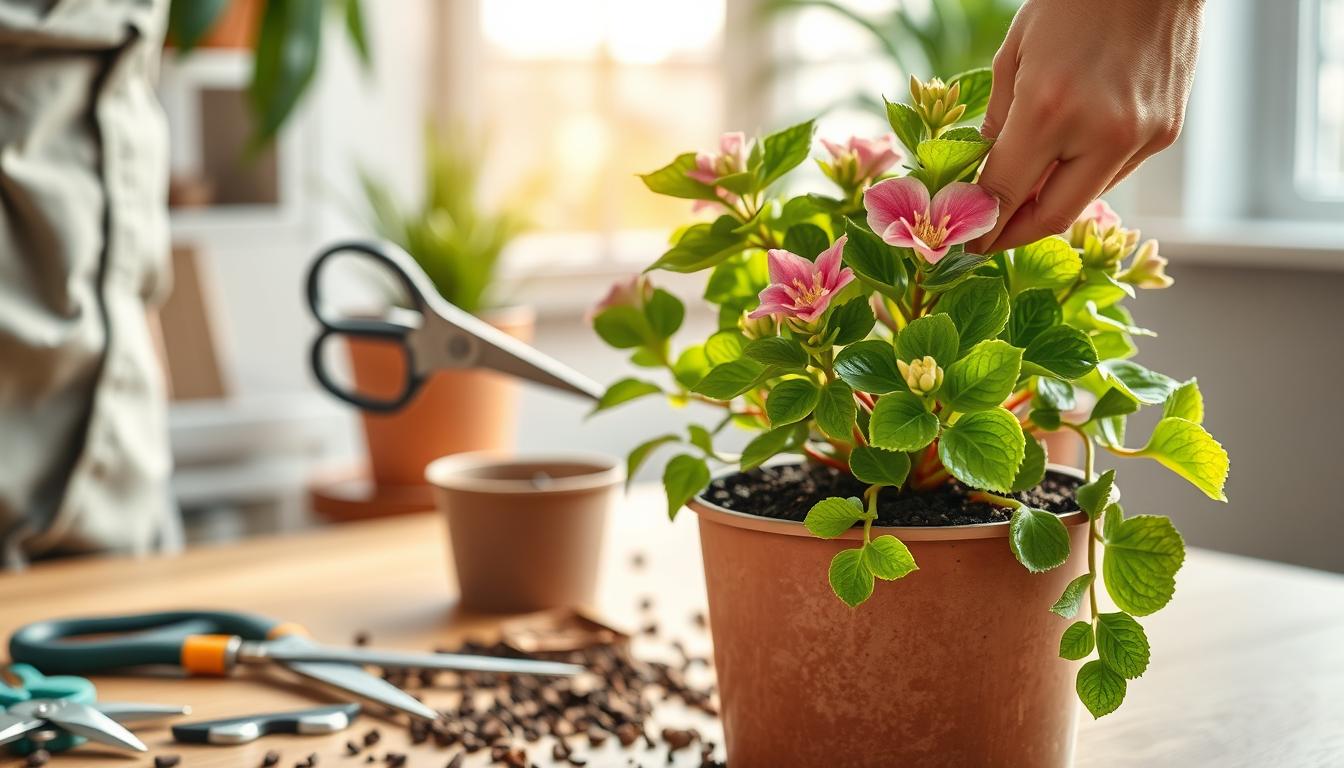
After the flowers fade, your first move is a strategic haircut. Pruning encourages the bushy new growth that will support next season’s blooms. Here’s the exact step-by-step guide on how and where to cut.

Pruning Leggy Growth and Shaping Your Kalanchoe

To make your kalanchoe look lush and compact, you need to prune it right. If your plant has long, thin stems with few leaves, it’s time to shape it up.

Cutting Back Overgrown Stems

First, learn about your plant’s stem structure. Leggy growth happens when plants don’t get enough sunlight. This makes them stretch too much. Here’s how to fix it:

  • Find stems that are too long
  • Get sharp pruning shears ready
  • Trim stems at a 45-degree angle near leaves
  • Take off at least half of each long stem

Encouraging Bushier Growth Through Strategic Pruning

Pruning your kalanchoe changes its look and helps it grow better. It’s like giving your plant a fresh start.

Pruning GoalTechniqueExpected Result
Reduce LegginessCut stems back to healthy leaf nodesCompact growth
Encourage BranchingRemove top growing tipsMultiple new shoots
Shape PlantTrim to desired symmetryBalanced appearance

Take a step back while pruning to see how your plant looks. Patience is key. Soon, new growth will make your kalanchoe look fuller and more vibrant.

“Pruning is not about perfection, but about encouraging healthy, vigorous growth.” – Succulent Care Expert

Post-Pruning Care for Your Kalanchoe Plant

After pruning your kalanchoe, it’s important to care for it well. This helps the plant get better and grow strong. Paying close attention during this time is key.

Watering is the most important part of caring for your kalanchoe after pruning. Here are some tips to follow:

  • Water thoroughly, allowing excess to drain completely
  • Avoid letting the plant sit in standing water
  • Wait until the top two inches of soil are dry before watering again

Light and temperature are also crucial for your kalanchoe’s recovery. Place the plant in bright, indirect light. Avoid direct sunlight, as it can stress the plant.

Growing ConditionRecommended Range
Daytime Temperature50-70°F
Nighttime Temperature45-65°F
Watering FrequencyOnce per week (outdoor), Every two weeks (indoor)

Watch out for pests like mealybugs and aphids on your pruned kalanchoe. Pro tip: You can use the healthy stem cuttings to grow new plants!

Don’t fertilize your kalanchoe for 2-4 weeks after pruning. Use a balanced, diluted fertilizer when you do. This helps the plant grow without getting overwhelmed.

Conclusion

Pruning your kalanchoe plant is easier than you think. By learning the basics, you can make your succulent lush and vibrant. Just a few cuts can greatly improve your plant’s health and look.

Pruning helps control your plant’s shape and encourages more growth and blooms. Each cut directs energy to new growth, avoiding leggy stems. A little pruning can make a big difference, adding color and life to your space.

Kalanchoe plants are easy-going and resilient. Even if you’re new to pruning, your plant will still thrive. With time, you’ll get better at pruning, watching your plant grow into a beautiful, full specimen.

Remember, proper pruning is just one step to a healthy plant. Combine it with good light, water, and soil, and you’ll enjoy stunning blooms all season.

FAQ

How often should I prune my kalanchoe plant?

Prune your kalanchoe once after it stops flowering, usually in late spring or early summer. You can also do small prunings all year to remove dead parts.

Can I propagate the cuttings from pruning my kalanchoe?

Yes! Let the cut ends dry for a few days. Then, plant them in moist soil. This way, you can grow new plants from your cuttings.

What tools do I need to prune a kalanchoe?

You’ll need sharp shears and rubbing alcohol to clean them. Wear thick gloves to protect your hands. A watering can is also useful after pruning.

How much of my kalanchoe can I safely remove when pruning?

You can remove up to one-third of the plant at once. If it’s very leggy, you can shape it more later when new growth appears.

Will pruning hurt my kalanchoe plant?

No, kalanchoes are very hardy and benefit from pruning. It makes them bushier, encourages more flowers, and keeps them healthy.

How do I know if my kalanchoe is too leggy?

A leggy kalanchoe has long, thin stems and big gaps between leaves. This happens when it doesn’t get enough light or isn’t pruned often.

When is the best time to prune a kalanchoe?

Prune your kalanchoe right after it stops flowering, usually in late spring or early summer. This helps it grow new leaves and stems.

Can I prune my kalanchoe during its flowering period?

You can remove dead flowers during the flowering period. But, do major pruning after it stops flowering to avoid cutting off new blooms.

How should I care for my kalanchoe after pruning?

Water it well, put it in bright light, and keep it at 50-70°F. Don’t fertilize for 2-4 weeks to let it recover and grow new.

What happens if I don’t prune my kalanchoe?

Without pruning, your kalanchoe might get leggy, flower less, and lose its shape. It could also get unhealthy as dead parts build up.