Physical Address
304 North Cardinal St.
Dorchester Center, MA 02124
Physical Address
304 North Cardinal St.
Dorchester Center, MA 02124

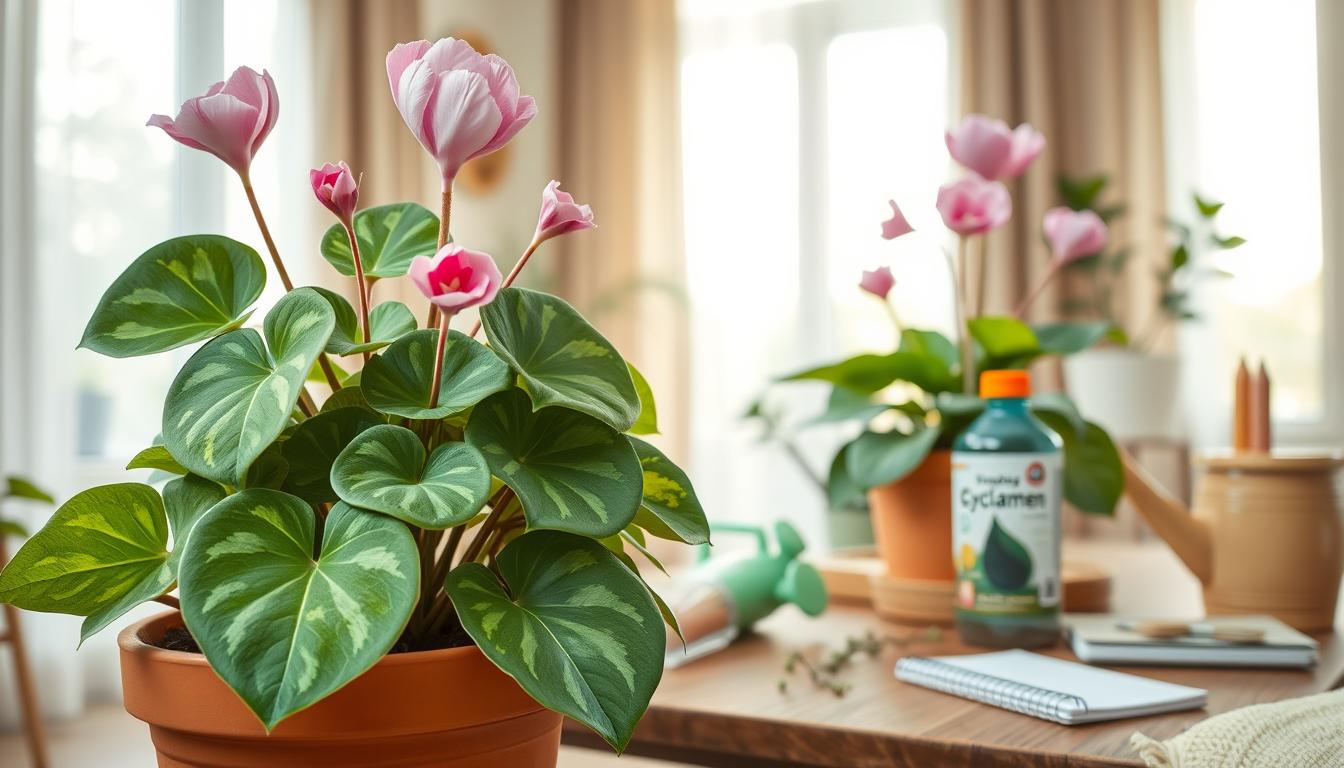
Cyclamen plant care helps reveal winter’s quiet magic. Winter brings quiet magic, often seen in cyclamen plants. These houseplants have a special bond with their owners. They are winter’s elegant artwork.
Cyclamen care indoors means knowing their nutritional needs. The Cyclamen persicum is the most popular, with beautiful flowers in white, pink, red, and lavender. Their leaves are heart-shaped with silvery patterns, making them stand out indoors.
Feeding cyclamen plants right is key. This guide will help you understand how to fertilize them. It covers everything from choosing the right fertilizer to how to apply it. This ensures your cyclamen blooms beautifully all season.
Cyclamen plants have a special growing cycle that’s different from most houseplants. They come from the Mediterranean and have a unique way to survive. To care for them, you need to know their growth and rest periods.
Their growing cycle is the opposite of most indoor plants. Cyclamen plants do best in cool seasons and rest in the hot summer. Let’s look at their amazing annual pattern:
When autumn temperatures drop, cyclamen plants wake up. From October to March, they grow lush foliage and show off beautiful flowers. This is when they need the most nutrients and care. The cooler weather makes them grow fast, showing off colors when most plants are sleeping.
In April, your cyclamen starts to slow down. Don’t worry if leaves turn yellow and die back—it’s normal. The plant’s tuber stays alive underground, saving energy for next year. Proper care during this time is key for future blooms.
| Season | Cyclamen Activity Level | Care Requirements |
|---|---|---|
| Fall | High | Regular watering, fertilization |
| Winter | Peak | Consistent moisture, cool temperatures |
| Spring | Declining | Reduce watering, stop fertilizing |
| Summer | Dormant | Minimal care, dry storage |
Knowing their unique growing cycle helps you care for your cyclamen. This ensures they bloom beautifully and stay healthy every year.
Caring for cyclamen indoors means knowing their special needs. These plants do best in certain conditions that help them grow naturally. Learning the basics of cyclamen care will keep your plant healthy and bright.
Temperature is key for cyclamen health. They like it cool, between 50°F and 65°F. This is similar to their natural home in the Mediterranean. Make sure your cyclamen is not near heating vents or warm rooms to avoid stress.
Cyclamen need bright, indirect light. Place your plant by a window for soft light without direct sun. This spot should offer:
Managing water is important for cyclamen care. Use the bottom-watering method to avoid problems:
| Care Aspect | Recommended Conditions |
|---|---|
| Temperature | 50°F – 65°F |
| Light | Bright, indirect |
| Soil pH | Slightly acidic |
| Humidity | Moderate (around 50%) |
Knowing these cyclamen care basics is the first step to a thriving indoor plant. The right environment helps your cyclamen absorb nutrients and grow strong.
Choosing the right fertilizer for cyclamen plants is key to keeping them healthy and vibrant. Cyclamen’s needs change as they grow, so picking the best fertilizer is crucial. This ensures they grow well and bloom beautifully.
When looking for the best fertilizer for cyclamen, consider two main types:
Using complete houseplant fertilizers is a balanced way to feed your cyclamen. These formulas usually have a balanced ratio that supports overall health:
For amazing blooms, specialized fertilizers are a big help. Phosphorus-rich formulas help cyclamen grow more flowers that last longer.
| Fertilizer Ratio | Purpose | Best Time to Apply |
|---|---|---|
| 4-20-4 | Bloom Enhancement | Early Winter |
| 5-10-5 | Flower Promotion | Pre-Blooming Season |
Pro tip: Cyclamen love slightly acidic soil. Think about using an acid-based fertilizer once a year. It helps keep the soil chemistry just right.
Knowing when to fertilize cyclamen is key for keeping them healthy and colorful. The needs of your cyclamen change as it grows, so timing is everything for good care.
The best time to fertilize cyclamen starts in early fall, from September to October. This is when your plant wakes up from summer sleep and grows new leaves. Use a low-nitrogen fertilizer every other week during this time.
As your cyclamen starts to bloom in November and December, change your feeding plan. Use a balanced fertilizer every three to four weeks. This helps your cyclamen get the nutrients it needs without too much.
By late winter or early spring, you should fertilize less often. By April, when your cyclamen starts to look like it’s going dormant, stop feeding it. This prevents damage to the roots.
Pro Tip: Always observe your plant’s growth patterns and adjust fertilization accordingly.
Knowing how much fertilizer your cyclamen needs is key to keeping them healthy. These plants are delicate and need the right amount of nutrients. You want to give them just enough without overloading them.
When it comes to fertilizing cyclamen, you need a smart plan. These plants don’t need as much as some other houseplants. So, it’s important to keep the amount low.
Here are some tips for feeding your cyclamen right:
Too much fertilizer can hurt your cyclamen. Look out for these signs of too much:
Cyclamen’s roots are very sensitive to fertilizer salts. If you think you’ve over-fertilized, wash the soil with clean water. Then, cut back on how often you feed. It’s better to under-fertilize than to overdo it.
Pro Tip: Always err on the side of caution when fertilizing cyclamen. A gentle approach yields the most beautiful results.
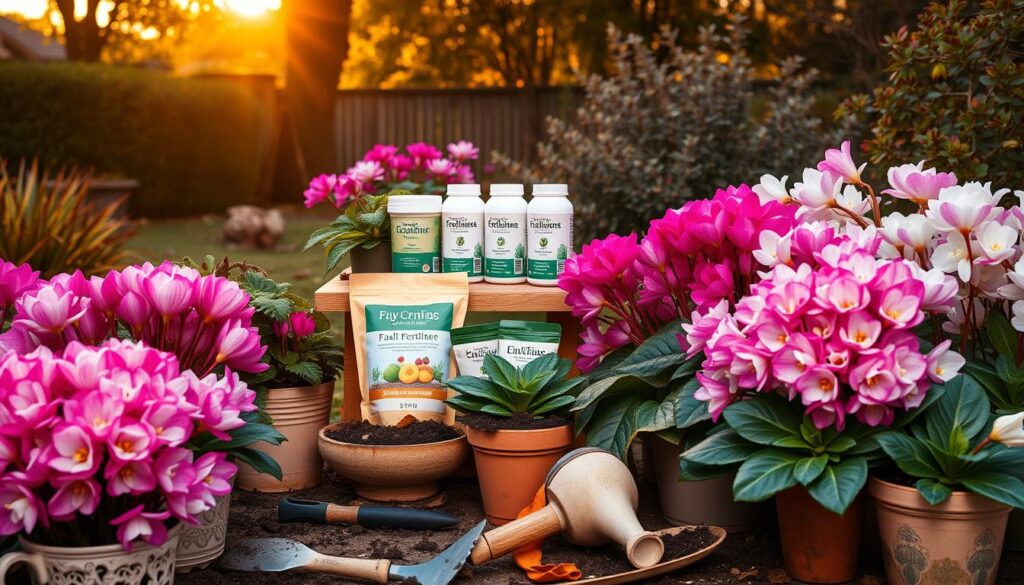
Fall cyclamen care starts with knowing your plant’s seasonal needs. As it gets cooler, your cyclamen comes out of its summer sleep. This is the best time to start fertilizing again.
In fall and early winter, your cyclamen needs extra nutrients. Start with a fertilizer low in nitrogen, given every other week until it blooms. This helps it grow well without too many leaves.
Signs your cyclamen is ready for fertilization include:
Pro tip: If you’re bringing a dormant tuber out of storage, introduce fertilization gradually. This helps your cyclamen adjust and avoids shocking it.
Good fall cyclamen care leads to beautiful winter blooms. By following this fertilizing plan, your plant will get the nutrients it needs to thrive during its most active time.
Winter cyclamen feeding is key to getting the most blooms. From December to February, your cyclamen needs special food to grow lots of colorful flowers.
To get your cyclamen to bloom well, you need to know what it needs. You want to give it the right nutrients for big, healthy flowers. This keeps your plant happy and healthy.
When your cyclamen starts to grow buds, here’s what to do:
Phosphorus is important for flowers. One application of high-phosphorus fertilizer can really help your cyclamen’s blooms. Keep feeding it regularly, but watch how it reacts.
“The secret to spectacular cyclamen blooms is precise, measured nutrition during their peak season.” – Professional Horticulturist
Keep an eye on your cyclamen’s growth. If it’s not blooming much, try feeding it more often or use a special bloom-boosting fertilizer. When your cyclamen has lots of green leaves and flowers, you’re doing it right.
Indoor cyclamen need special care when it comes to fertilizing. This is different from how you care for outdoor plants. You must consider how indoor growing conditions affect how your cyclamen absorbs nutrients and stays healthy.
Here are key things to think about when fertilizing cyclamen indoors:
Indoor cyclamen grow differently than outdoor ones. This is because indoor places have steady temperatures and less air movement. Lighter, more frequent fertilization works best for indoor cyclamen.
Here are some tips for fertilizing indoor cyclamen:
The light your indoor cyclamen gets affects its nutritional needs. Plants near bright, indirect windows can handle more frequent feeding. But, always watch how your plant reacts and adjust your fertilizing as needed.
Flowering plants like Cyclamen have different needs. While reducing water in winter, they may still need light feeding during bloom periods.
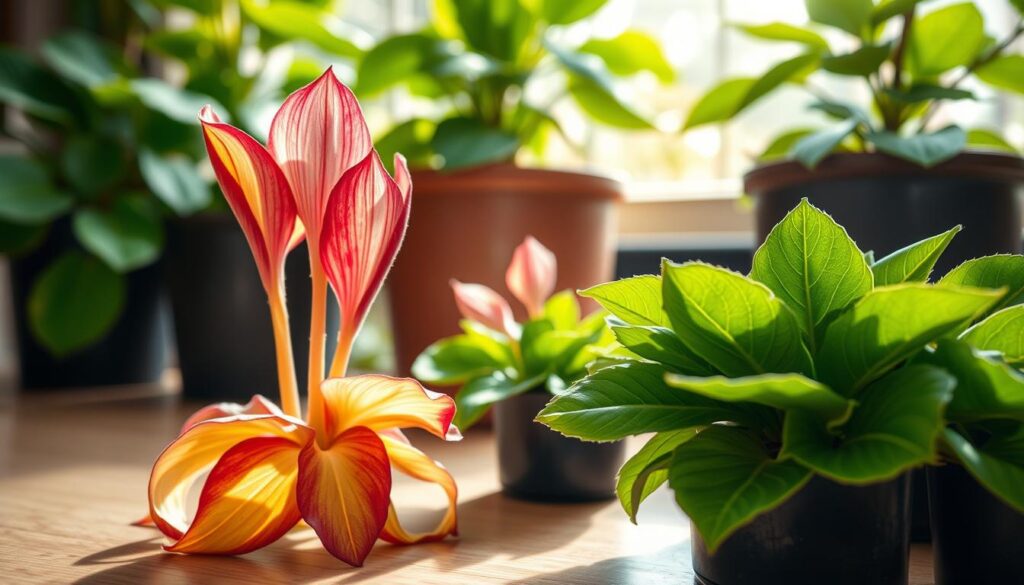
Knowing how to spot cyclamen nutrient deficiencies is key to keeping your plant healthy. Cyclamen are very sensitive to not getting the right nutrients. This can show up in different ways, like yellow leaves. Catching these signs early helps you fix the problem and keep your plant thriving.
Yellow leaves on cyclamen often mean there’s a nutrient issue. Yellowing can be caused by many things, but some patterns are more telling than others. For example, yellowing between the leaf veins usually means the plant lacks iron.
When your cyclamen has lots of leaves but few flowers, it might be low on phosphorus. Phosphorus is important for flowers. Without enough phosphorus, your cyclamen won’t bloom well.
By watching your cyclamen’s nutritional needs closely, you can avoid problems. This way, you’ll have a healthy, beautiful plant to enjoy.
Summer cyclamen care means knowing when your plant rests. In April or May, your cyclamen will slow down and rest. This is a key time for cyclamen care.
When this happens, stop fertilizing completely. Your cyclamen is saving energy and can’t use nutrients well. Fertilizing too much can harm the tuber and cause root rot.
| Dormancy Stage | Care Instructions |
|---|---|
| Early Dormancy | Reduce watering gradually |
| Mid Dormancy | Stop fertilization |
| Late Dormancy | Minimal water, cool dark location |
The tuber stays alive underground, getting ready for growth. Move the pot to a cool, dark place like a basement or garage. It might look sad, but that’s okay. It’s part of its health routine.
Caring for cyclamen plants needs careful attention to fertilization. Many gardeners make mistakes that harm their plants. Knowing these common errors helps keep your cyclamen healthy and vibrant.
The biggest mistake is over-fertilization. Too much fertilizer can cause problems:
Choosing the wrong fertilizer is another mistake. During blooming season, avoid high-nitrogen formulas. Instead, use balanced or phosphorus-rich fertilizers for flowering plants.
Timing is key in fertilizing cyclamen. Avoid these mistakes:
Environmental conditions affect cyclamen care. Adjust your fertilization based on light, temperature, and growth stage. If unsure, start with less for these sensitive plants.
Cyclamen plants are a beautiful sight in winter. To keep them healthy, match their fertilization to their natural cycle. This way, you’ll help them grow well during their active season.
Understanding their needs is key to caring for cyclamen. They need cool temperatures, bright indirect light, and the right amount of fertilizer. This will make them bloom beautifully.
Knowing how to fertilize cyclamen is crucial for good care. It helps you manage their growth from winter blooms to summer rest. Watch your plants and adjust your care as needed. Enjoy their beauty in your home during the cold months.
With patience and the right care, cyclamen will become a highlight of your indoor garden. Your dedication to their needs will make them thrive and bring joy year after year.