Physical Address
304 North Cardinal St.
Dorchester Center, MA 02124
Physical Address
304 North Cardinal St.
Dorchester Center, MA 02124

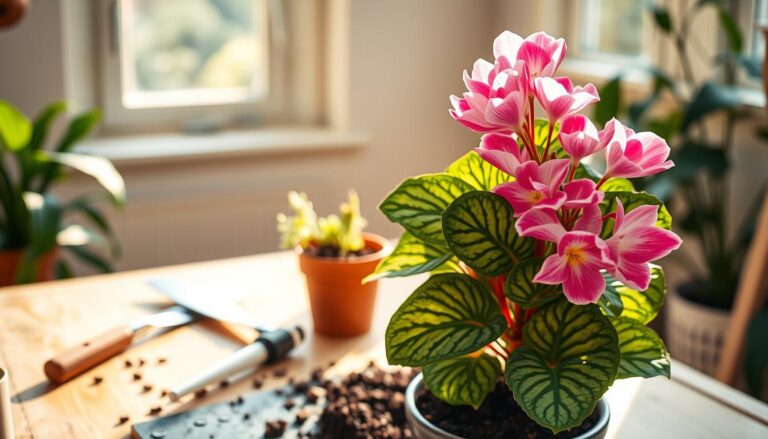
Have you ever seen a cyclamen watering plant slowly fade away, even when you tried your best? I remember learning that watering cyclamens is more of an art than a science. These plants can brighten up your home with their beautiful leaves and flowers. But, they need special care that’s different from most houseplants.
Cyclamens are not like other houseplants. Their need for water comes from their Mediterranean roots. Knowing how to care for them is key to their survival and blooming.
Many people accidentally harm their cyclamens by watering them wrong. The biggest mistake is overwatering, which can cause crown rot. This guide will teach you how to water your cyclamen right. It will help protect its roots and ensure it grows well.
Cyclamen plants are amazing, with special ways to handle water. They need a careful watering routine that’s different from most houseplants. This is because they’ve adapted to the dry conditions of the Mediterranean.
Their tuberous roots make cyclamen plants very sensitive to water. They have a special system for storing water and nutrients. But, this system can get damaged if they’re watered wrong.
Their central crown is also very delicate. This makes it important to control the moisture around them.
Cyclamen come from southern Europe and North Africa. They’ve learned to live with the area’s changing water patterns. Their natural growth cycle is deeply connected to rainfall rhythms.
In cool, wet winters, they do well. But summers are dry, and they need to rest.
To care for your indoor cyclamen, follow their natural water cycle. Give them water when it’s needed, and let them dry out between. This way, they’ll feel like they’re back in their Mediterranean home.
Cyclamen’s water needs are a testament to nature’s incredible adaptive strategies.
Watering a cyclamen might seem simple, but it’s actually a big challenge. Overwatering cyclamen is the biggest mistake you can make. More cyclamen die from too much water than any other issue.
Your good intentions can quickly turn into a disaster for your cyclamen. The plant’s structure makes it very sensitive to water problems. Too much water leads to cyclamen root rot.
Many people think cyclamen need constant moisture. In reality, these plants prefer letting their soil dry out between waterings. Only water when the top 1-2 inches of soil feel dry.
“Less water is more” is the golden rule for cyclamen care.
Cyclamen come from the Mediterranean, where they get used to seasonal rains. They store water in their tubers and can handle short dry spells. Your goal is to water them carefully, like their natural environment.
Look out for signs of overwatering: droopy leaves, yellowing foliage, and a soft base. These signs mean you’re watering too much. Change your watering to avoid these deadly mistakes.
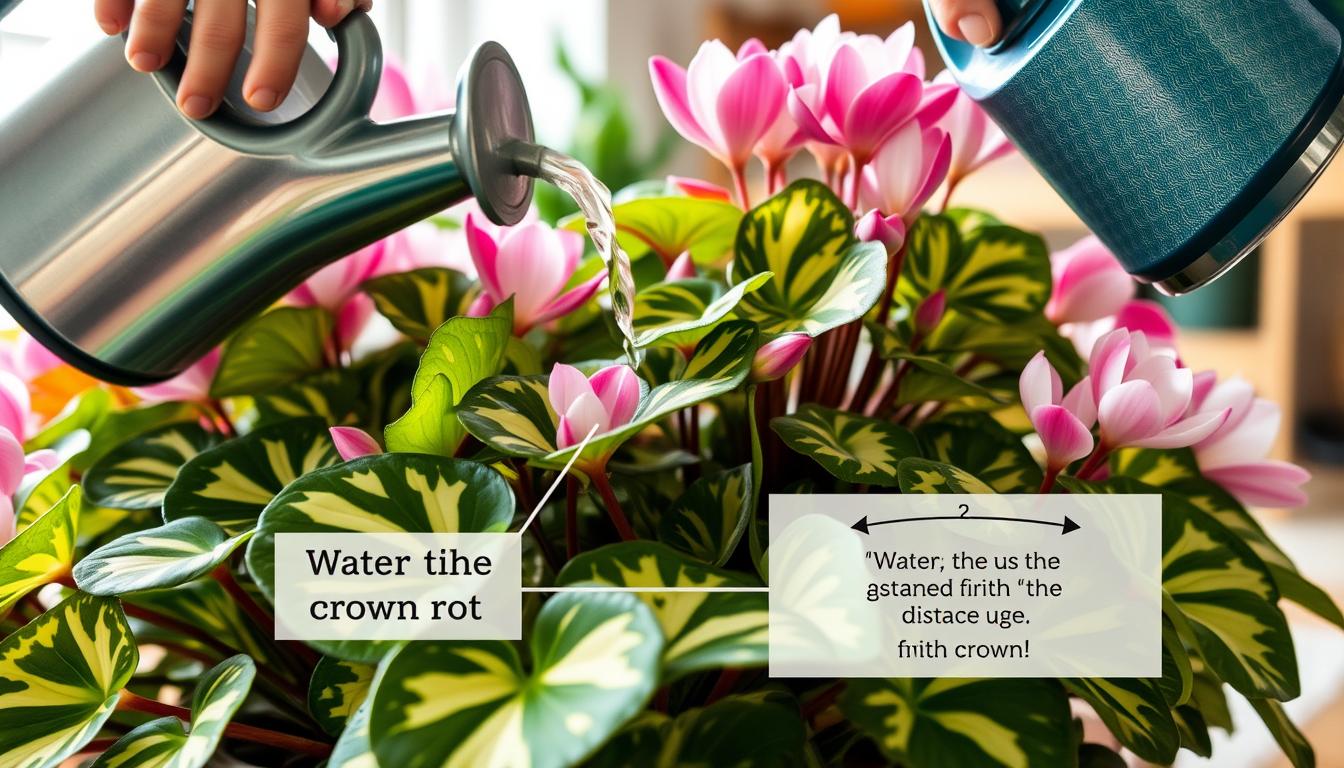
Cyclamen plants face a serious threat: crown rot. This fungal infection attacks the plant’s most critical part – the central growing point. This is where leaves and flowers grow.
Crown rot in cyclamen is a silent killer. It often goes unnoticed until it’s too late. The infection starts in the plant’s most vulnerable area – the crown. This area is just at soil level.
Fungal infections thrive in certain conditions. These conditions make your cyclamen plant very susceptible.
Spotting crown rot early can save your plant. Look out for these important symptoms:
Water is the main cause of crown rot. When water gathers in the plant’s crown, it’s a perfect spot for fungi. Cool temperatures and too much water make cyclamen especially vulnerable.
“Prevention is always better than cure when it comes to protecting your cyclamen from crown rot.” – Plant Care Experts
Knowing the symptoms of crown rot helps protect your cyclamen. With careful watering and proper care, you can lower the risk of this fungal infection.
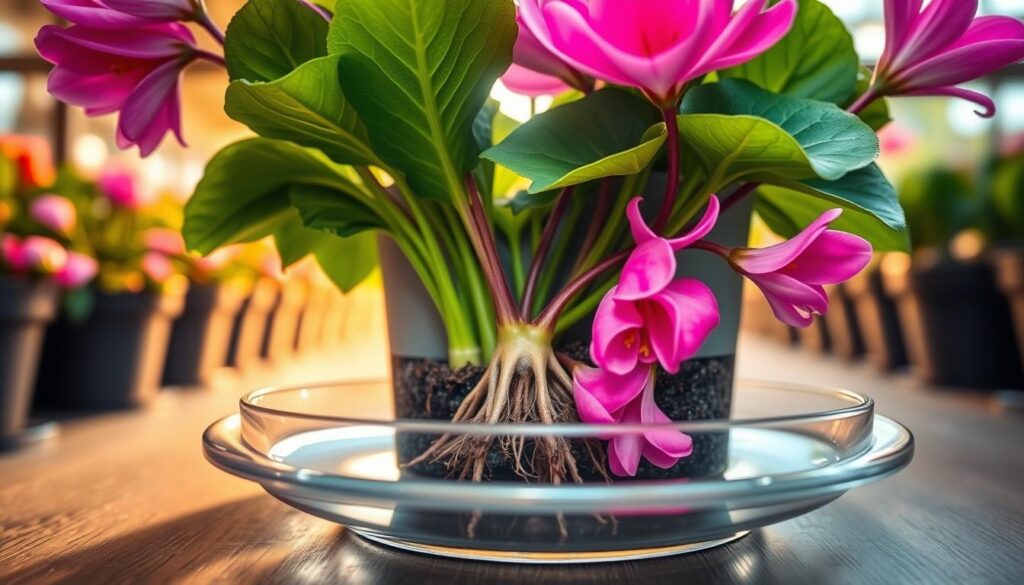
Learning how to water cyclamen properly is key to keeping them healthy. The bottom watering technique is the best and safest way to care for your cyclamen.
To water your cyclamen correctly, follow these steps:
Bottom watering is like how cyclamen naturally absorb water. The roots soak up moisture, keeping the plant hydrated evenly. This method also stops water from causing fungal infections.
When using the bottom watering technique, look for these signs:
If bottom watering is not an option, water the soil around the plant. Be careful not to get water on the leaves. Your cyclamen will thank you for this gentle care.
The absolute key to keeping your Cyclamen healthy and blooming is perfect watering technique. Avoid the fatal mistake of crown rot by following these specific do’s and don’ts.
Watering cyclamen needs a careful touch. It depends on many things around it. Knowing when to water is key to keeping your cyclamen healthy.
Figuring out how often to water cyclamen means watching your plant closely. It’s important to not water too much or too little. Both can harm your plant.
To know when to water cyclamen, try these tips:
Your cyclamen tells you when it needs water. If its leaves are soft or droopy, it’s time to water. Water when the top 1-2 inches of soil are dry.
When cyclamen are growing, they need regular but gentle watering. Make sure not to let water sit around the plant. This can hurt the roots.
Watering cyclamen isn’t about a set schedule. It’s about listening to your plant’s needs. Every cyclamen is different, based on its environment.

Watering cyclamen plants can be tricky. Common mistakes often lead to yellow leaves and wilting. It’s important to find the right balance of moisture for your plant’s health.
Yellow cyclamen leaves can come from two main causes:
Wilting cyclamen plants can have different reasons:
When your plant wilts suddenly, it usually means it’s too dry. But if it wilts slowly and the stems are soft, it might be too wet.
Signs of bad watering include:
To avoid these problems, water carefully. Check the soil moisture by sticking your finger in about an inch. If it’s dry, water well using the bottom-up method. If leaves start to turn yellow, change how often you water right away.
Pro tip: Always ensure your cyclamen has proper drainage to avoid water-related stress.
Keeping cyclamen plants happy can be a challenge. They need the right amount of moisture, but not too much water. It’s important to know how to keep the humidity right without drowning your plant.
Watering cyclamen plants requires careful planning. Indoor spaces often have dry air, especially when it’s cold and we use heaters.
There are smart ways to add moisture without soaking your plant. Here are a few:
This method helps keep your plant humid without too much water. Just make sure the water level is low and the soil doesn’t get wet.
Don’t use misting, as it can cause mold. Try these other ways to keep your plant humid:
Good cyclamen care is all about finding the right balance. With these tips, you can create a perfect environment for your plant to thrive.
Keeping your cyclamen safe from crown rot starts with the right drainage. It’s all about creating a space where water doesn’t collect. This helps your plant’s roots stay healthy.
To prevent crown rot, choose the right soil. Cyclamen need soil that drains well and is light. Look for a mix with:
When picking a pot, consider these important points:
| Container Feature | Importance for Cyclamen |
|---|---|
| Drainage Holes | Essential for preventing water buildup |
| Pot Size | Should be proportional to plant size |
| Material | Terracotta or ceramic preferred for moisture regulation |
Look out for signs of bad drainage, like yellowing leaves or soft, mushy stems. These mean your cyclamen might be too wet. Make sure water can drain freely to avoid root rot.
Pro tip: Lift your pot after watering to feel its weight. A light pot indicates proper drainage and ideal moisture levels.
By using these drainage tips, you’ll help your cyclamen thrive. This will keep it safe from crown rot.
Knowing how to care for your cyclamen during its dormant period is key. This stage is part of its natural life cycle. It needs special attention to watering.
Watering a dormant cyclamen is tricky. As the weather warms up and days get longer, your cyclamen will start to rest.
Look out for these signs that your cyclamen is getting ready to rest:
Here’s how to water your cyclamen during its dormant phase:
You have two main choices for caring for your cyclamen during dormancy:
The biggest mistake is watering a dormant, leafless tuber like it’s growing. This can cause tuber rot and kill your plant.
Learning how to water cyclamen right means watching the temperature closely. These plants have special temperature needs that affect how much water they need and their health.
The best temperature for cyclamen is between 50-65°F (10-18°C). They come from the Mediterranean and do well in cool places. When it gets warmer, you need to change how you water them to keep them healthy.
Watering changes with temperature. Warmer air makes the soil dry out quicker, so cyclamen need more water. But, cooler air makes them drink water slower.
| Temperature Range | Watering Frequency | Plant Response |
|---|---|---|
| Below 50°F | Reduce watering | Slower growth |
| 50-65°F | Regular watering | Optimal growth |
| Above 65°F | Increase monitoring | Potential stress |
Look out for signs of stress like droopy leaves or fast fading blooms. These mean your cyclamen needs cooler air and different watering.
“The key to cyclamen care is understanding their preference for cool, stable temperatures.” – Botanical Gardens Expert
Keep the right temperature and adjust your watering to make your cyclamen happy. They will bloom beautifully and last a long time.
Watering cyclamen plants right is key to their success. You start by knowing they need just the right amount of moisture. With the right watering, these plants can become beautiful additions to your home.
To keep cyclamen happy, think about where they come from. They need careful watering, like letting the soil dry a bit before watering again. This helps avoid problems like crown rot and keeps them looking great.
It’s important to watch your cyclamen closely. Look for signs like firm leaves to know they’re getting enough water. Every plant is different, so it takes time to learn what they need.
Learning to care for cyclamen is very rewarding. By following tips like watering from the bottom and watching the soil, you’ll get amazing blooms. Your dedication will help your cyclamen thrive and add beauty to your home.