Physical Address
304 North Cardinal St.
Dorchester Center, MA 02124
Physical Address
304 North Cardinal St.
Dorchester Center, MA 02124

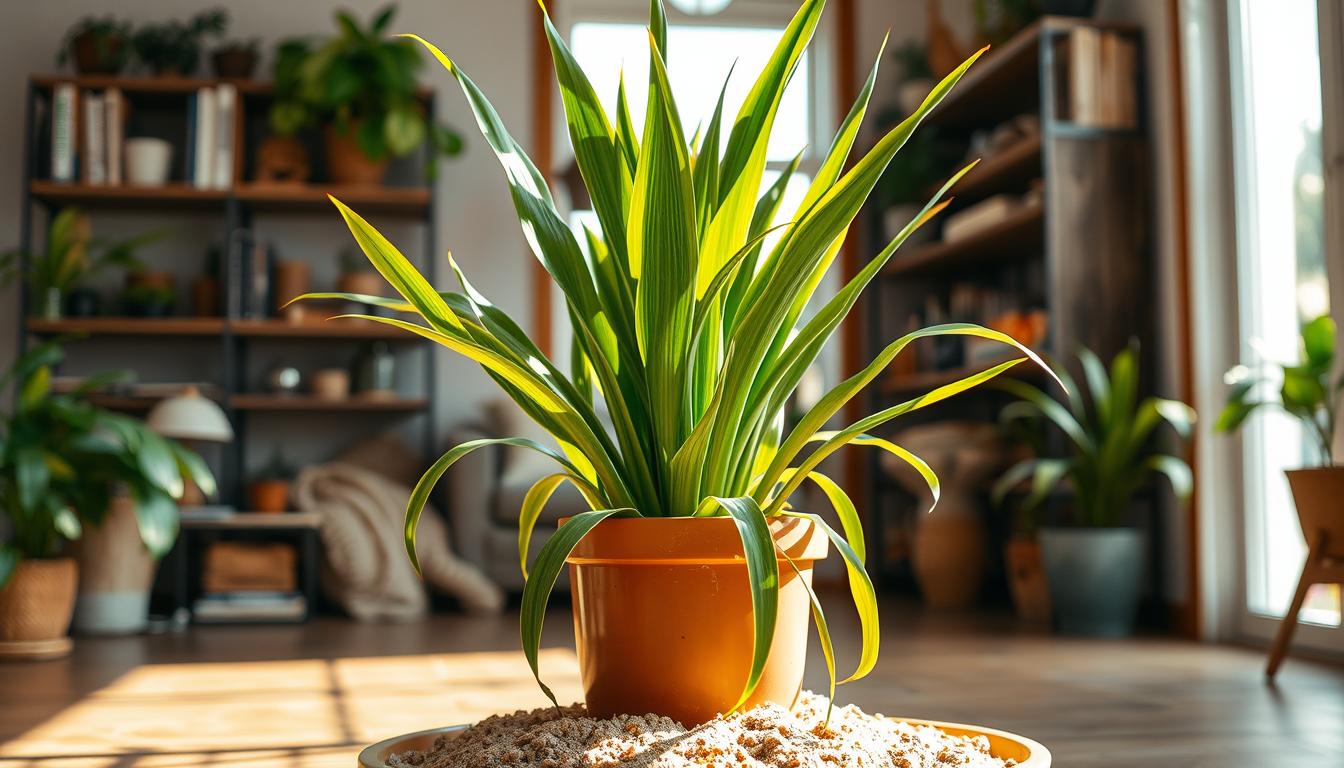
Welcome to the ultimate guide for dracaena marginata care! If you’re looking for a resilient and stunning houseplant, the Dragon Tree might be your perfect green companion. Native to Madagascar, this remarkable plant offers beauty and simplicity for both novice and experienced indoor gardeners.
The Dragon Tree stands out with its distinctive sword-like leaves edged in vibrant red. This creates a dramatic visual statement in any home. Despite its exotic appearance, this Madagascar dragon tree is incredibly forgiving and adaptable to various indoor environments.
NASA’s Clean Air Study highlighted the Dragon Tree’s impressive ability to remove harmful toxins like formaldehyde from indoor air. While beautiful, pet owners should note this plant is toxic to cats and dogs. This requires careful placement in your home.
Starting your dracaena marginata plant care journey means learning about its background and traits. Your new dragon tree is more than a houseplant. It’s a piece of Madagascar’s rich botanical world.
Welcoming a dragon tree plant into your home is like inviting a botanical wonder with a rich history. It comes from Madagascar’s tropical areas. This plant has learned to thrive in many environments.
Madagascar dragon tree care begins with its roots. The Dracaena marginata comes from Madagascar’s varied ecosystems. These include:
Your dragon tree plant has unique features that make it a beautiful indoor friend:
| Characteristic | Details |
|---|---|
| Leaf Structure | Narrow, sword-like leaves with red-tinged edges |
| Growth Rate | Slow-growing, typically reaching 6 feet indoors |
| Stem Appearance | Thick, cane-like stems resembling bamboo |
Interesting varieties like ‘Tricolor’ and ‘Colorama’ offer unique color variations that can transform your indoor space into a vibrant botanical display.
“A dragon tree is not just a plant, but a living piece of Madagascar’s natural heritage.” – Botanical Experts
When you set up your dracaena marginata indoors, where you place it matters a lot. Your dragon tree needs the right environment to grow well. This includes the right amount of light and temperature.
Understanding what light your dragon tree likes is key. These plants can do well in many indoor spots. They make great friends for your home.
Think about these important points for the best spot for your dragon tree:
| Location Characteristic | Recommended Conditions |
|---|---|
| Light Exposure | Indirect, bright light |
| Temperature | 60-75°F (15-24°C) |
| Drafts | Avoid near vents or windows |
Put your dragon tree a few feet from east or west windows. Rotate the plant now and then to keep it straight. If leaves start to change color or droop, it might not be in the best spot.
Choosing the right spot will help your dracaena marginata thrive. It will become a beautiful addition to your home.
Knowing the light needs of your Dracaena marginata is key to its health and beauty. These plants do best in light that’s similar to their natural home.
Light is very important when caring for your Dracaena marginata. They love bright, indirect light. This kind of light helps them grow well.
Finding the right spot for your plant is crucial. Here are some tips:
Direct sunlight can harm your plant’s leaves. Look out for these signs of too much light:
| Light Stress Indicators | Recommended Action |
|---|---|
| Yellowing leaves | Move to less intense light |
| Brown scorched patches | Reduce direct sun exposure |
| Crispy leaf edges | Use light filtering methods |
Using indirect light helps your Dracaena stay healthy and look great. It keeps it safe from too much sunlight.
A classic and resilient choice is the Dracaena Marginata. Here is its complete care guide.
Learning how to care for dracaena marginata means knowing its watering needs. These plants are quite good at handling dry spells. But, they can suffer if you water them too much.
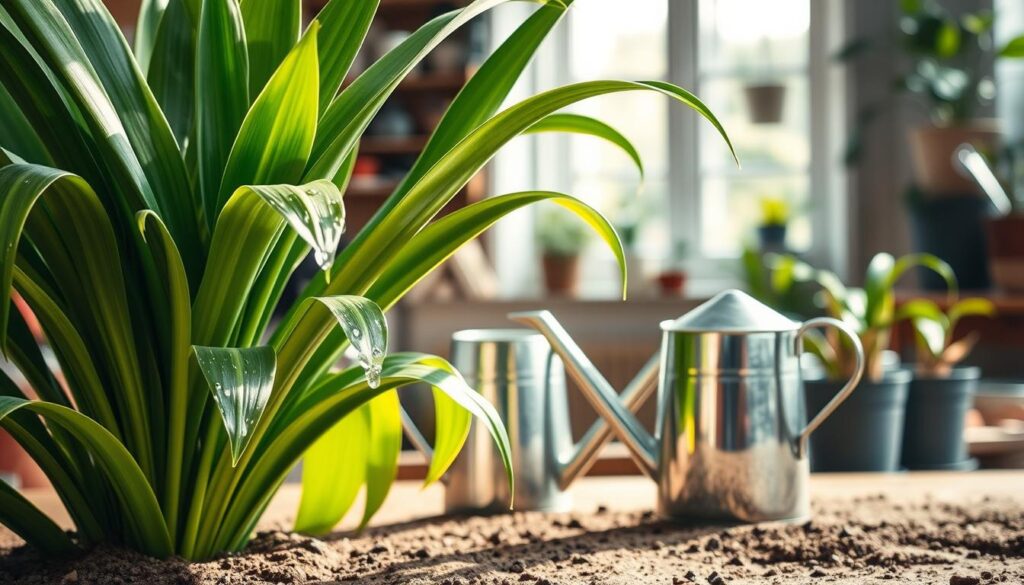
To water your dragon tree right, you need to know what it likes. Let the soil dry out a bit between waterings. This helps your plant stay healthy and prevents root rot.
| Season | Watering Frequency | Moisture Level |
|---|---|---|
| Spring/Summer | Every 2-3 weeks | Keep consistently moist |
| Fall/Winter | Less frequent | Allow soil to dry completely |
Watch for signs that tell you when to water your dracaena marginata. Yellowing leaves mean you’re watering too much. Drooping or crispy leaves tell you it’s time to give it a drink. Make sure the pot has good drainage and never leave your plant in water.
Pro tip: Water thoroughly until liquid runs through drainage holes, then allow the pot to drain completely before returning it to its saucer.
Starting a dracaena marginata indoors means knowing the right soil and pot. These are key for your dragon tree’s health.
Choosing the best soil for your dragon tree is important. You need a mix that drains well to avoid root rot and help the plant grow.
“The right soil can make or break your dragon tree’s success.” – Plant Experts
When you pot your dracaena marginata, pick a container that helps it grow well. The right pot is key for your plant’s health.
| Pot Material | Pros | Cons |
|---|---|---|
| Terracotta | Excellent drainage | Dries out quickly |
| Ceramic | Decorative options | Heavier, less portable |
| Plastic | Lightweight, affordable | Less breathable |
Your container should be just 2 inches larger than the current root ball. Make sure it has drainage holes to avoid water buildup. Use a saucer to catch water without letting the pot sit in it.
Pro tip: If your dragon tree comes in lava rock, remove about one-third of the rock and replace it with quality potting mix. This helps with nutrient absorption and moisture management.
Knowing the dragon tree’s temperature needs is key to a healthy Dracaena marginata. These tropical plants prefer a certain indoor climate. It’s easy to meet these needs in most homes.
The best indoor climate for dragon trees is between 70°F and 80°F. This warm range makes your Dracaena marginata happy, just like its natural home.
“Consistency is key when maintaining the perfect environment for your dragon tree.” – Plant Care Experts
Dragon trees are quite flexible when it comes to humidity. They do well with the humidity found in most homes, between 30-50%.
Look out for signs of stress, like:
| Temperature Issue | Plant Symptoms |
|---|---|
| Too Cold | Leaf drop, stunted growth |
| Too Dry | Brown leaf tips, crispy edges |
Pro tip: If your home is very dry, try misting your dragon tree lightly. Or, place a small humidifier nearby to make the air more comfortable for it.
Taking care of your Dracaena marginata means knowing what it needs to eat. Dragon tree plant food is key to keeping your indoor plant healthy and bright. Even though these plants don’t need a lot of food, the right amount can help them grow strong.
The schedule for feeding your dracaena is easy. These plants do well with a little bit of food, making them great for anyone who loves plants.
Your dragon tree needs different foods at different times of the year. Here’s a guide to help keep your plant happy:
| Healthy Fertilization Signs | Over-Fertilization Symptoms |
|---|---|
| New growth | White crusty soil deposits |
| Vibrant leaf color | Brown leaf tips |
| Strong plant structure | Stunted growth |
Remember, less is more when fertilizing your dragon tree. Gentle, consistent care is better than too much food. Your plant will thank you with beautiful, healthy leaves if you follow these easy tips.
Keeping your dragon tree healthy means regular pruning and smart propagation. Pruning helps shape the plant and encourages growth. Use sharp shears to cut off damaged or yellow leaves.
Here are the main pruning tips for your dracaena marginata:
Propagating your dracaena marginata is a fun way to grow more plants. Using stem cuttings is a simple way to make new plants.
Here’s how to propagate your dragon tree successfully:
| Propagation Method | Success Rate | Time to Root |
|---|---|---|
| Water Propagation | 85-90% | 3-4 weeks |
| Soil Propagation | 75-80% | 4-5 weeks |
Pro tip: Spring is the best time for pruning and propagating your dragon tree. This is when the plant’s growth hormones are most active.
Dragon trees are tough, but they can still face problems. Knowing about dracaena marginata issues helps keep your indoor plant happy. Let’s look at common problems and how to fix them.
Your dragon tree might run into several threats. Spotting early signs of trouble can stop big problems. This keeps your plant healthy and strong.
Pests can harm your dracaena marginata fast. Look out for these common pests:
Use natural solutions like neem oil or insecticidal soap to fight pests. Spray these on leaves, stems, and soil to get rid of them.
Yellow leaves can mean a few things:
Change your watering habits and make sure the soil drains well. This stops yellow leaves from spreading on your dragon tree.
Early detection and regular care are crucial for a healthy dracaena marginata. Keep an eye out and act fast to avoid long-term damage.
Repotting your dracaena marginata is key to keeping it healthy. Knowing when to repot can greatly impact its health and growth.
Dragon trees need repotting every 2-3 years. Look for these signs to know it’s time:
Here’s how to repot your dracaena marginata:
The best time to repot is early spring. This lets your dragon tree recover and settle in the new pot. For root bound dracaena that are hard to move, try top-dressing. Replace the top 2-3 inches of soil with fresh potting mix.
Pro tip: Don’t fertilize right after repotting. Wait 4-6 weeks to let the roots adjust.
Your dracaena marginata care guide has ended, but your journey with this beautiful houseplant is just starting. The Dragon Tree is a great choice for beginners. It’s easy to care for and can make any indoor space look amazing with little effort.
This houseplant care journey will teach you patience and how to observe your plant. With the right care, your Dragon Tree can live up to 15 years. It needs consistent care, the right light, and water, and a tropical environment to thrive.
If you have pets, be careful because the Dracaena marginata is toxic to cats and dogs. Place your plant in a spot where it won’t harm your pets. Learning about your plant will make you more confident in caring for it.
Your success with the Dragon Tree depends on your care and flexibility. Keep an eye on your plant and adjust its care as needed. Enjoy the beautiful leaves that will become a special part of your home. The Dragon Tree shows your growing gardening skills.