Physical Address
304 North Cardinal St.
Dorchester Center, MA 02124
Physical Address
304 North Cardinal St.
Dorchester Center, MA 02124

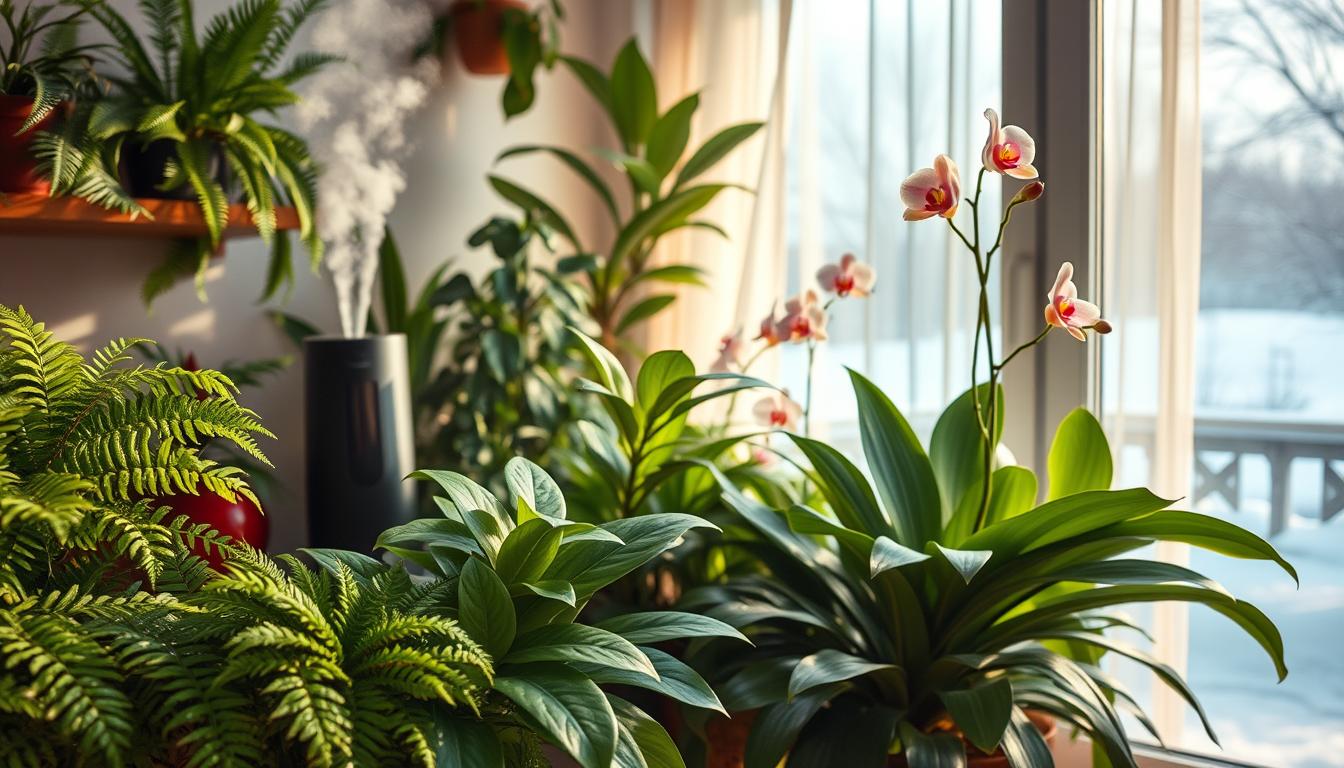
How to Increase humidity for plants this winter—it’s essential for keeping your tropical houseplants happy and healthy. I’ve watched my monstera and fiddle leaf fig struggle through dry winters, their once vibrant leaves turning brittle and wilted.
Most tropical plants come from humid rainforests where moisture levels hover between 50–60%. Indoors, winter heating robs the air of that crucial moisture, leaving your plants stressed and vulnerable.
The good news? You don’t need expensive gadgets to increase humidity for plants. In this guide, I’ll share seven simple, budget-friendly methods that actually work—so your plants can stay lush and green until spring.
Tropical houseplants add life to our homes, but winter is tough for them. They love moist air, unlike the dry air of winter. This makes finding ways to keep them moist very important.
These plants come from rainforests where it’s always humid. When we bring them inside in winter, they face big changes. These changes can really hurt their health.
Houseplants like monsteras, philodendrons, and ferns do best in certain conditions. They need:
Heating systems make indoor air dry. Cold air can’t hold much moisture. When we warm our homes, the air can get as dry as 20-30%.
Look out for these signs that your plants need more moisture:
Knowing these challenges helps you find ways to keep your plants happy in winter. You can make their indoor space feel more like their natural home.
Protecting your tropical houseplants in winter starts with where you place them. Heat sources and drafty spots can harm the moisture balance your plants need. This is crucial for their survival during the cold months.
Winter humidity for houseplants requires careful attention to their environment. Radiators, space heaters, and heating vents create dry spots that can harm your plant’s health. These sources quickly take moisture from the air, causing leaf damage and stress.
Tropical plants are very sensitive to sudden temperature changes. A cold draft near an exterior door can shock your plant’s system and remove critical moisture. Your goal is to create a stable, consistent environment that matches their natural habitat.
Remember: Prevention is easier than treating winter humidity damage for houseplants.
Smart plant placement is your first line of defense against winter’s dry conditions. By understanding and avoiding problem areas, you’ll help your tropical plants stay healthy during the tough winter months.
Grouping your plants is a smart way to increase humidity indoors. By clustering tropical houseplants, you can naturally raise moisture levels. This method avoids the need for expensive equipment.
Plant grouping mimics the dense vegetation of tropical environments. When you place multiple plants close together, they form a self-sustaining ecosystem. This ecosystem increases local humidity through transpiration.
Transpiration is a natural process where plants release water vapor through their leaves. When plants are grouped, this moisture gets trapped in the area. This creates a localized humid environment that benefits all nearby plants.
To maximize humidity and plant health, follow these guidelines for how to increase humidity for indoor plants through strategic grouping:
| Plant Type | Humidity Preference | Grouping Compatibility |
|---|---|---|
| Boston Fern | High | Excellent with Peace Lilies |
| Calathea | High | Good with other tropical plants |
| Peace Lily | High | Perfect for humid clusters |
Pro tip: Aim for clusters of 3-5 plants to create a noticeable humidity boost. The more plants you group, the more effective the microclimate becomes.
Learning how to increase humidity for plants leads to using a humidifier. It’s the best way to keep moisture levels steady. Winter’s dry air can make your tropical plants suffer.
Choosing the right humidifier for your plants means knowing the different types and their benefits:
When using a humidifier to increase humidity for plants, consider these tips:
Most tropical plants do best with humidity levels between 40-50%. A hygrometer can help you check moisture levels. This ensures your plants get the best care during dry winter months.
Pro tip: Run your humidifier for 4-8 hours daily to maintain consistent humidity for your indoor plants.
Creating a humid environment for your tropical plants doesn’t need expensive equipment. Pebble trays are a great solution for increasing humidity without a humidifier. They are simple and cost-effective, helping your indoor plants during dry winter months.
Pebble trays use natural evaporation to improve moisture levels. This process is easy and can make a big difference for your plants. Here’s what you need to make your own humidity-boosting system:
To increase humidity for plants without humidifier, follow these simple steps:
Keeping the tray maintained is crucial for successful humidity management. Check your pebble tray every 2-3 days, adding water as needed. Tip: Clean the tray weekly to prevent algae and mineral buildup. The goal is to create a gentle moisture environment that mimics tropical conditions without risking root rot.
Pebble trays work best when used with other humidity-increasing techniques. They’re especially effective for individual plants that can’t be easily grouped or moved to more humid areas of your home.
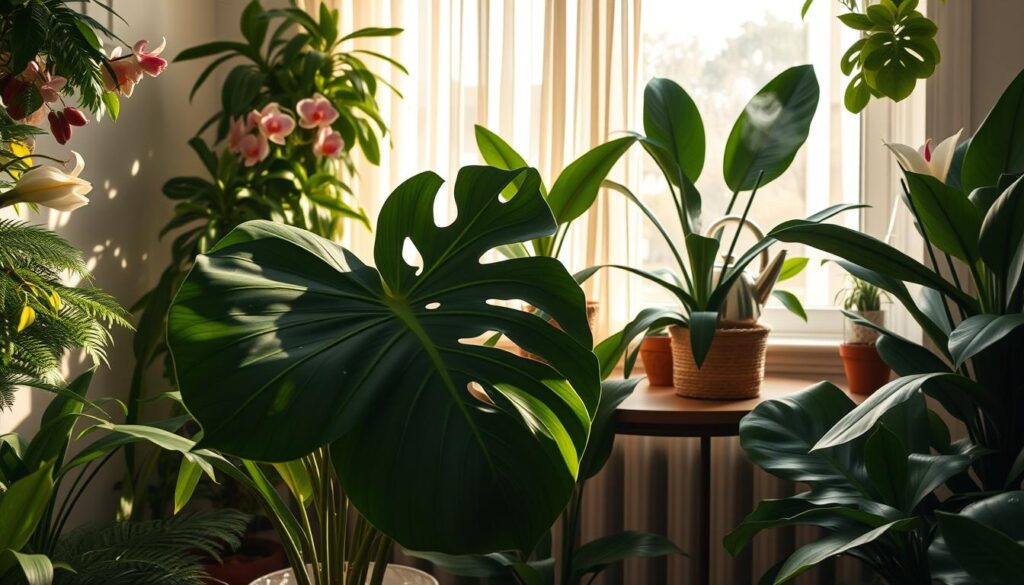
Increasing humidity for indoor plants doesn’t need special gear. Your home has many humid spots perfect for tropical plants.
Bathrooms and kitchens are great for plants. They get humid from daily tasks like showering, cooking, and washing dishes. Placing plants here can make these areas lush and green.
Choose plants that love humid air for these rooms. Boston ferns, orchids, pothos, and peace lilies do well in bathrooms. Herbs and small tropical plants are great for kitchens.
Think about light when placing plants. Not all bathrooms get enough sunlight. You might need to:
Watch out for mold or too much moisture. Make sure there’s good air flow. Check your plants for fungal signs or wet soil.
Tropical plants often face low humidity in winter. Mini greenhouses are a great way to boost humidity and protect them. These spaces keep moisture levels high, which tropical plants need.
Mini greenhouses come in many forms, each with its own benefits. You can turn everyday items into mini greenhouses. This helps keep your plants’ humidity levels up with little effort.
When picking a container, consider these options:
Creating the right environment is key. Your mini greenhouse should have 70-90% humidity. It should also prevent fungal growth.
By following these tips, you can create a cozy space for your tropical plants. This helps them thrive in winter. Remember, each plant is different, so watch and adjust as needed.
Winter brings a need for smart care for your houseplants. They need extra attention as growth slows and the weather gets colder.
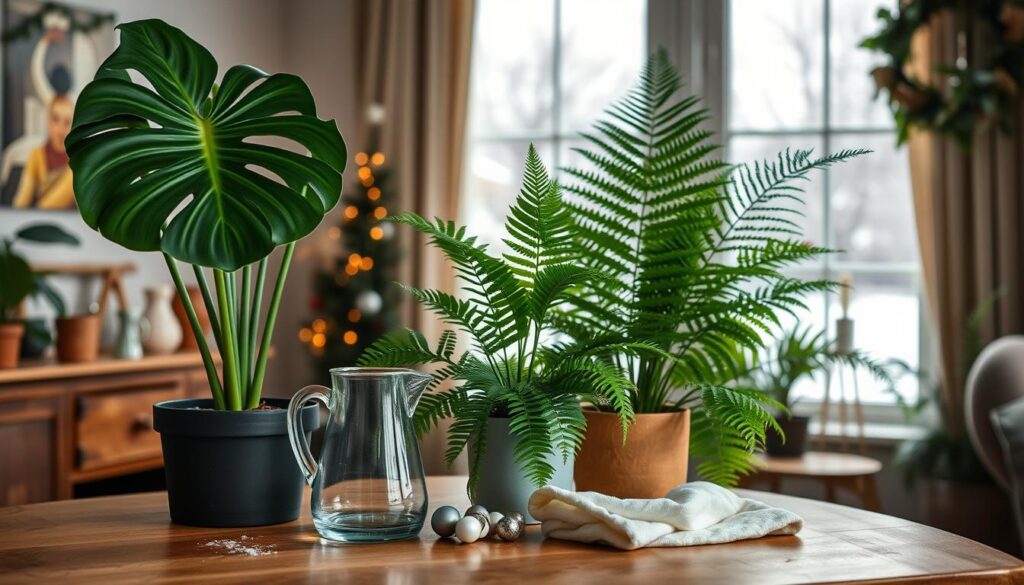
Watering is key in winter’s dry air. Unlike summer, you can’t just water them often. Here’s how to do it right:
Cleaning your plants is important too. Dust can block light and attract pests. So, clean them regularly:
Don’t forget about fertilizing in winter. Hold off on feeding during dormant months to avoid weak growth and root damage.
| Plant Type | Winter Watering Frequency | Cleaning Method |
|---|---|---|
| Tropical Plants | Every 10-14 days | Damp cloth wipe |
| Succulents | Every 3-4 weeks | Minimal cleaning |
| Ferns | Weekly | Gentle misting |
With these tips, your houseplants will make it through winter just fine.
Keeping your tropical plants healthy during dry winter months is easy. Just a few simple steps can make a big difference. It’s all about knowing what your plants need and tailoring your approach.
Every tropical plant is different when it comes to humidity. You can try things like grouping plants, using pebble trays, or setting up mini greenhouses. Even just a couple of these methods can help a lot.
Keep a close eye on your plants as you try these methods. Look for signs like less browning, new growth, and overall health. Learning how to increase humidity without a humidifier will make your plants strong and vibrant.
Winter care for plants is all about creating the right environment. Your efforts to manage humidity are not just about preventing damage. They’re about helping your plants thrive. With the right care, your plants will not only make it through winter but might even look better than before.