Physical Address
304 North Cardinal St.
Dorchester Center, MA 02124
Physical Address
304 North Cardinal St.
Dorchester Center, MA 02124

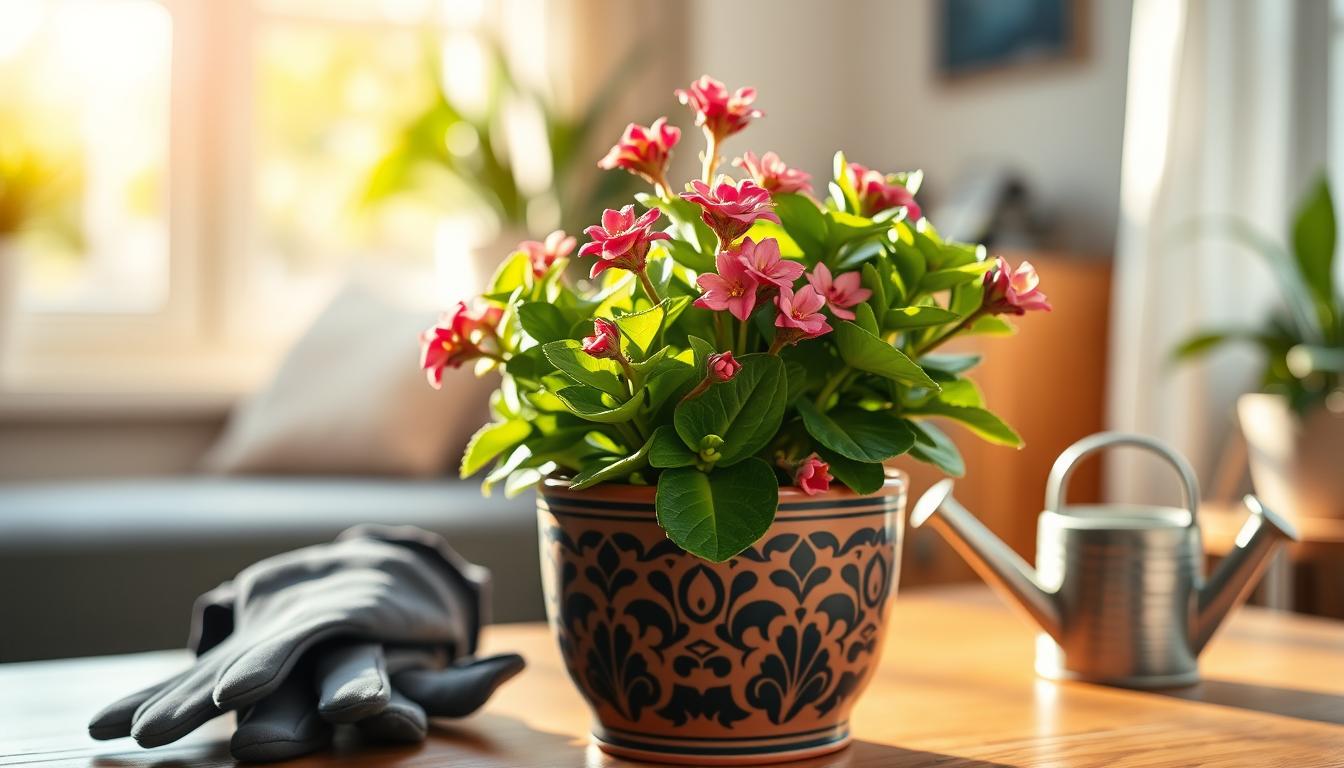
Before you think about propagation, you need to keep your gifted Kalanchoe alive and happy! Start with this essential post-holiday care guide.
Kalanchoe plant care begins now. That beautiful kalanchoe you got for the holidays is more than a decoration. It’s a living gift ready to brighten your space with color and life. Start your journey of caring for it here, turning it into a lasting friend for your home.
Don’t worry, taking care of a kalanchoe is easier than you think. These plants are forgiving, perfect for both experts and beginners. This guide will show you how to keep your plant happy and blooming long after the holidays.
Kalanchoes come from Madagascar and are more than just holiday cheer. With the right care, they can become a beautiful, easy-to-care-for part of your indoor garden. They can bloom many times, bringing joy to your home all year round.
Explore the enchanting world of the kalanchoe plant. It’s a colorful succulent that’s easy to care for. These plants are not just ordinary houseplants. They have a rich history and special traits.
Your kalanchoe plant is unique among houseplants. It has:
The blooming kalanchoe plant has stunning flowers. They come in bright colors like red, orange, pink, white, and bi-colors. These flowers can last for weeks or months, adding beauty to your home.
Kalanchoe plants are a favorite gift for good reasons. Nurseries grow them to bloom during holidays. This makes them a perfect gift for anyone.
They are easy to care for. This makes them great for both beginners and experienced plant lovers.
Fun Fact: Kalanchoe even traveled to space in 1979 on the Soviet Salyut 1 space station, where cosmonauts nicknamed it the “Life Tree” for its uplifting presence!
Getting a kalanchoe plant as a gift means you’ll have a colorful friend. It will brighten your space with little effort.
Learning how to care for kalanchoe plants starts with knowing their light needs. These plants do best with the right amount of light. This is key for their health and to make them bloom.
Your kalanchoe needs 6-8 hours of bright, indirect light every day. The best spot is near south- or west-facing windows. This way, your plant gets enough light without getting burned.
It’s important to know when your plant is stressed from light. If it stretches or looks pale, it needs more light. Indoor spaces can make it hard for plants to grow well, so keep an eye on your plant.
| Light Condition | Plant Response |
|---|---|
| Bright, Indirect Light | Compact Growth, Healthy Foliage |
| Low Light | Leggy Stems, Sparse Leaves |
| Direct Sunlight | Leaf Burn, Potential Damage |
If you don’t have enough natural light, full-spectrum grow lights are a great option. These lights act like real sunlight. They help your kalanchoe grow strong and healthy all year round.
Learning how to care for a kalanchoe plant starts with understanding its unique watering needs. These succulent plants are different from typical houseplants. They require a specialized approach to hydration.
Kalanchoe plants store water in their leaves and stems. This makes them incredibly drought-resistant. They prefer less water than most indoor plants. Your goal is to mimic their natural desert-like environment.
Recognizing your kalanchoe’s water stress is crucial. Watch for these key indicators:
To successfully care for your kalanchoe, follow these watering guidelines:
“When it comes to kalanchoe, less water is more!” – Plant Care Experts
Remember that your plant’s water needs might change seasonally. Always observe your kalanchoe’s specific conditions. Adjust your watering routine accordingly.
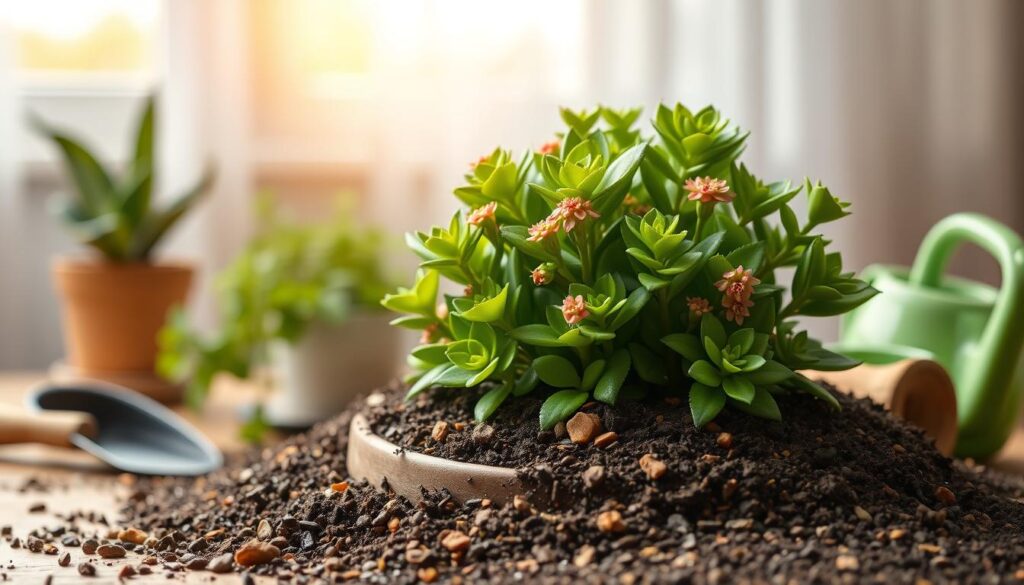
Choosing the right soil and pot is key for your kalanchoe’s health. This plant needs special care to live beyond the holiday season. Knowing what soil and container it needs is the first step.
Drainage is crucial for your kalanchoe. These plants don’t like waterlogged soil, which can cause root rot. You should aim to create a dry environment, like their natural habitat.
If you like making your own soil mix, here’s a recipe:
“The right soil is like a comfortable home for your kalanchoe – it provides support, nutrition, and breathing room.” – Plant Care Experts
Repotting your kalanchoe every 1-2 years is a good idea. It refreshes the soil and prevents it from getting too dense. When you get a new pot, make sure it’s only a bit bigger than the old one. This helps the plant’s roots adjust smoothly.
To care for your kalanchoe plant, you need to know its temperature and humidity needs. These plants love warm, stable conditions, which are common in homes.
Kalanchoes do best in temperatures between 60-80°F (16-27°C). This makes them great for indoor spaces. They’re easy to care for, unlike some other houseplants.
To keep your kalanchoe happy, place it in a safe spot. Avoid areas with:
When it gets cold, move outdoor kalanchoes inside fast. Their native Madagascar shows they like warm, steady temperatures.
| Temperature Zone | Kalanchoe Response |
|---|---|
| 60-80°F (16-27°C) | Optimal Growth Conditions |
| 50-59°F (10-15°C) | Potential Stress Signals |
| Below 50°F (10°C) | Risk of Damage |
Kalanchoes don’t need much moisture. They thrive in the dry air found in most homes. This makes them a low-maintenance choice for indoor plants.
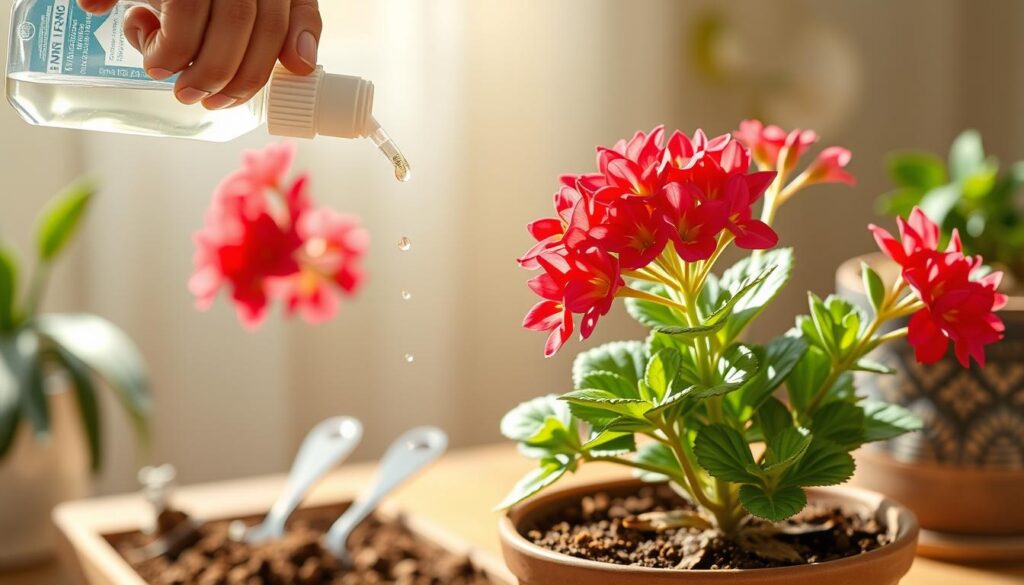
After your holiday kalanchoe plant finishes blooming, it’s time to think about fertilizing. This step is key to keeping your plant healthy and ready for more flowers. Kalanchoe plants are easy to care for when it comes to food.
Don’t overdo it with the fertilizer. Your kalanchoe needs a little bit of food now and then. Here’s what you should know:
When picking a fertilizer, think about organic options. These give your plant slow-release nutrients:
| Fertilizer Type | Benefits | Application Frequency |
|---|---|---|
| Worm Castings | Gentle, natural nutrition | Once per spring |
| Compost Top Dressing | Improves soil structure | Annually |
| Seaweed Extract | Mineral-rich liquid supplement | Occasional warm-month watering |
Don’t over-fertilize your kalanchoe. The time after it blooms is for it to rest. A little bit of food helps it grow well without getting stressed. Watch for signs like salt buildup or leaf tip burn. These mean you need to change how you fertilize.
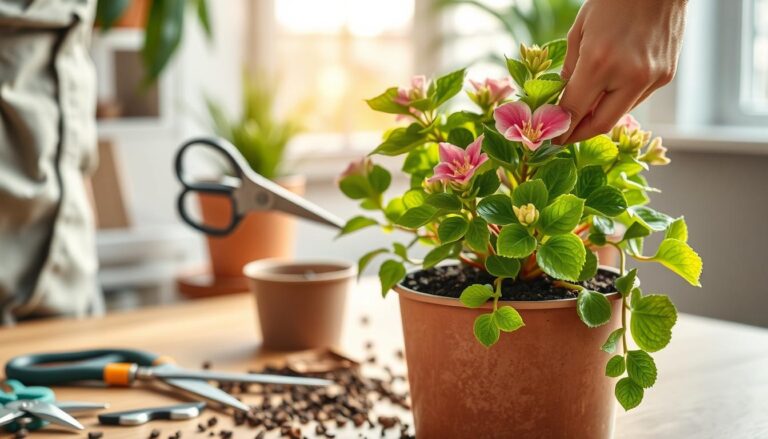
Caring for a kalanchoe plant means cutting it right to keep it looking good. This helps your plant stay healthy and saves energy on dead flowers.
Learning how to prune your kalanchoe is key. It keeps your plant looking great and growing strong.
Deadheading is a must for kalanchoe care. Here’s what to do:
Leggy stems can make your kalanchoe look sparse. Here’s how to fix it:
By using these pruning tips, your kalanchoe will stay compact and bloom all year.
Getting your kalanchoe to bloom again can be a fun challenge. These plants need special care to grow more flowers.
The key to reblooming kalanchoes is knowing their light needs. They are photoperiodic, needing specific light to bloom again.
To rebloom your kalanchoe, create a fake winter. Put it in a dark spot every night, like:
| Reblooming Phase | Light Conditions | Watering |
|---|---|---|
| Dark Period | 14 hours complete darkness | Reduced frequency |
| Light Period | 10 hours bright indirect light | Normal watering |
Being consistent is crucial for reblooming. Follow the schedule closely, without any light breaks. With patience and care, you’ll see new flowers soon.
Kalanchoe plant care can sometimes present challenges, but with the right knowledge, you can keep your plant healthy and thriving. Understanding potential issues helps you address them quickly and effectively.
Even the most well-maintained kalanchoe can encounter problems. Recognizing early signs of distress is crucial for successful plant care.
Pests can compromise your kalanchoe’s health. Watch for these common invaders:
When dealing with pest infestations, quick action is essential. Neem oil and insecticidal soap are effective treatments. Gently wipe leaves with alcohol-soaked cotton swabs to remove small pest populations.
Yellowing leaves can signal various issues in kalanchoe plant care:
| Symptom | Possible Cause | Recommended Action |
|---|---|---|
| Soft, pale yellow leaves | Overwatering | Reduce watering frequency |
| Yellow leaves with brown edges | Underwatering | Increase watering |
| Overall pale color | Insufficient light or nutrients | Adjust light exposure and fertilize |
“Prevention is always better than cure in plant care.” – Gardening Wisdom
Regular inspection and proper kalanchoe plant care can prevent most common problems. Pay attention to your plant’s environment, water carefully, and provide adequate light to maintain its health.
Your kalanchoe gift plant is more than a holiday decoration. With the right care, it can become a lasting indoor friend. Understanding its needs and keeping care consistent all year is key.
Patience is important when caring for your kalanchoe. These succulents are quite forgiving. By following the care tips, your plant will bloom and grow for years.
Every care step, from light and water to soil and temperature, is crucial. Don’t worry about occasional problems. Most can be fixed with a little attention and adjustment to your care routine.
Your kalanchoe is now a beautiful addition to your home. Enjoy the journey of caring for it. Your efforts will be rewarded with stunning flowers and growth for years.