Physical Address
304 North Cardinal St.
Dorchester Center, MA 02124
Physical Address
304 North Cardinal St.
Dorchester Center, MA 02124

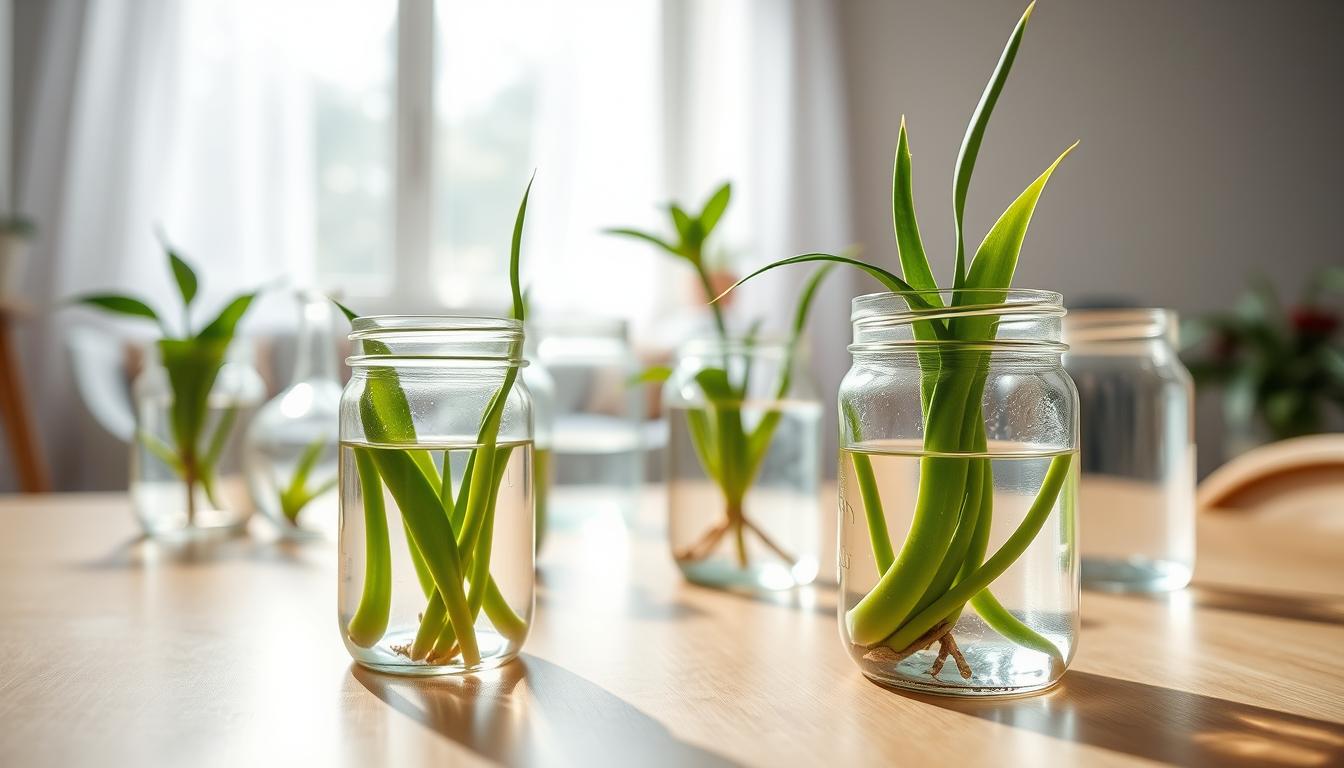
Propagating snake plant in water can multiply your collection. Ever looked at your houseplants and wished for more? Water propagation is your magic trick. I turned one snake plant into a lush indoor garden. It showed me how easy it is to grow more plants.
Snake plants are top picks for water propagation. They’re tough and let you grow more plants easily. Whether you’re new to gardening or not, you can multiply your plants with water.
This guide will show you how to grow snake plants in water. Plus, four other plants that are just as easy. You’ll learn simple steps that make caring for plants fun and rewarding.
Snake plant water propagation is a thrilling chance for plant lovers, especially beginners. These Sansevieria plants are top picks for easy care. They’re perfect for starting with plant propagation.
Snake plants are known for their toughness. They do well with little care. This makes them great for those new to plants.
Snake plants are amazing at surviving. They have special traits like:
“Snake plants are the ultimate survivors in the plant kingdom” – Plant Enthusiast Magazine
Starting with snake plant water propagation is easy. They can handle mistakes and grow strong roots. They do well in different conditions.
| Plant Characteristic | Benefit for Propagation |
|---|---|
| Root Development | Quick and consistent |
| Stress Tolerance | High resilience during propagation |
| Light Requirements | Adaptable to multiple light conditions |
Starting your plant propagation journey with snake plants is less scary. Their strong nature helps beginners succeed.
Water propagation is a fun and easy way to grow more snake plants. It’s perfect for beginners and experienced gardeners alike. Learning how to do it can be very rewarding.
Choosing the right leaf is key for success. Pick a mature, healthy leaf without any damage. Use sharp shears to cut it near the soil line, at an angle. This helps the roots grow better.
Preparing your cutting is easy. Unlike other methods, snake plants don’t need special treatments. No rooting hormones or special solutions are needed. Just make sure to keep things clean.
Put your cutting in a clear glass container, with about 25% of the leaf in water. Place it in bright, indirect sunlight. Too much sunlight can hurt it, while not enough can slow it down.
Water propagation for snake plants takes patience. Roots should appear in 2-8 weeks, depending on the environment. Keep an eye on it and watch your new plant grow!
Starting snake plant water propagation requires patience. Knowing the rooting timeline is key for success. Snake plant root growth has its own pace, different from many houseplants.
The time it takes for snake plant roots to grow depends on several factors:
In the best conditions, you might see the first root signs in 6-8 weeks.
“Patience is key when propagating snake plants,” say experienced plant enthusiasts.
Snake plant propagation is slower than many houseplants. So, you need to keep up consistent care without expecting quick results.
Watching how long snake plant roots take to grow needs careful watching. You’ll first see small white bumps or nodes at the cutting base. These roots will grow longer over time. Remember, slow growth is normal for snake plants.
Here are some tips for successful root growth:
Your snake plant cutting will thank you with a strong root system. This is ready for soil or continued water growth.
Pothos is a top pick for easy houseplants to propagate in water. It’s simple to grow and perfect for beginners.
Pothos is known for being easy to propagate in water. It grows roots fast and is tough, making it great for indoor plants.
To start with pothos water propagation, just follow these steps:
Roots on pothos grow fast. You’ll see roots in 1-2 weeks. This makes it a quick and fun process.
When roots are 2-3 inches long, it’s time to move to soil. Here’s how:
“Pothos is the ultimate beginner’s plant for water propagation” – Plant Enthusiast Magazine
Pothos is a great choice for beginners. It’s easy to propagate and helps grow your indoor garden with little effort.
Philodendrons are great for water propagation, making them a favorite among houseplant lovers. They include popular types like Heartleaf Philodendron, Brasil, and Micans. These plants root easily in water.
To start your philodendron water propagation journey, follow these simple steps:
Your philodendron cutting will thrive in bright, indirect light. Patience is key – you’ll typically see root development within 7-14 days. Keep an eye on your water, changing it every 5-7 days to maintain oxygen levels and prevent bacterial growth.
Pro tip for successful houseplant cuttings in water: Position your philodendron in a spot with consistent temperature and indirect sunlight. Yellow leaves might indicate too much direct sun or stale water, so adjust accordingly.
Once roots reach several inches long, you can choose to keep your philodendron in water as a decorative display or transfer it to soil for continued growth. This flexibility makes philodendrons an excellent option for both novice and experienced plant propagators.
Spider plants are easy to propagate in water, making them great for beginners and experts alike. They produce cute spider plant babies that root quickly. This turns your home into a fun place for growing plants.
Spider plantlets can also be rooted in water before potting! For a full tour of the easiest water-propagated plants, see this guide featuring Snake Plants and more.
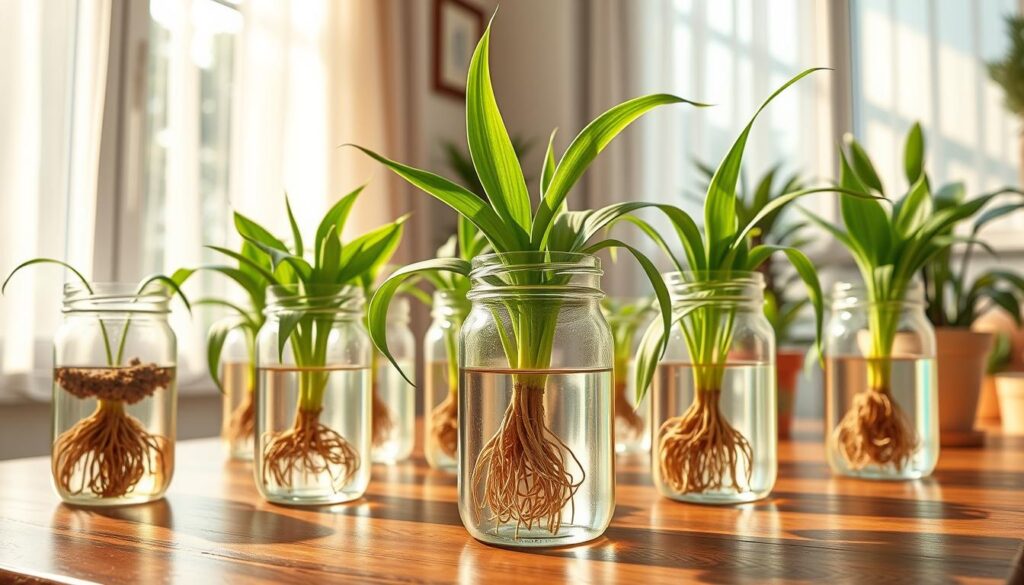
Propagating spider plant pups is fun and easy. These plants naturally grow small offsets called “babies.” These babies can become their own plants in just a few steps.
There are two main ways to remove pups from spider plants:
First, find a healthy spider plant baby with small roots. Then, carefully remove the pup. Make sure to keep any roots intact.
Water propagation of spider plant babies needs special care. Put your pups in a container with clean, filtered water. Place the container near a bright window but not in direct sunlight.
Roots will grow in 7-10 days. This is when you should move your new spider plant to soil. Wait until the roots are 2-3 inches long before transplanting.
Lucky Bamboo is a top pick for growing in water, perfect for indoor plant fans. It’s not true bamboo but a Dracaena family member. It’s great for plants that live in water without soil.
This plant grows well in water, making it easy to care for. It fits well in many indoor spots, from offices to homes.
Here are some tips for growing lucky bamboo in water:
| Growing Condition | Recommended Practice |
|---|---|
| Water Type | Filtered or Distilled |
| Light Requirement | Bright Indirect Light |
| Water Change Frequency | Every 2-3 Weeks |
| Fertilization | Quarterly, Diluted Liquid Fertilizer |
Lucky Bamboo is a great start for those new to water plant growing. It’s easy to care for and adapts well to water environments.
Water propagation is a great way to grow new plants. But, there are pitfalls that can stop you. Knowing these mistakes helps you grow snake plants and other houseplants successfully.
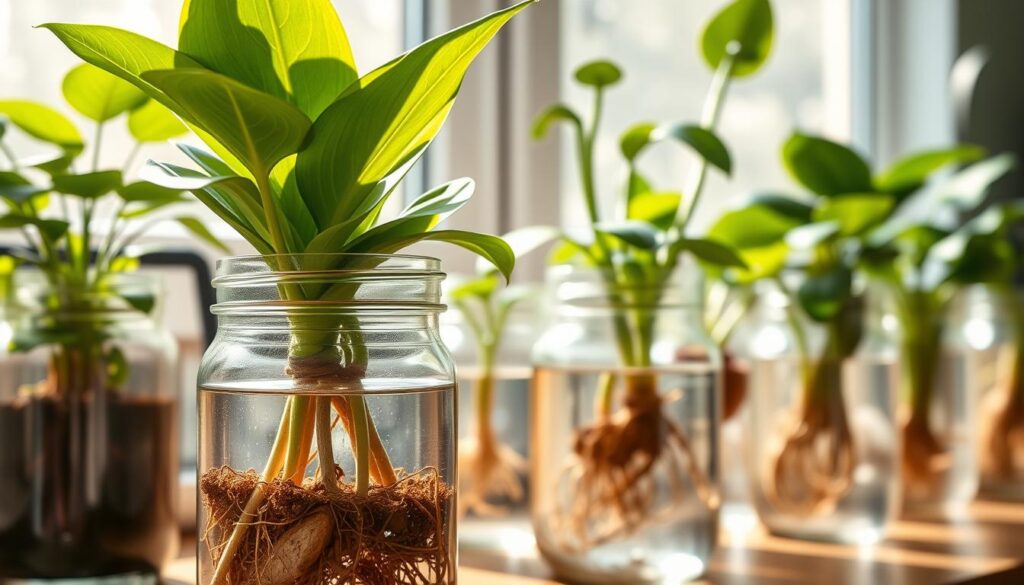
To master plant propagation, pay close attention to details. Be aware of potential challenges. The key is to keep growing conditions right and avoid common problems.
Root rot is a big risk in water propagation. It might seem odd, but plants can still get root problems in water. Look out for these signs:
To stop root rot, change your water every week and use clean containers. Use fresh, room-temperature water with good air flow. This keeps roots healthy during propagation.
Environmental factors are key for water propagation success. Too little light slows down root growth. Too much direct sunlight can harm cuttings.
By avoiding these water propagation mistakes, you boost your chances of growing new plants. This helps you grow your indoor garden.
When your snake plant is ready, it’s time to move it from water to soil. This step is crucial for your plant’s growth. You need to pay close attention to make sure it thrives in its new home.
Your plant is ready when its roots are about 2-3 inches long. Pick a pot that’s a bit bigger than your roots. The right soil is key for a smooth transition.
Water roots are thicker and whiter than soil roots. Be gentle when moving them to prevent damage. Fill the pot with soil, place the cutting, and cover the roots.
| Transition Stage | Care Instructions |
|---|---|
| First 2-3 weeks | Keep soil slightly more moist |
| Light conditions | Bright indirect light |
| Watering frequency | Allow partial soil drying between waterings |
Some yellowing of leaves is normal during this time. After 3-4 weeks, your plant will adjust. Patience is key in successful water to soil transition.
Water propagation is a fun way for plant lovers to grow their collection without spending money. You can start by propagating a snake plant in water or try other easy plants. This hobby turns plant care into a creative journey.
The five plants we looked at – Snake Plants, Pothos, Philodendrons, Spider Plants, and Lucky Bamboo – are great for beginners. They are easy to grow in water and are forgiving for new plant parents.
To start your plant propagation journey, you need patience, clean containers, and bright light. Make sure to change the water regularly. Remember, snake plants can take 6-8 weeks to grow roots. Success comes from knowing what each plant needs and caring for them gently.
Begin with a snake plant cutting to start your water propagation journey. This low-risk method will help you grow your collection and even give gifts to other plant lovers. Your green thumb is waiting to grow – one cutting at a time.