Physical Address
304 North Cardinal St.
Dorchester Center, MA 02124
Physical Address
304 North Cardinal St.
Dorchester Center, MA 02124
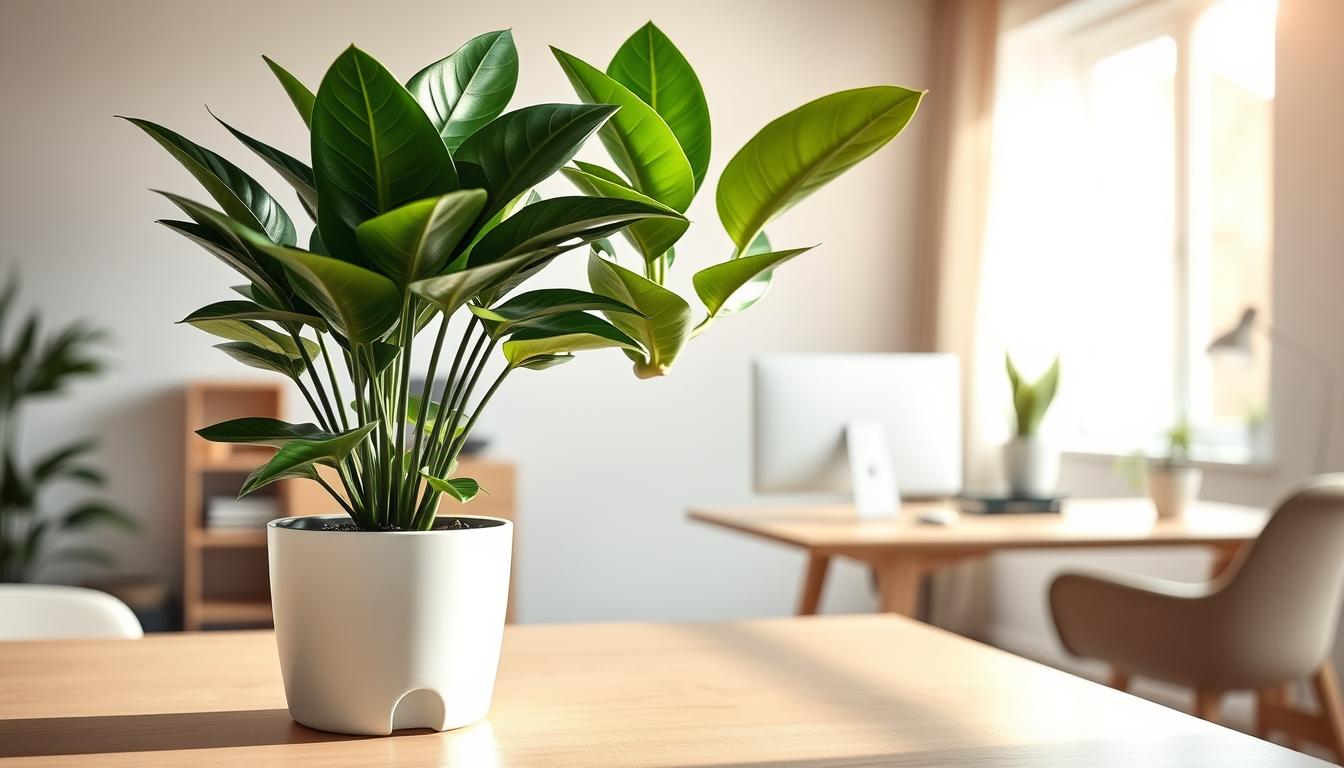
ZZ Plant Care is famously simple. Ever wished for a plant that thrives even when you’re busy or forgetful? The ZZ plant is your ideal companion. It brings beauty to any space with little effort, thanks to its stunning looks and tough nature.
Discovering how to care for your ZZ plant indoors is easy. Known as Zamioculcas zamiifolia, this plant is a game-changer for anyone who wants a low-maintenance green friend. It’s perfect for busy people, apartment dwellers, and anyone who loves plants but doesn’t have time to care for them.
The ZZ plant’s glossy, dark green leaves make it a joy to care for. Whether you’re new to plants or have been gardening for years, this guide will help you care for your ZZ plant with confidence.
The zz plant is known as the ultimate unkillable office plant for many reasons. It does well in places where other plants can’t, making it great for busy people and new plant owners.
So, what makes the ZZ plant stand out as a top office plant? Let’s look at its special survival traits:
The plant’s secret is its thick rhizomes. These underground water tanks help the ZZ plant go weeks without water. This makes it perfect for those who forget to water their plants.
Businesses love these plants because they add greenery without needing constant care. They look great in any office, from windowless cubicles to busy reception areas. With little effort, they keep their glossy, deep green look.
ZZ plants show that beautiful plants don’t need constant care. They just need the right survival strategy.
With this plant, your office can go from dull to lively. No need for a green thumb!
The ZZ plant comes from Eastern Africa, making it great for low light spaces. It has special ways to survive, perfect for indoor plants.
The ZZ plant grows in many places, from Kenya to South Africa. It thrives in:
The ZZ plant is very resilient. It has special traits for growing well in low light, with little care needed.
Its potato-like rhizomes store water. This lets it go without water for a long time. It’s great for offices where water is not always available.
The ZZ plant is part of the Araceae family, known for tough plants. Its leaves are smooth and waxy, protecting it from losing water.
It can even grow new plants from fallen leaves. This shows how well it can adapt to different places indoors.
After dealing with root rot, you might want a break. For a truly forgiving plant that’s hard to overwater, the ZZ Plant is your best bet.
Knowing what light your zz plant needs is key to keeping it healthy. These plants are great for places with little light, making them perfect for indoor spots.
ZZ plants do well in different light setups. But they really come alive in certain conditions. Here’s what they need to grow best:
Your ZZ plant can handle tough light situations. Windows facing north or east are ideal. Even in offices with little light, these plants stay green and healthy.
While they can handle low light, they grow slower. Turn your plant every month to keep it balanced. If leaves turn pale or yellow, they might need more light.
The ZZ plant’s ability to survive in low light makes it the ultimate survivor for indoor spaces with minimal natural illumination.
When placing your ZZ plant, indirect light is best. Avoid direct sunlight to prevent damage to the leaves. With the right light, your ZZ plant will be a beautiful, easy-to-care-for addition to your home.
Learning to care for a ZZ plant means understanding its unique watering needs. These plants are very forgiving when it comes to water. They have built-in survival tools.
The ZZ plant’s secret is its thick rhizomes. These act like natural water tanks. They help the plant survive long without water.
Remember, less water is better for your ZZ plant. Here’s a simple guide:
It’s important to know when your plant needs water. Here’s a quick guide:
| Overwatering Signs | Underwatering Signs |
|---|---|
| Yellow leaves | Slightly wrinkled leaves |
| Mushy stems | Droopy appearance |
| Root rot at base | Quick recovery after watering |
Pro tip: Make sure your ZZ plant has good drainage. It prefers dry conditions over wet soil.
To care for your ZZ plant indoors, you need to know about soil, temperature, and humidity. These elements must match the plant’s natural home for it to thrive.
Soil is key for a healthy ZZ plant. Pick a mix that drains well to avoid waterlogged roots. A good mix includes:
Temperature is also important. ZZ plants like temperatures between 65-85°F (18-29°C). Keep your plant away from:
Humidity is another factor. Luckily, ZZ plants are very flexible. They do well in the humidity found in most homes, between 30-60%. If your home is very dry, a little misting can help.
Pro tip: ZZ plants are remarkably forgiving, making them perfect for indoor environments with varying conditions.
Caring for your ZZ plant is easy. These plants are hardy and need little care. They are great for both new and experienced plant owners.
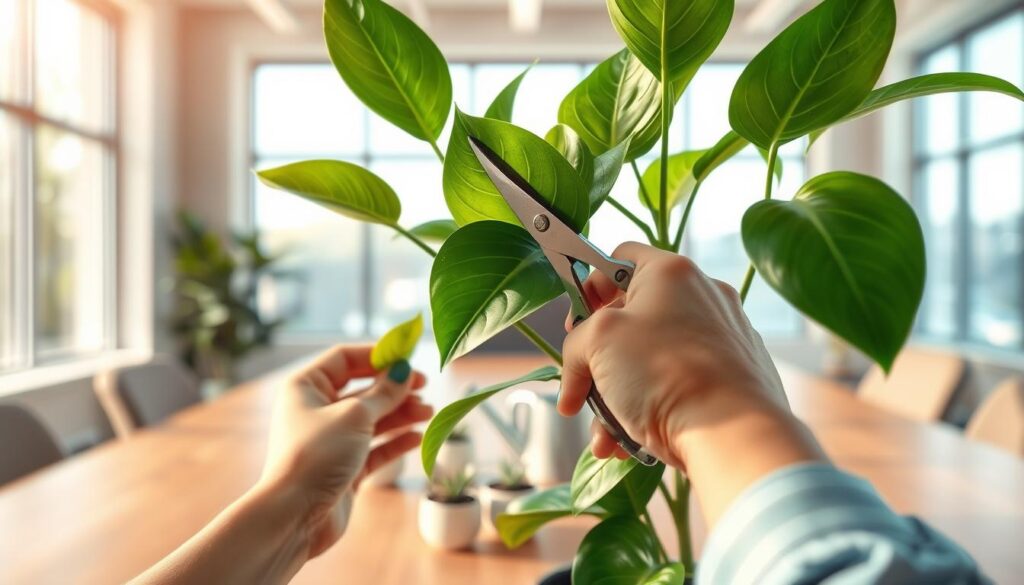
Feeding and grooming your ZZ plant right is important. It keeps your plant healthy and looking good. Knowing how to fertilize and clean is key.
ZZ plants don’t need a lot of food. This makes them very easy to care for. Here are some tips for fertilizing:
| Season | Fertilization Frequency |
|---|---|
| Spring/Summer | Every 4-6 weeks |
| Fall/Winter | No fertilization needed |
Keeping your ZZ plant shiny is easy. Dust can block photosynthesis, so cleaning is important:
By following these tips, your ZZ plant will stay beautiful and easy to care for.
When picking a zz plant for your office, you’ll find two amazing varieties. The classic green ZZ plant and the striking Black Raven offer different looks. Yet, they both need the same easy care.
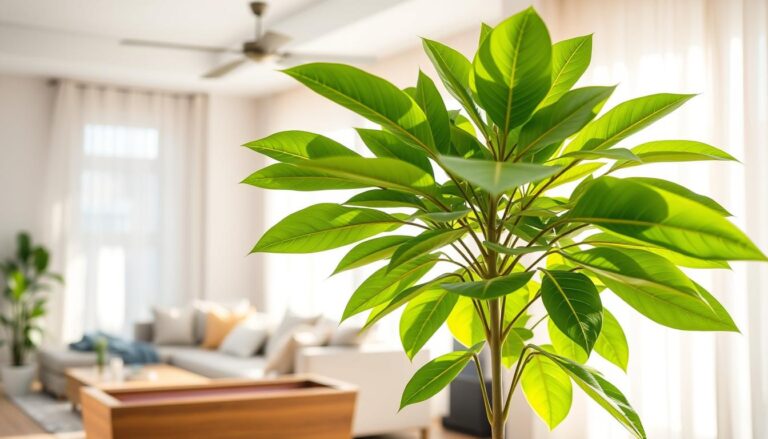
The classic ZZ plant has upright, glossy green leaves. These leaves symbolize prosperity and endurance. It’s a top choice for office plants because it’s easy to care for.
| Variety | Leaf Color | Growth Habit | Best Space |
|---|---|---|---|
| Classic Green ZZ | Bright Green | Upright, Structured | Large Offices |
| Black Raven ZZ | Dark Purple-Black | Compact, Dramatic | Modern Workspaces |
The Black Raven ZZ has a bold look. Its leaves start green and turn deep purple-black as they grow. This rare plant adds a unique touch to modern offices.
“The right ZZ plant can transform your workspace from mundane to magnificent.” – Plant Design Expert
Choosing the classic green or the Black Raven will add style and elegance to your office. Both plants are resilient and easy to care for.
Even the toughest office plants can face issues. Your ZZ plant might show stress signs, but most problems are fixable. Just know the right steps to take.
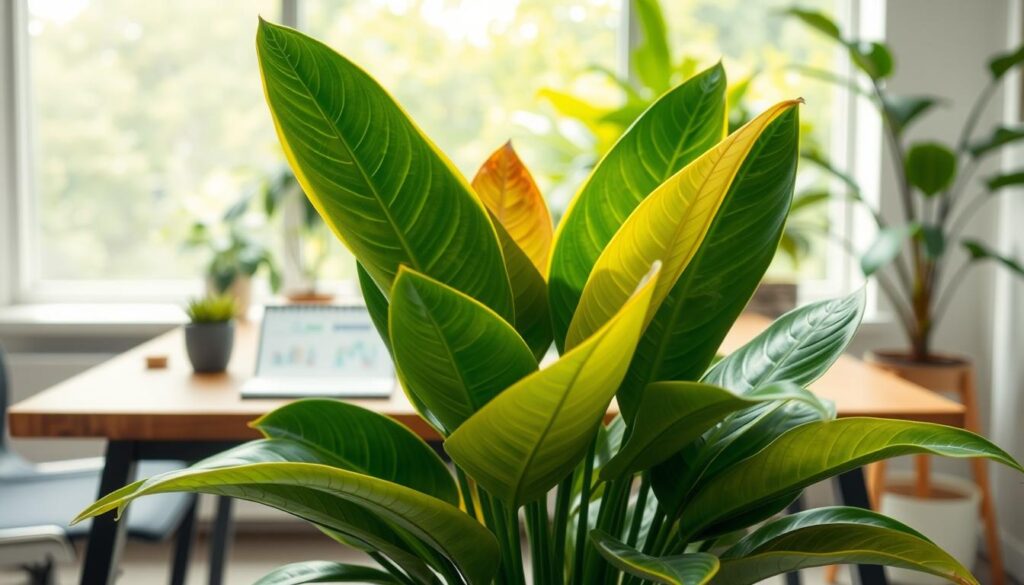
Knowing the warning signs is key to keeping your plant healthy. Let’s look at common problems and how to solve them.
Yellow leaves usually mean you’ve watered too much. ZZ plants like dry soil and can rot in wet conditions. Here’s how to fix it:
ZZ plants are tough, but pests and slow growth can happen. Mealybugs and spider mites might show up, especially if your plant is stressed.
Slow growth can come from too little light or not enough food. Move your plant to a brighter spot and fertilize lightly during the growing season. This will help it grow well.
Your journey with ZZ plants is more than just adding a houseplant. These plants are perfect for spaces that are hard for other plants. They need very little care, making any room lively and green.
The ZZ plant is great for busy people and beginners. It can handle dim corners and infrequent water. This makes it a stress-free choice for anyone.
ZZ plants add beauty and clean air to your space easily. Their shiny leaves make any area look better. With simple care, you can enjoy a thriving plant that inspires.
Begin your ZZ plant journey today. This low-maintenance plant is waiting to brighten your space. It’s a mix of beauty and durability.