Physical Address
304 North Cardinal St.
Dorchester Center, MA 02124
Physical Address
304 North Cardinal St.
Dorchester Center, MA 02124

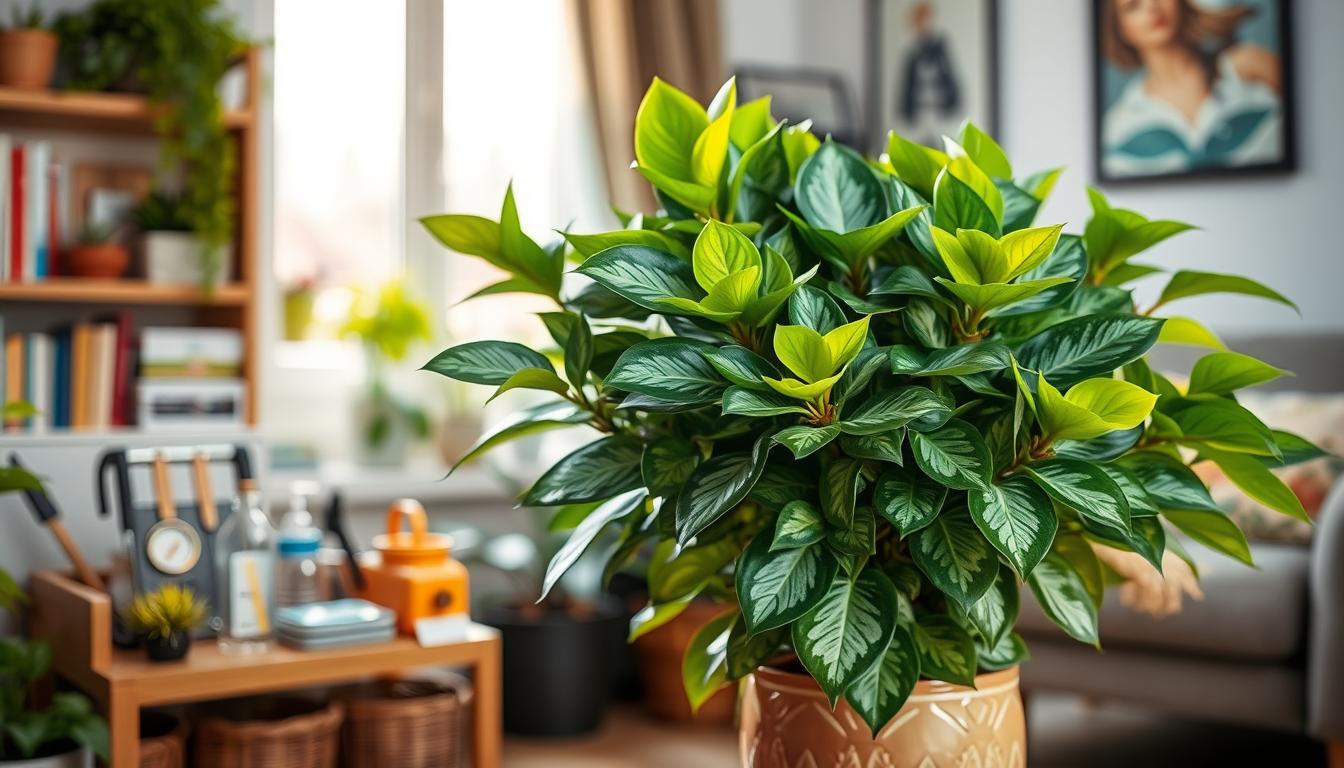
Chinese evergreen care is wonderfully simple. Ever dreamed of adding lush greenery to your home without stress? Chinese Evergreens might be your perfect match. These plants bring vibrant colors and tropical vibes to your space with little effort.
Both indoor plant lovers and beginners adore Chinese Evergreens. They’re known for their adaptability and beautiful leaves. These plants can brighten up any room, whether it’s bright or dim.
Chinese Evergreen plants, also known as Aglaonema, are popular indoor friends. They add color and are easy to care for in homes across the U.S. These plants come from the green floors of Southeast Asia, where they love filtered light and humid air.
These plants are loved for their ability to adapt to indoor life. With colors like Silver Queen, Red Siam, and Diamond Bay, they turn homes into mini tropical paradises.
Chinese Evergreens come from places like Thailand, Indonesia, and the Philippines. They grew up in dense forests. This is why they prefer indirect light and can handle low light well.
The Chinese Evergreen has many varieties with unique colors. From Silver Bay’s green streaks to Lady Valentine’s pink splashes, each one is special.
| Variety | Color Characteristics | Visual Appeal |
|---|---|---|
| White Joy | Creamy white with green halo | Bright and elegant |
| Maria | Dark green with silver splotches | Sophisticated and mysterious |
| Tricolor | Three shades of green camouflage | Bold and dynamic |
| Lemon Mint | Silver blotches with green and yellow veining | Fresh and vibrant |
Each Chinese Evergreen variety adds its own charm to your home. They are great decorative plants that fit many styles.
Chinese Evergreen plants add stunning colors and patterns to your home. Each variety has unique traits that can change your home’s look. They also clean the air well.
Let’s look at some amazing Chinese Evergreen varieties:
For unique foliage, check out these varieties:
Choose a Chinese Evergreen based on your home’s light. Some types, like the common variety, do well in bathrooms and low light. Others need more indirect light to stay colorful.
Chinese Evergreen plants are great for indoor spaces because they can handle different light levels. Knowing what light they need helps keep them healthy and looking good in your home or office.
Most Chinese Evergreen plants can do well in low light. This is perfect for places with little natural light, like bathrooms or offices. They stand out because they can handle low light better than many other plants.
Each Chinese Evergreen variety likes a bit different light. Here’s a quick guide to their light needs:
Direct sunlight can hurt Chinese Evergreens. It can damage their leaves badly.
| Light Condition | Plant Response |
|---|---|
| Direct Sunlight | Leaf Burn, Discoloration |
| Bright Indirect Light | Optimal Growth, Vibrant Foliage |
| Low Indirect Light | Slower Growth, Maintained Health |
To keep your Chinese Evergreen safe, put it near a window with filtered light. Or use sheer curtains to soften direct sunlight. Watch for signs like leaf discoloration or crispy edges. These mean your plant needs different lighting.
Learning how to water your Chinese Evergreen is key to its health. It’s important to know how much water it needs. This can change based on several things like the environment.
To figure out when to water, try the finger test. Stick your finger into the soil up to your second knuckle. If it’s dry, it’s time to water. If it’s still moist, wait a bit longer and check again.
Seasonal changes affect how often you should water. In spring and summer, water about once a week. But in winter, when it’s dormant, you might only need to water every 10-14 days or even less.
Pay attention to your plant’s signs:
If you’re unsure, it’s better to water less than too much. Your home’s temperature, humidity, and light affect how fast the soil dries. Watch your plant and adjust as needed.
To keep your Chinese Evergreen happy, you need to focus on temperature and humidity. These plants love warm, moist air, just like their home in the tropics.
While tolerant of average humidity, Chinese Evergreens (especially variegated ones) truly thrive with a boost. See how happy they can be!
Your Chinese Evergreen grows best in temperatures between 65-80°F. If it gets colder than 60°F, it can get damaged. Make sure it stays above 55°F to keep it safe.
Chinese Evergreens like air that’s a bit moist, with humidity between 60-70%. But they can handle lower humidity too. If you live in a dry area, you might need to add more moisture.
Pro tip: A continuous mister or small humidifier is best for keeping the air moist, especially in dry places.
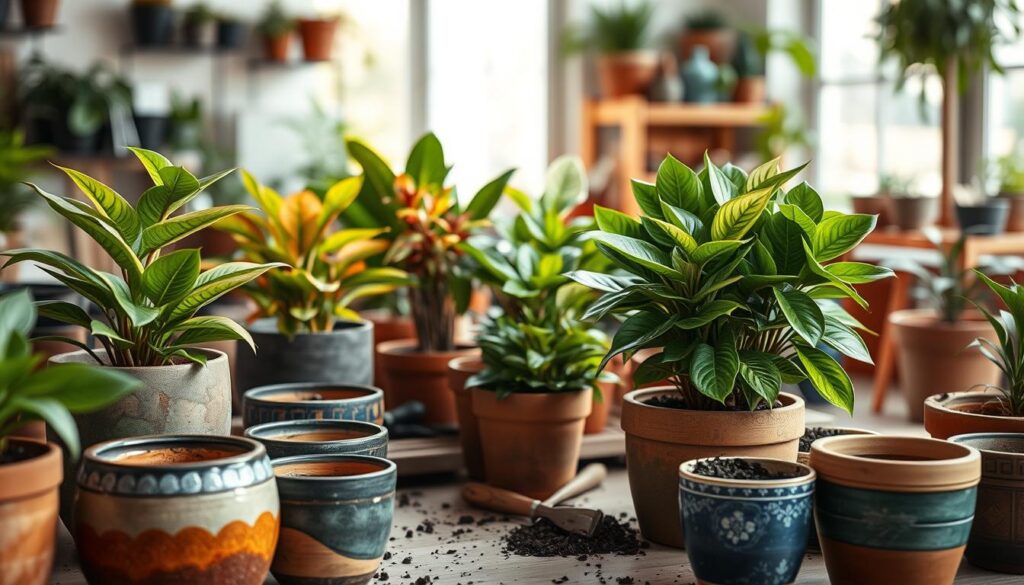
Choosing the right pot and soil is key for your Chinese Evergreen’s health. Its roots can rot in waterlogged soil. So, it’s important to have good drainage.
When picking a container, remember these important points:
The type of pot material matters a lot for plant care. Different materials hold moisture differently:
The soil mix is also crucial. Use a mix that drains well to avoid waterlogged roots. A blend of potting soil, perlite, and orchid bark is best. It helps with air and moisture balance.
Don’t choose pots that are too big. They can hold too much soil, leading to root rot. You want a space where your Chinese Evergreen can grow well without too much water.
Proper fertilization is key for healthy Chinese Evergreen plants. Knowing the right nutrients and when to feed them will help your Aglaonema thrive. It will also show off its stunning foliage.
Choosing the right fertilizer is crucial for Chinese Evergreen plants. Look for a balanced, water-soluble fertilizer. It should have equal parts nitrogen, phosphorus, and potassium (NPK).
Always water your plant well before fertilizing to avoid root burn. Dry soil can harm the roots. In the growing season (spring and summer), fertilize once a month with a diluted solution.
| Season | Fertilization Frequency | Fertilizer Strength |
|---|---|---|
| Spring/Summer | Monthly | Half-strength |
| Fall/Winter | Reduce or Stop | No fertilization |
Watch for signs of over-fertilization. Look for brown leaf tips and edges, white crusty deposits, or stunted growth. If you see these signs, flush excess salts by running water through the pot several times.
Pro Tip: Less is more when fertilizing Chinese Evergreen plants. It’s better to under-fertilize than to risk damaging your plant’s delicate root system.
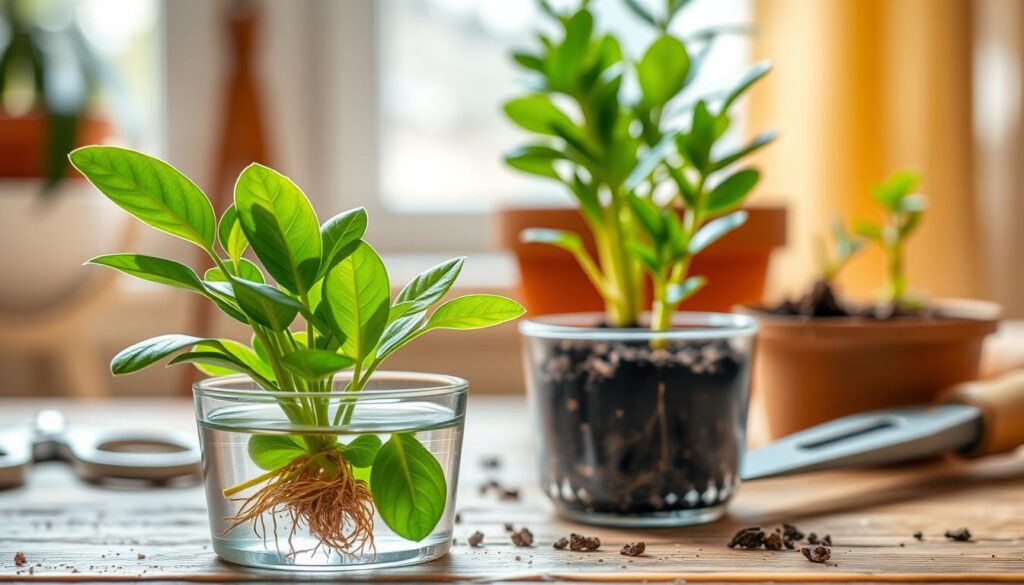
Repotting your Chinese Evergreen is key to keeping it healthy and vibrant. Look for signs like roots growing out of the pot or water draining quickly. These are clear indicators it’s time for a new home.
Here’s how to repot your Chinese Evergreen:
There are two main ways to multiply your Chinese Evergreen. Division is best in summer when it’s warm. Carefully separate root clumps by following these steps:
Stem cutting is another great way to multiply your plant. Cut a stem several inches long with a sharp tool. Place it in water with indirect sunlight. Roots will grow in 3-4 weeks. Once they’re 1-2 inches long, move the cutting to a pot with good drainage and keep it moist.
Tip: Chinese Evergreens like being slightly rootbound. So, choose a pot only 1-2 inches bigger than the current one when repotting.
Keeping your Chinese Evergreen healthy means knowing about common problems. Pests and leaf issues can harm your plant. But, with the right care and quick action, you can keep your plant thriving.
Act fast if you find pests. Isolate the plant to stop the spread. Here’s how to treat:
Leaf color changes are important health signs for your Chinese Evergreen:
| Leaf Color | Potential Causes | Recommended Action |
|---|---|---|
| Yellow | Overwatering/Underwatering | Adjust watering schedule |
| Brown Tips | Low humidity | Increase humidity levels |
| Crispy Brown | Direct sunlight exposure | Move to indirect light |
Root rot can happen from too much water. Remove the plant, check the roots, cut out damaged parts, and repot in fresh soil. Proper watering is key to avoid future problems.
Maintaining your Chinese Evergreen is key. It involves pruning and cleaning. These steps enhance the plant’s look, prevent pests, and boost new growth.
When pruning, only remove dead or dying leaves. Don’t cut leaves with small damage. Chinese Evergreens can grow leggy, looking sparse.
Pruning helps your plant grow fuller. Cutting stems below nodes encourages new shoots. Prune in spring or early summer for best results.
Leaf cleaning is vital. Dust blocks light and harms photosynthesis. Here’s how to clean:
| Maintenance Task | Frequency | Benefits |
|---|---|---|
| Pruning | Spring/Early Summer | Encourages bushier growth |
| Leaf Cleaning | Every few weeks | Improves photosynthesis |
| Plant Rotation | During watering | Ensures even light exposure |
Older plants may have small flowers like Calla Lilies. Many remove these to focus on foliage. Rotate your plant to ensure even growth and prevent leaning.
These easy tasks keep your Chinese Evergreen looking great for years.
Caring for Chinese Evergreens is an exciting journey. These plants thrive in low light, unlike many others. They also tolerate drought, forgiving you if you forget to water sometimes.
Understanding their needs is key to success. The Aglaonema genus offers stunning foliage that adds tropical beauty to any room. You can find everything from classic silver-and-green to bold pink and red varieties.
Remember, observing your plant is crucial. Watch how it reacts to different environments and adjust care as needed. These plants are forgiving and adapt well to various homes, perfect for both beginners and experienced collectors.
Growing Chinese Evergreens is about enjoying the journey. With what you’ve learned, you can confidently care for these plants. Watch them grow and maybe even share them with friends. Your indoor garden will become a vibrant, colorful space with little effort.