Physical Address
304 North Cardinal St.
Dorchester Center, MA 02124
Physical Address
304 North Cardinal St.
Dorchester Center, MA 02124

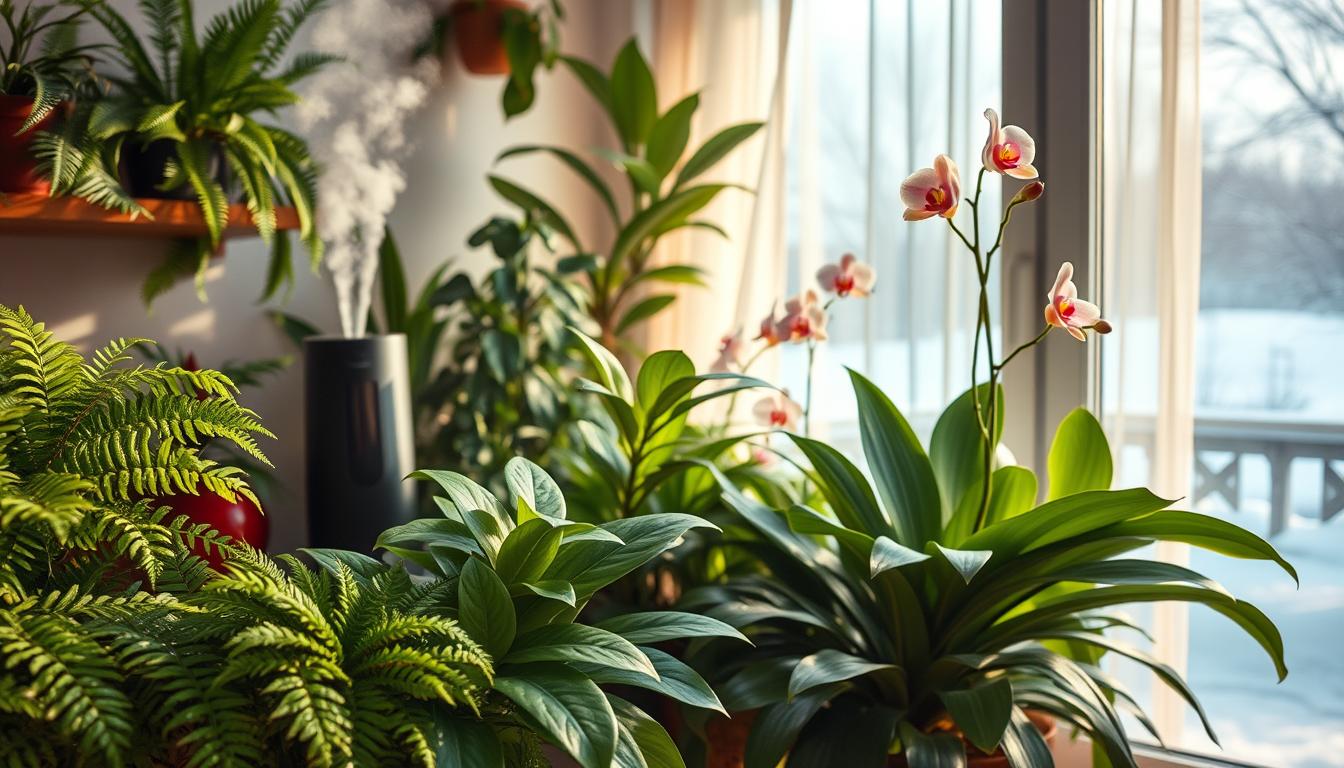
The quick answer: most tropical houseplants want 50–60% humidity, but winter heating can drop indoor air to 20–30%. You can close that gap without expensive gear by grouping plants, using pebble trays, running a humidifier, and moving moisture-lovers into naturally humid rooms. Below are seven methods, ranked from easiest to most involved, with the trade-offs of each.
Most popular houseplants — monsteras, philodendrons, calatheas, ferns — evolved on humid rainforest floors where moisture rarely drops below 50%. Bring them into a heated home in winter and they hit a wall: warm air holds more water, so when a furnace heats cold outdoor air, relative humidity can fall toward 20–30%. That is closer to a desert than a jungle.
The result is slow, quiet stress rather than sudden collapse — which is exactly why it is easy to miss until leaves start browning.
If several symptoms overlap, it may not be humidity alone — our guide to why indoor plants die helps you rule out watering and light first.
| Method | Humidity boost | Cost | Effort | Best for |
|---|---|---|---|---|
| Group plants together | Low–Medium | Free | Low | Anyone with 3+ plants |
| Pebble tray | Low | $ | Low | Single specimens |
| Humidifier | High | $$ | Low | Whole rooms, larger collections |
| Move to a humid room | Medium–High | Free | Low | Bright bathrooms/kitchens |
| Cloche / terrarium | Very High | $–$$ | Medium | Small, delicate tropicals |
| Move away from heat/drafts | Preventive | Free | Low | Every plant |
| Adjust winter watering | Supporting | Free | Low | Every plant |
This is the cheapest fix and often the most underrated. Plants constantly release water vapor through their leaves (transpiration). Cluster several together and that shared vapor lingers around them, noticeably raising local humidity compared with a lone plant on an open shelf.
How to do it well:
Humidity-lovers that group well include Boston ferns, bird’s nest ferns, calatheas, and peace lilies.
A pebble tray raises humidity through simple evaporation and costs almost nothing. Fill a shallow, waterproof tray about 2–3 inches wider than the pot with a 1–2 inch layer of pebbles, then add water so it sits just below the top of the stones. Set the pot on the pebbles — the base must stay above the waterline, or the roots will sit in water and rot.
Pebble trays are modest on their own; they shine when paired with grouping.
For larger plant collections, a cool-mist humidifier is the most reliable option because it holds humidity steady instead of letting it spike and crash. Cool-mist (ultrasonic or evaporative) models are preferred over warm-mist for plant rooms because they do not swing the temperature.
Running it for a few hours a day is usually enough through the driest months.
Your home already has humid zones. Bathrooms and kitchens run more humid thanks to showers, cooking, and washing up, which makes them excellent winter homes for tropical plants — provided there is enough light. Ferns, orchids, pothos, and peace lilies do well in a bright bathroom.
If the room is dim, pair this with low-light-tolerant plants or add a small full-spectrum grow light. Watch for mold and make sure air still moves.
For small, delicate tropicals, an enclosure traps humidity at a high level — the closest you can get to a rainforest indoors. Glass cloches suit single ferns; clear plastic containers and terrariums work for groups; even a repurposed clear bottle works for one cutting.
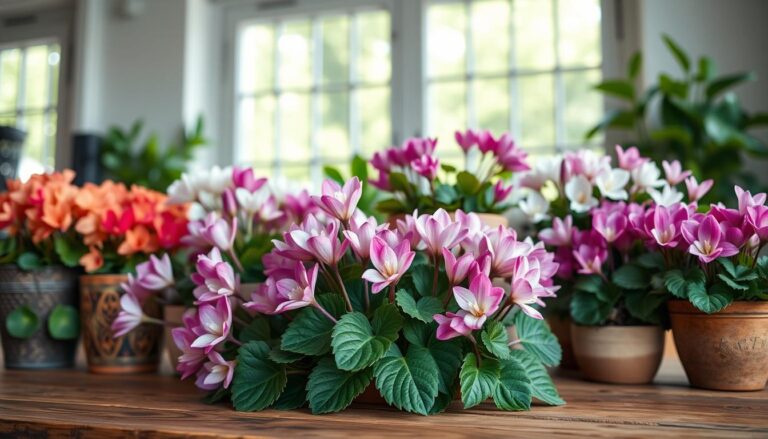
This is also a reliable way to keep cool, moisture-sensitive bloomers like cyclamen from dropping buds in dry rooms.
This one is preventive but easy to overlook. Radiators, space heaters, and heating vents create pockets of bone-dry air, while drafts from exterior doors and windows deliver cold shocks. Both strip moisture fast.
Stable placement protects every other method you are using.
Growth slows in winter, so watering needs change — roughly 30–50% less than in summer. Check the top 1–2 inches of soil and water only when it is dry, using lukewarm water to avoid shocking roots. (Our full guide to how often to water indoor plants in winter goes deeper.)
Dust also builds up in winter and blocks light. Gently wipe smooth leaves with a damp cloth — see how to clean indoor plant leaves — but skip fuzzy-leaved plants, which trap water and rot. Hold off on fertilizer until spring.
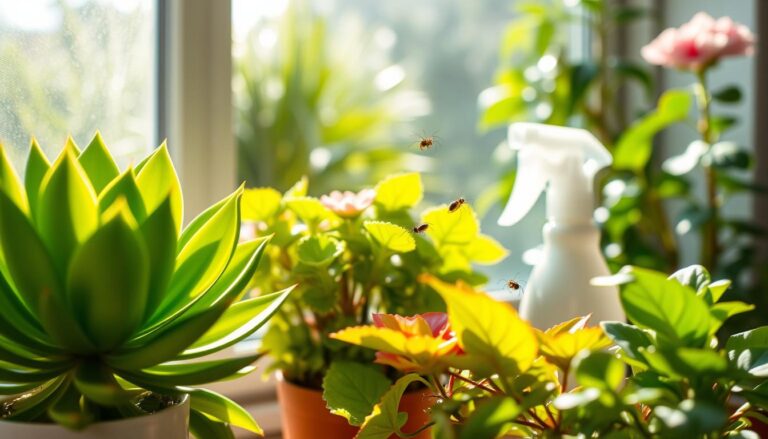
Look for brown, crispy leaf tips and edges, curling leaves, wilting despite moist soil, stalled growth, and more spider mites. Two or more together usually point to dry air.
Yes. Grouping plants, pebble trays, moving plants to a bright bathroom or kitchen, and using a cloche or terrarium all raise humidity with little or no cost.
Most tropical houseplants are happiest at 50–60%. An inexpensive hygrometer takes the guesswork out.
A few hours a day is usually enough in winter. A model with a built-in humidistat will hold the level for you.
Grouping plants. It is free, takes minutes, and works because clustered plants share the moisture they release.