Physical Address
304 North Cardinal St.
Dorchester Center, MA 02124
Physical Address
304 North Cardinal St.
Dorchester Center, MA 02124

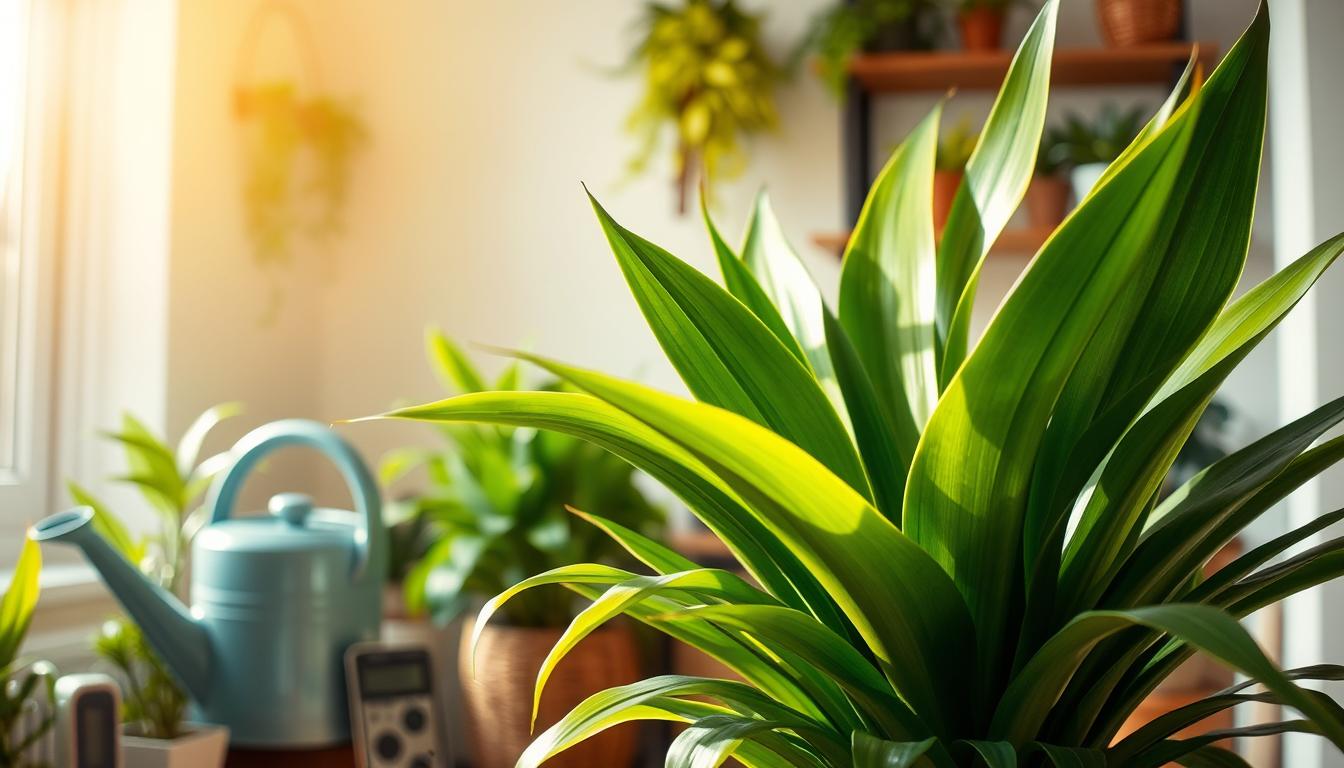
Imagine you’ve been caring for your dracaena for months. It’s been growing well in your home. But when summer comes, you start to worry. You’re not sure if you’re watering it enough or too much.
The warmer days make you question your watering routine. The longer sunlight hours make you wonder about the bright windowsill. If this sounds like you, you’re not alone.
Dracaenas are tropical plants from Africa, Asia, and Central America. They’re known for being hard to kill. Their low-maintenance nature makes them popular among plant lovers. But summer changes how your dracaena reacts to its environment.
When the seasons change, your dracaena care routine needs to adjust. Summer’s heat, longer days, and changing humidity levels are different from spring. Knowing these changes helps you avoid common summer problems like leaf scorch and overwatering stress.
The good news is that dracaena summer care is simple. Just a few adjustments to your watering and light can make a big difference. Your tropical beauty will thrive when you care for it right for summer. This guide will show you how to adjust your care for a healthy dracaena all season long.
Dracaena plants add a touch of tropical beauty to your home with little effort. They have long, spear-shaped leaves that grow from thick stems. The name “dracaena” comes from Ancient Greek, meaning “female dragon,” due to the red resin in their stems. Knowing your dracaena helps you care for it better, especially during summer.
In their natural habitats, dracaena plants can grow up to 20 feet tall. But indoors, they usually stay under 8 feet, fitting well in most homes. They are easy to care for because they can handle different light conditions and grow slowly.
Dracaena plants are special because of their unique structure and adaptability. Their thick stems add a distinctive look to any room. Unlike many tropical plants, dracaenas can handle drought and varying light levels well.
These plants grow slowly, so you won’t need to repot them often. They can also handle indoor air conditions and bounce back from neglect. This makes them perfect for beginners who might forget to care for their plants sometimes.
There are many dracaena varieties that do well indoors. Each adds its own beauty to your space:
While all varieties need similar care, some have specific preferences. Darker-leaved varieties like ‘Janet Craig’ can handle lower light better because they have more chlorophyll. Knowing this helps you pick the right variety for your home and adjust your care accordingly.
Remember, dracaena plants are toxic to dogs and cats because they contain saponins. Keep them out of your pets’ reach and place them on high shelves or in rooms your animals can’t get into.
Summer is a big change for your dracaena. It moves from a quiet rest to an active growing season. This change means your plant needs more care and attention.
Dracaena care in summer is crucial. Longer days and warmer weather make your plant grow faster. It needs more water and nutrients to support this growth.
Summer temperatures can affect your dracaena. It prefers temperatures between 70°F and 80°F. When it gets hotter, the soil dries out faster, so you need to water it more often.
The sun’s rays get stronger in summer. While your dracaena likes bright light, direct sunlight can scorch its leaves. Air conditioning also makes the air dry, which your plant doesn’t like.
| Summer Factor | Impact on Your Dracaena | Your Plant’s Response |
|---|---|---|
| Higher Temperatures | Soil dries faster, increased water uptake | Grows more rapidly, needs more water |
| Longer Daylight | More photosynthesis opportunity | Active growth mode, new leaf production |
| Intense Sunlight | Risk of leaf scorch, color fading | Moves toward light source, needs protection |
| Lower Humidity | Moisture loss from leaves increases | Brown tips may develop on foliage |
| Active Growing Season | Nutrient demand increases significantly | Benefits from monthly fertilization |
Your dracaena prefers temperatures between 70°F and 80°F. Summer heat can be too much. If it gets too hot, your plant may slow down or get brown leaves. Cold temperatures can also harm it, causing stress and leaf drop.
In summer, your dracaena grows faster. It needs more water and food to keep up with this growth. This means you need to water and feed it more often.
Knowing how summer affects your dracaena helps you care for it better. By adjusting your care routine, you can help your plant thrive. The next sections will guide you on how to adjust light, water, humidity, and nutrients for your dracaena’s summer care.
Summer changes how much light your home gets. The sun is higher and stronger. You need to change how you care for your dracaena indoors during this time. The spot that was perfect in winter might now be too sunny for your plant.
Dracaenas love bright, indirect light but can’t handle too much direct sun. In summer, the afternoon sun can burn your plant’s leaves. But, with a few easy changes, your dracaena can do well even in the hottest months.
Direct sunlight in the afternoon can scorch dracaenas. You’ll see brown, crispy spots on the leaves. If your plant’s colors are fading, it’s a sign too.
Move your plant a few feet back from windows that face south or west. This helps a lot. Sheer curtains can also soften the sun’s rays. East-facing windows are better because they get gentler morning light.
The best spot for your dracaena is near bright, indirect light. Place it next to north or east-facing windows. It should see the sky but not get direct sun.
For south or west-facing windows, keep your plant a few meters back. This protects it from strong afternoon sun. If your home is dark, grow lights can help. Enough light keeps your dracaena growing well and looking good.
| Window Direction | Summer Placement | Protection Method |
|---|---|---|
| North-Facing | Directly beside window | No protection needed |
| East-Facing | Directly beside window | No protection needed |
| South-Facing | Several feet away | Sheer curtains recommended |
| West-Facing | Several feet away | Sheer curtains essential |
Check your plant’s spot every day in summer. If you see fading or brown spots, move it. Your dracaena will tell you if it’s in the right place. Paying attention to light helps your plant do well all summer.