How to Prune a Kalanchoe Plant: Step-by-Step Guide for Bushiness

Essential Pruning Tools and Materials

Before you start, make sure you have these tools:
  • Sharp pruning shears
  • Rubbing alcohol for tool disinfection
  • Thick gardening gloves
  • Clean watering can
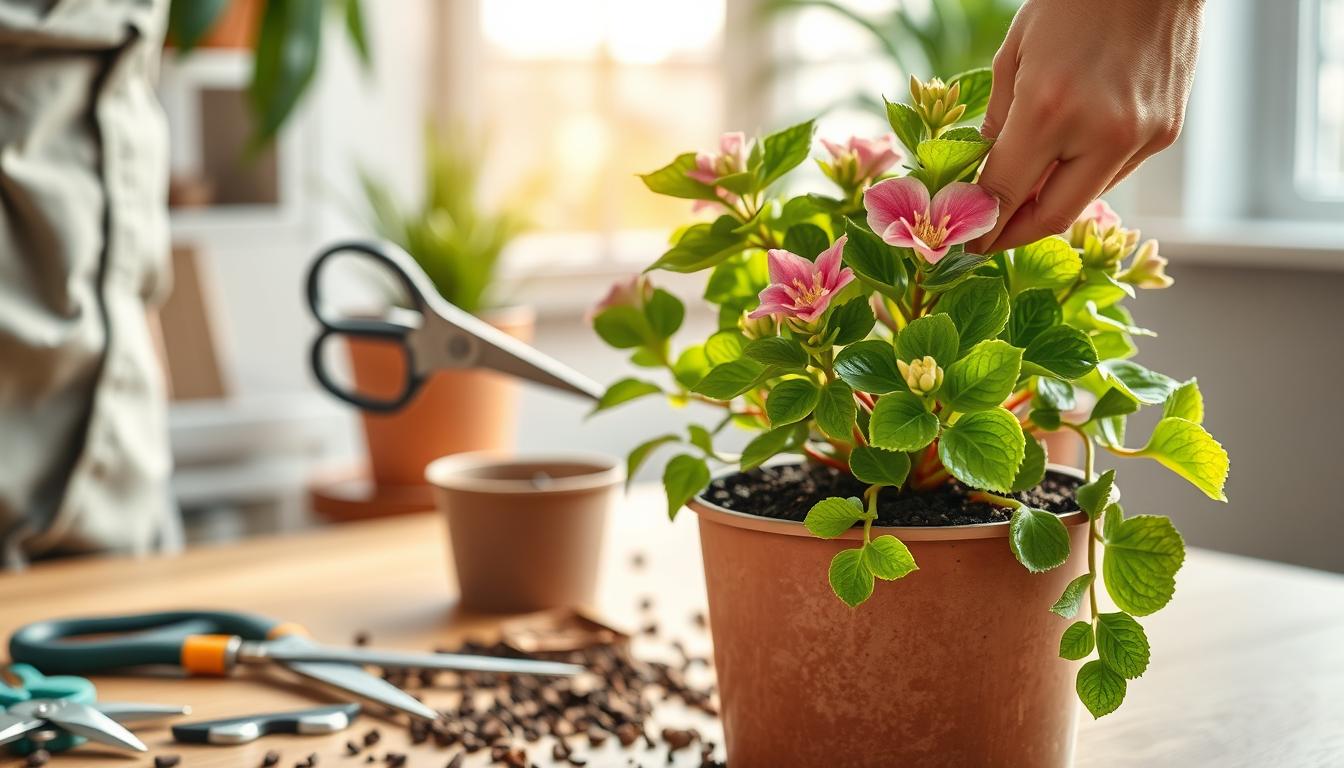
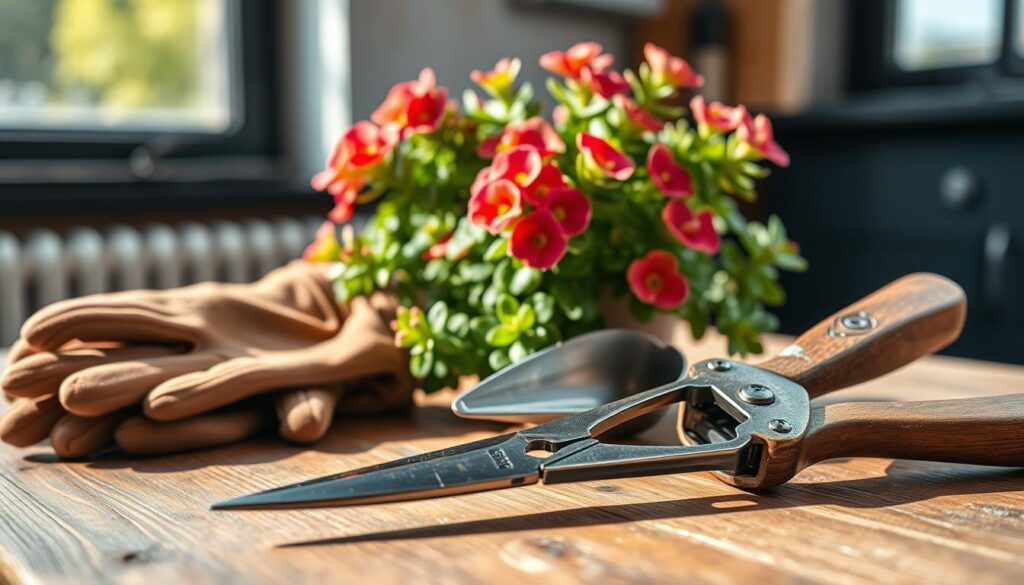
A beautifully arranged set of Kalanchoe pruning tools displayed on a rustic wooden table. In the foreground, focus on sharp pruning shears with a shiny blade and a sturdy handle, alongside a pair of gardening gloves and a small hand trowel. The middle layer features a vibrant Kalanchoe plant, lush with green leaves and clusters of colorful blooms, ready for pruning. In the background, soft natural light filters through a nearby window, casting gentle shadows and illuminating the tools and plants. The atmosphere is serene and inviting, ideal for a gardening enthusiast, evoking a sense of readiness for a rewarding task. The composition is framed with a shallow depth of field to emphasize the tools and plant, creating an engaging and informative visual.

It’s important to clean your pruning tools. Use rubbing alcohol to disinfect them. This stops diseases from spreading between plants.

Identifying Sections to Remove

Look for these areas to trim when pruning your kalanchoe:

  • Dead or yellowing leaves
  • Damaged stems
  • Spent flower blooms
  • Leggy or sparse growth

Making Precise Pruning Cuts

Follow these steps for healthy regrowth:

  • Cut at a 45-degree angle
  • Trim about 1/2 inch from a leaf node
  • Direct new growth by positioning the cut near a leaf node
  • Remove up to one-third of each stem’s length

Wear gloves to protect your skin from kalanchoe sap. Always make clean, precise cuts to promote optimal plant healing and growth.