Physical Address
304 North Cardinal St.
Dorchester Center, MA 02124
Physical Address
304 North Cardinal St.
Dorchester Center, MA 02124

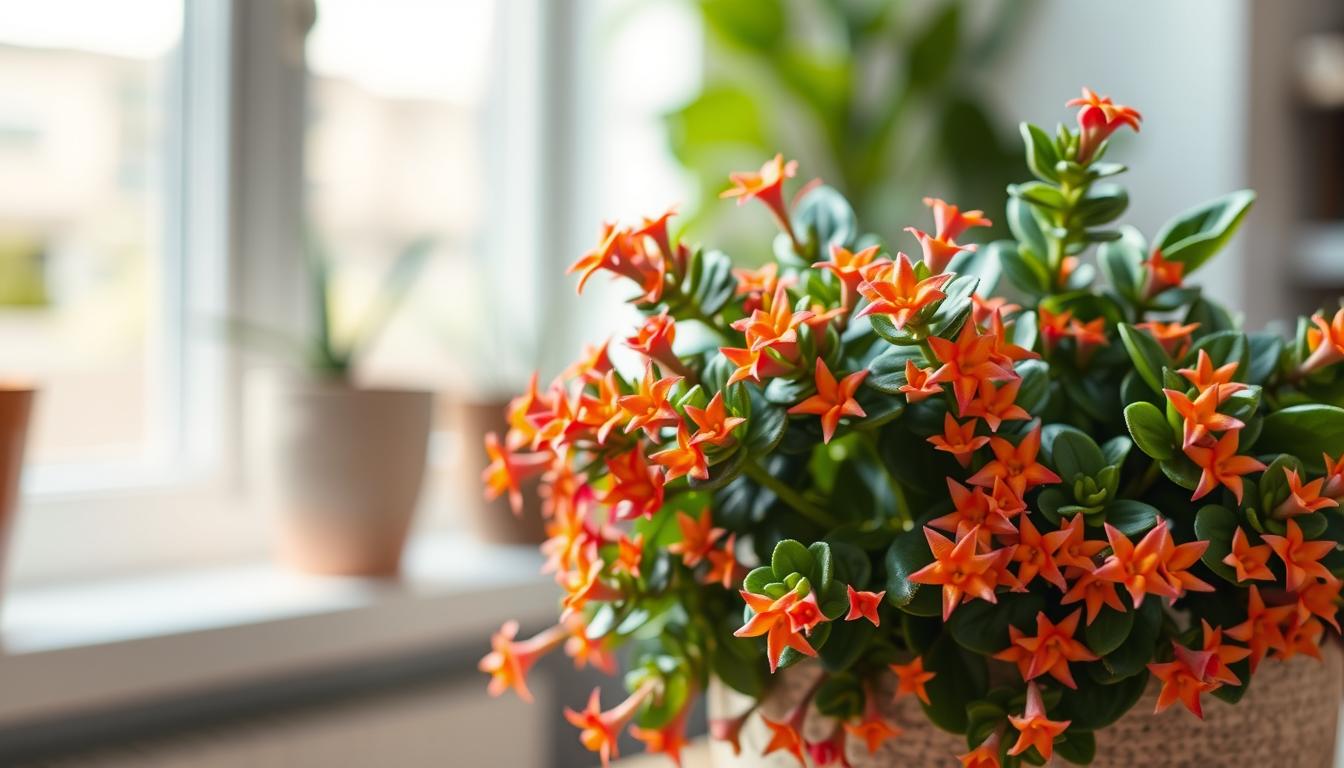
Quick answer: Kalanchoe blossfeldiana (Flaming Katy) is a colorful, low-maintenance succulent. Give it bright, indirect light, water only when the soil is fully dry (about every 2 weeks), plant it in fast-draining cactus mix, and keep it between 60–75°F. To make it flower again, it needs a stretch of long, dark nights. Note: it is toxic to cats and dogs.
Native to Madagascar and first described by botanist Robert Blossfeld in 1926, Kalanchoe blossfeldiana is a compact succulent in the Crassulaceae family. It grows 6–18 inches tall and wide, with glossy, scallop-edged leaves and dense clusters of small star-shaped flowers in red, pink, orange, yellow, and white. Modern varieties such as Calandiva add double blooms with far more petals than the classic four. If you received one as a gift, our guide on keeping a gift kalanchoe thriving is a good companion read.
| Light | Bright, indirect; 6–8 hrs/day |
| Water | Every ~2 weeks; let soil dry fully |
| Soil | Fast-draining (50/50 potting + cactus mix) |
| Temperature | 60–75°F day; keep above 50°F |
| Bloom trigger | 6+ weeks of 14–16 hr dark nights |
| Toxicity | Toxic to cats & dogs (cardiac glycosides) |
Flaming Katy flowers best in bright, indirect light — 6–8 hours a day near a south- or west-facing window. Keep it out of harsh direct sun, which scorches the leaves.
As a succulent, kalanchoe stores water in its leaves and hates soggy soil. Water thoroughly, then let the mix dry out completely before watering again.
Overwatering shows as yellow, mushy leaves and soft stems; underwatering as shriveled, wrinkled foliage.
Use a gritty, fast-draining mix — a simple 50% potting soil / 50% cactus mix, with extra perlite for drainage. Always use a pot with drainage holes; terracotta is ideal because it wicks away excess moisture and helps prevent root rot.
Kalanchoe is happiest at 60–75°F during the day with slightly cooler nights (50–60°F), which actually encourages blooming. Protect it from temperatures below 50°F and keep it away from drafts and heating vents. It needs no extra humidity — average household levels are fine.
Feed lightly during spring and summer with a balanced, water-soluble fertilizer at half strength, every 4–6 weeks. If you get lots of leaves but few flowers, switch to a higher-phosphorus feed. Stop fertilizing in winter while the plant rests.
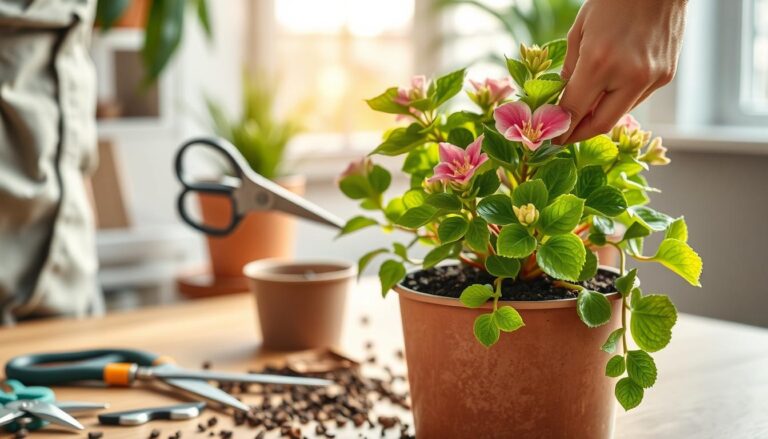
Deadheading keeps the show going: when blooms fade, snip the spent flower stem back to the leaves so the plant puts energy into new buds instead of seeds. Pinch stem tips to encourage a fuller, bushier shape, and always use clean tools. For a full walkthrough, see our guide to pruning a kalanchoe for bushiness.
Kalanchoe is photoperiodic — it sets flower buds in response to long nights, not day length. To trigger a fresh flush:
Our dedicated guide, getting kalanchoe to rebloom: the light-cycle secret, goes deeper if it is being stubborn.
Kalanchoe is generally tough, but watch for aphids (soft insects on new growth) and mealybugs (white cottony clusters in leaf joints). Knock them off with a water spray, then treat with neem oil, insecticidal soap, or a dab of rubbing alcohol — our houseplant pest guide has the full routine. The bigger risk is root rot from overwatering; if you see yellowing, mushy stems, wilting in wet soil, or a bad smell, improve drainage and let the soil dry.
Kalanchoe is easy to multiply from stem cuttings or offsets:
Step-by-step help is in our how to propagate kalanchoe guide. (Curious about the wild-looking relatives? See Mother of Thousands.)
Kalanchoe blossfeldiana contains cardiac glycosides and is toxic to cats and dogs. Keep it out of reach, and call your vet if you suspect your pet has chewed it.
Yes — they contain cardiac glycosides and are toxic to cats and dogs. Keep out of reach and contact a vet if ingested.
About every 2 weeks in the growing season, every 3–4 weeks in winter, always letting the soil dry fully first.
Bright, indirect light for 6–8 hours a day. Avoid harsh direct sun.
Give it 14–16 hours of darkness nightly for about 6 weeks, with reduced water and no fertilizer, until buds form.
With good care they can live for many years, reaching mature size in 2–5 years and blooming repeatedly.