Physical Address
304 North Cardinal St.
Dorchester Center, MA 02124
Physical Address
304 North Cardinal St.
Dorchester Center, MA 02124
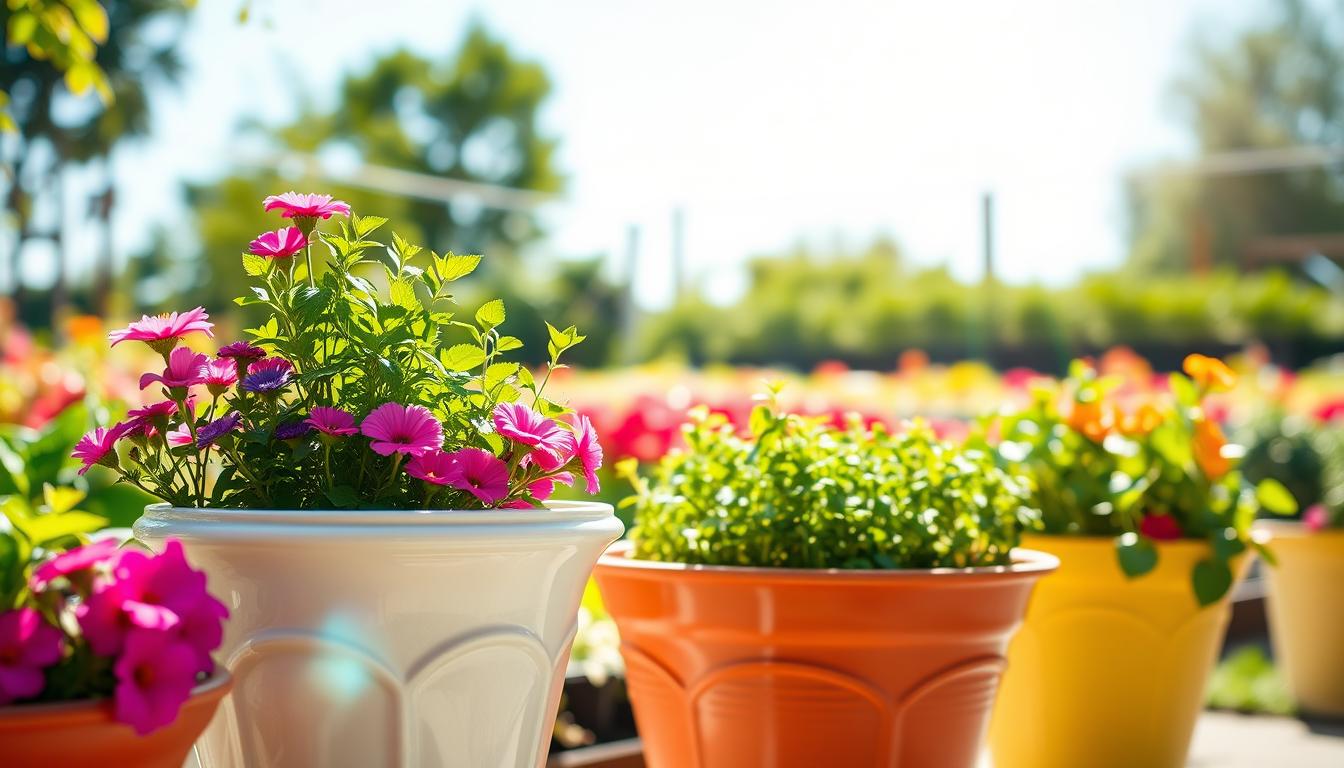
Summer brings hot weather and lots of sunshine. Your garden loves these long, warm days. But, keeping plants watered becomes a big job. You might water twice a day and worry about your plants when you’re away.
Self-watering planters can help with these summer challenges. They give water to your plants regularly. This way, your plants stay hydrated without you always watching over them. The technology works quietly, helping your plants during the hottest months.
The market for self-watering planters is growing fast. It’s expected to hit around $850 million by 2025. By 2033, it could go over $1.5 billion. More gardeners see the value of reliable watering during tough seasons.
Summer gardening has its own set of challenges. Heat makes water evaporate quickly from the soil. Plants can get stressed in the heat. And when you’re away, your garden might not get enough water. Self-watering planters solve these problems.
This guide will cover everything you need to know about self-watering planters for summer. You’ll learn how they work in hot weather. You’ll see their benefits for summer gardening. And you’ll understand their limitations and downsides. By the end, you’ll know if self-watering planters are right for your garden.
Summer heat can be tough on plants. That’s why self watering planters are a game-changer. They keep your plants healthy without needing constant watering. These planters use smart mechanics to deliver water to roots, reducing evaporation and keeping moisture steady.
Self-watering planters solve a big problem. Plants need consistent moisture, but summer heat makes it hard to keep soil moist. These containers provide steady water access from below, where it matters most.
The magic happens through capillary action. This is when water moves up through absorbent materials against gravity. Your plant roots tap into this moisture as needed, keeping soil balanced.
Here’s why this matters in summer:
Self-watering systems use two main ways to deliver water. Knowing the difference helps you pick the best for your garden.
| Delivery Method | How It Works | Best For |
|---|---|---|
| Wicking System | Absorbent cord (cotton or synthetic material) pulls water from the reservoir up into soil through capillary action | Container gardens, indoor plants, smaller spaces |
| Sub-Irrigation (Reservoir System) | Water tank sits below a perforated barrier; soil acts as natural wick, drawing water upward as roots need it | Outdoor planters, larger gardens, long-term installations |
The wicking system steadily pulls water up, while sub-irrigation uses soil’s natural wicking. Both encourage deeper, healthier root growth than surface watering.
In summer heat, plants draw water more often from these reservoirs. Both systems are self-regulating. When soil dries slightly, they pull more water to roots. When soil is moist enough, they slow down. This prevents overwatering and underwatering.
Sub-irrigation’s bottom-up approach is especially valuable in extreme heat. Water stays in the reservoir, not evaporating from exposed soil. Plants access this cooler, deeper water source as needed, keeping them hydrated even when it’s hot.
Self-watering pots are a game-changer for gardening in the summer. They keep your plants hydrated, even when it’s hot. This is because they deliver water directly to the roots, keeping the soil moist.
Knowing the pros and cons of self-watering pots helps you decide if they’re right for your garden. They’re especially helpful when the summer heat is high and your plants need constant care.
Self-watering pots are great for saving water, especially in dry areas. They keep water in a reservoir, reducing evaporation. This is key during summer droughts or when water is scarce.
They also save you time. Instead of watering every day, you can do it once a week. This lets you enjoy your summer without worrying about watering.
| Benefit | Summer Impact | Your Advantage |
|---|---|---|
| Consistent Moisture | Prevents heat-induced plant stress | Healthier, stronger plants |
| Water Conservation | Cuts evaporation losses by 40-60% | Lower water bills, eco-friendly gardening |
| Extended Watering Intervals | Reduces daily watering from 2x to 1x weekly | More free time during summer |
| Vacation Ready | Supports plants for 2-4 weeks | Travel without plant care worries |
| Root System Development | Steady hydration encourages deeper roots | Better drought tolerance long-term |
Using self-watering systems reduces plant stress. Your plants no longer face the shock of dry and wet soil. This stable environment helps them grow stronger and produce better.
Self-watering pots are great for any space, from small balconies to big backyards. They’re perfect for busy summers or when life gets busy. They’re an investment in your plants’ health and your peace of mind.