Physical Address
304 North Cardinal St.
Dorchester Center, MA 02124
Physical Address
304 North Cardinal St.
Dorchester Center, MA 02124

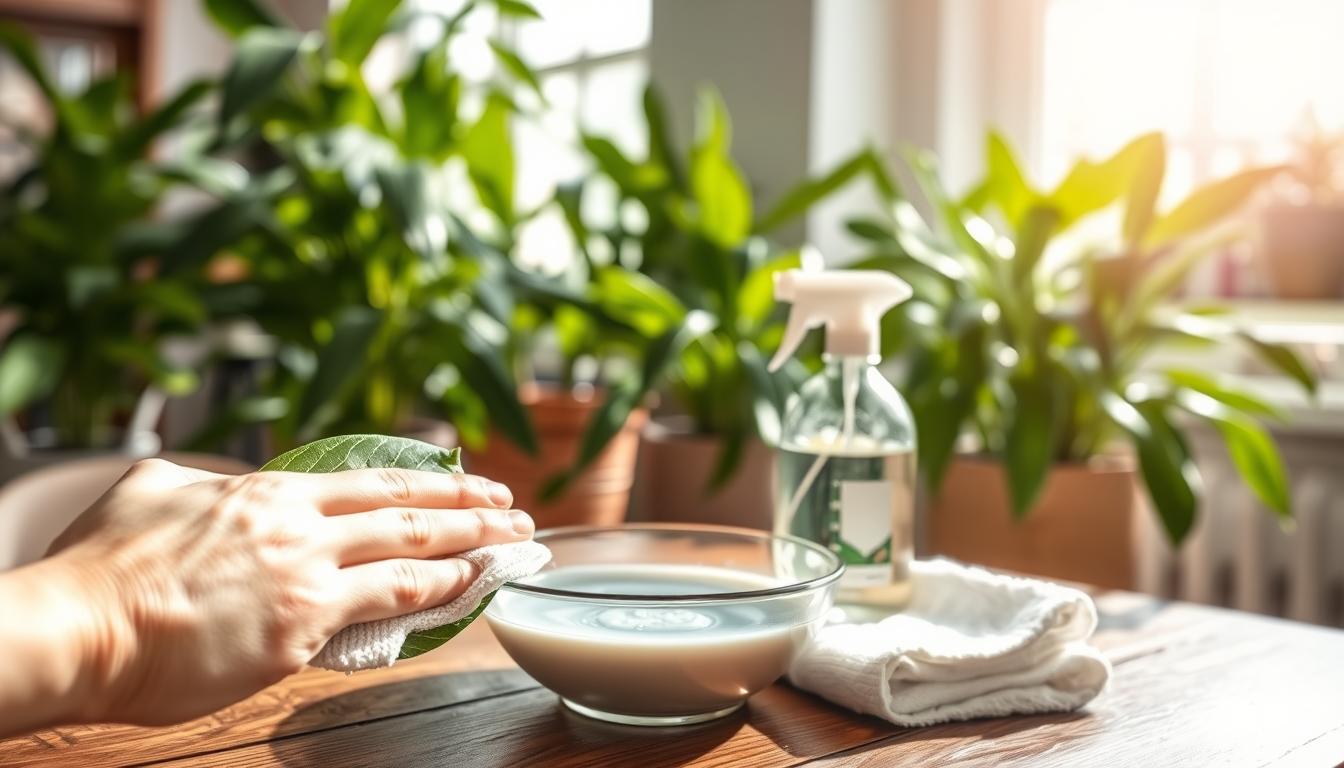
The quick answer: wipe smooth-leaved houseplants with a damp microfiber cloth every 1–2 weeks, dust fuzzy-leaved plants with a soft brush, and skip commercial leaf-shine sprays. Clean leaves absorb more light, breathe better through their pores, and let you spot pests early — all of which add up to healthier growth.
A leaf is a solar panel. Dust settles on that surface and physically blocks the light a plant needs for photosynthesis, and it clogs the stomata — the tiny pores leaves use to exchange gases and release moisture. A thick dust film measurably reduces the light reaching the leaf, which shows up as slower growth, duller color, and weaker plants over time.
Cleaning fixes three things at once:
If a plant is dull, dropping leaves, or yellowing, dust is one suspect — but rule out the bigger causes in our guide to why indoor plants die too.
Take the plant to the sink, shower, or outside and mist it with lukewarm water at low pressure. This rinses dust off many leaves at once. Clean in the morning so foliage dries before nightfall, and let pots drain fully so roots do not sit in water.
For broad-leaved plants like monstera, rubber plant, or dracaena, wipe each leaf with a soft, damp cloth. Support the leaf from underneath with one hand while you wipe with the other, and do both the top and the underside — pests love the hidden lower surface.
Between deeper cleans, a quick pass with a soft brush or microfiber duster stops dust from building up. This is the low-effort habit that keeps the other two from becoming big jobs.
| Leaf type | Best method | Caution |
|---|---|---|
| Thick / waxy (dracaena, rubber plant, ZZ) | Damp cloth, wipe along the veins | Low |
| Thin / sensitive (calathea, ferns) | Barely-damp microfiber cloth | High |
| Fuzzy (African violet, some begonias) | Soft dry brush — no water | Very high |
Fuzzy leaves trap water in their hairs and rot or spot easily, so keep them dry and never use leaf shine on them.
Plain lukewarm water handles most dust. When leaves are greasy or you want light pest deterrence, these gentle mixes work:
Always patch-test any solution on a single leaf and wait 24 hours before treating the whole plant. Use small amounts — more is not better.
It depends on your home, not a fixed rule. Use dust level as the guide:
| Environment | Frequency |
|---|---|
| Dusty (near vents, busy rooms, pets) | Weekly |
| Average home | Every 1–2 weeks |
| Low-dust space | Monthly, with quick weekly dusting |
Winter deserves a mention: dry, heated indoor air traps more dust, so cleaning pairs naturally with your winter humidity routine. A 15-minute session while you check watering keeps it manageable.
Weekly in dusty homes, every 1–2 weeks in most, monthly in low-dust rooms — adjust when leaves look dull or growth slows.
No. Window cleaners, polishes, and all-purpose sprays damage the leaf surface and block its pores. Stick to water, mild soap, or diluted neem oil.
Yes. Pests and dust concentrate on the underside, so wipe both surfaces while supporting the leaf.
Usually yes, at room temperature. If your water is hard, filtered or distilled water avoids mineral spotting.
No — they clog stomata and attract dust. For a natural shine, a plain damp wipe is enough.