Physical Address
304 North Cardinal St.
Dorchester Center, MA 02124
Physical Address
304 North Cardinal St.
Dorchester Center, MA 02124

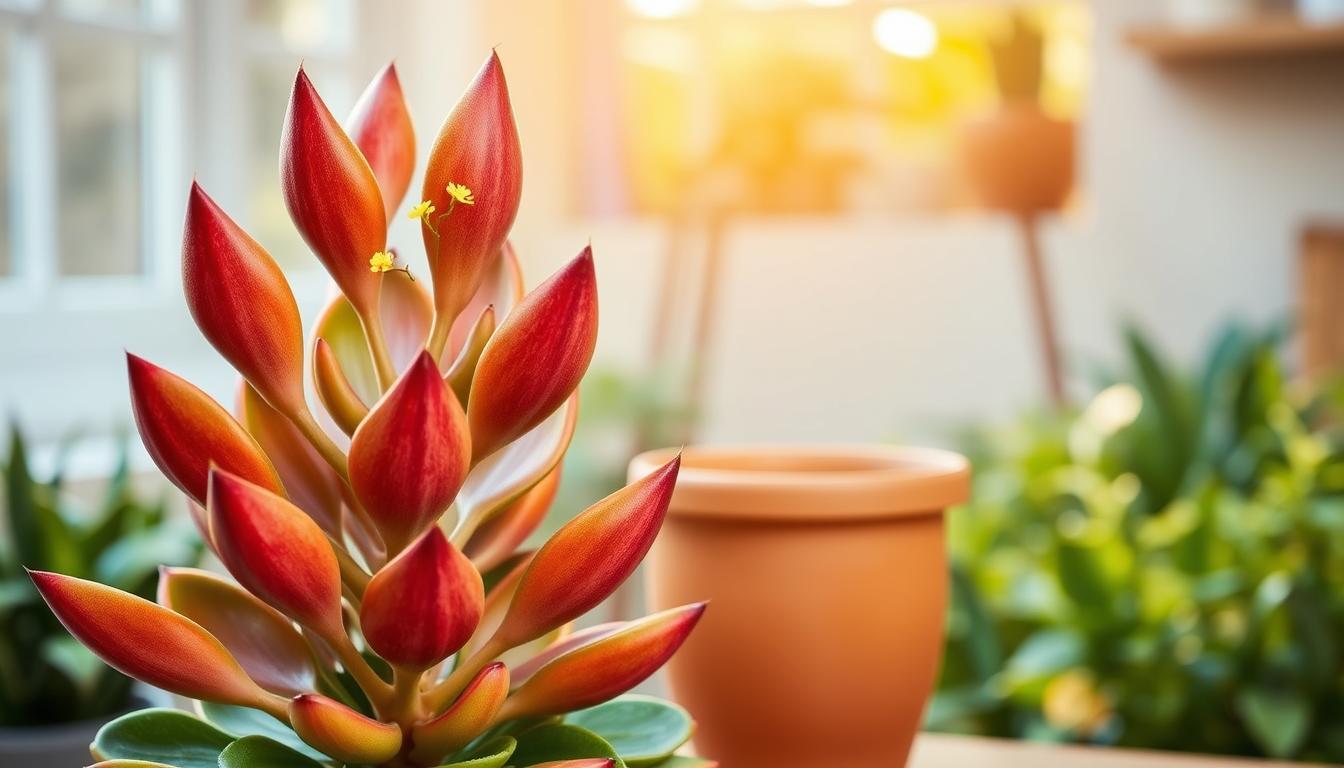
Have you ever seen a plant that looks like it’s from a fantasy world? The Kalanchoe copper spoons is that magical succulent. It turns your space into a living work of art. Its copper and cinnamon-colored leaves create a stunning visual display.
Imagine having a unique succulent that needs little care but looks amazing. The Kalanchoe orgyalis, or copper spoons, is your ideal plant friend. It’s perfect for both seasoned plant parents and beginners, adding beauty to your indoor garden.
Caring for Kalanchoe copper spoons is easy. This amazing succulent fits well in many indoor settings. It changes colors with the light, offering a constantly evolving display of beauty. Learn how to care for this extraordinary plant that will impress everyone.
Explore the world of kalanchoe orgyalis, a standout succulent. It adds a special touch to any space with its unique look.
Kalanchoe orgyalis is known by many names. These names reflect its amazing appearance:
This succulent is loved for its special features. Its leaves are shaped like spoons and feel fuzzy. It grows slowly, forming a beautiful tree-like shape.
While Blossfeldiana is loved for its flowers, other Kalanchoes boast stunning foliage. Discover the textured, coppery leaves of ‘Copper Spoons’—a dramatic addition to any succulent collection.
The kalanchoe orgyalis has a stunning color scheme. Its top side is warm cinnamon and copper, while the bottom is a cool silver. The color changes with light, creating a beautiful gradient as it grows.
| Characteristic | Description |
|---|---|
| Leaf Shape | Spoon-like with fuzzy texture |
| Top Color | Cinnamon to copper tones |
| Underside Color | Silvery metallic sheen |
| Growth Pattern | Slow-growing, sculptural form |
Whether you’re an experienced plant lover or just starting, kalanchoe orgyalis is a must-have. It brings together texture, color, and elegance in a unique way.
Your copper spoon kalanchoe needs the right light to thrive. It loves specific lighting to keep its copper leaves bright and healthy.
Knowing what light your copper spoon kalanchoe needs is key. It prefers bright, indirect sunlight. Place it near a south-facing window for plenty of filtered light all day.
Look for signs to see if your plant is getting enough light. Rich, deep copper tones mean it’s getting the right amount of light. If the colors seem pale, it might need more light. In winter, move it closer to windows for more light.
“Light is the secret ingredient that transforms your copper spoon kalanchoe from ordinary to extraordinary.” – Succulent Enthusiast
Rotate your plant every few weeks to keep it growing evenly. Too little light can make stems stretch, while too much can burn the leaves. Finding the right balance will make your plant’s colors pop.
Caring for your kalanchoe copper spoons needs a careful touch with water. This succulent loves little water, perfect for those who forget to water or are always on the move. Knowing exactly how much water it needs is key to keeping it healthy.
Watering your copper spoons kalanchoe right is all about finding the middle ground. The plant’s strong look hides signs of water stress, so it needs a gentle touch.
It’s not always easy to tell if your copper spoons kalanchoe needs water. Watch for these small signs:
The bottom watering method is best for your copper spoons kalanchoe. It keeps the plant’s soft leaves safe while making sure the roots get enough water.
Pro tip: During active growth (spring and summer), water about every two weeks. In winter, cut back to once every 4-6 weeks.
“Less is more” when it comes to watering your copper spoons succulent.
Remember, too much water is worse than too little for your kalanchoe copper spoons. Always wait until the soil is completely dry before watering again.
Your kalanchoe orgyalis does well in the humidity found in most homes. It loves dry places, just like its natural home. Unlike plants from wet places, it doesn’t need extra water or misting.
When it comes to its leaves, your plant needs careful handling. The fuzzy, copper-colored leaves get dusty, especially in cities. Here’s how to keep them clean:
Don’t put your kalanchoe orgyalis in humid places like bathrooms or kitchens. Too much moisture can cause fungal problems and root rot. The plant’s leaves can handle a soft brush without getting hurt, making care easy.
It’s best to keep it in dry rooms with indirect light and good air flow. Your Copper Spoons succulent will give you bright, fuzzy leaves that stay healthy and dust-free with little work.
Growing a copper spoon kalanchoe takes patience and understanding. This slow-growing succulent grows slowly, becoming more sculptural over years. It won’t grow fast, but will become an elegant plant with unique features.
Knowing how it grows helps you care for your kalanchoe orgyalis. It grows slowly, from a small plant to a tall one in two to three years.
Your copper spoon kalanchoe needs careful fertilizing. Here are some tips for feeding it well:
Feed your plant when you see new leaves. Stop fertilizing in winter when it’s dormant.
Expect slow, steady growth with your copper spoon kalanchoe. It grows slowly, but beautifully. With good care, it will change from a small plant to a striking, tree-like specimen.
Your Kalanchoe copper spoons plant is naturally resistant to pests. Its unique leaves are far apart, making it hard for pests to get to. This is unlike many other houseplants.
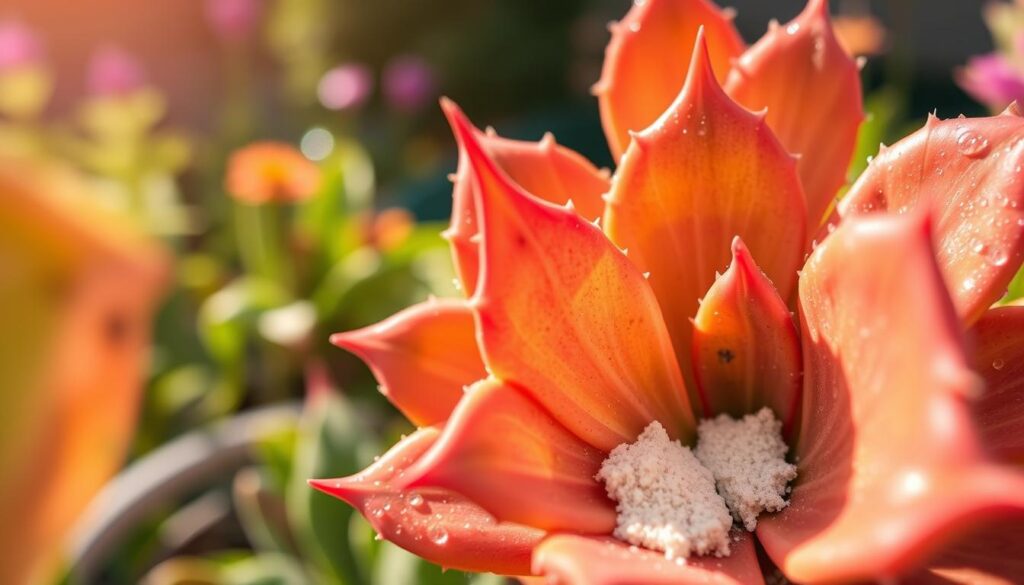
When caring for your kalanchoe copper spoons, you might face a few pests:
Mealybugs look like small, white, cottony spots. They hide where leaves meet stems. These pests love stressed plants with low humidity and bad watering.
To keep your copper spoons kalanchoe safe, follow these steps:
If you find a few mealybugs, use a cotton swab with rubbing alcohol to get rid of them. For bigger problems, neem oil or insecticidal soap can help.
| Pest | Signs | Treatment |
|---|---|---|
| Mealybugs | White cottony clusters | Rubbing alcohol spot treatment |
| Spider Mites | Tiny web-like structures | Neem oil spray |
| Scale Insects | Small brown bumps on stems | Manual removal with alcohol |
Healthy plants fight off pests better. Keeping your kalanchoe copper spoons plant healthy is the best way to protect it.
Caring for your copper colored plants means knowing their repotting needs. Kalanchoe Copper Spoons is a low-maintenance succulent. It doesn’t need to be repotted often. Knowing when and how to repot helps your plant thrive without stress.
Finding the right container is key for your copper colored plants. Look for pots with these important features:
Your potting mix for Kalanchoe Copper Spoons should drain well. Mix a custom blend with:
Repotting these plants is rare—usually every 12-18 months. Look for these signs to know it’s time:
| Repotting Season | Recommended Action |
|---|---|
| Spring to Early Fall | Best time to repot |
| Winter | Avoid repotting during dormancy |
Pro tip: If switching to a terracotta pot, soak it in water for a few hours before use to prevent immediate moisture wicking.
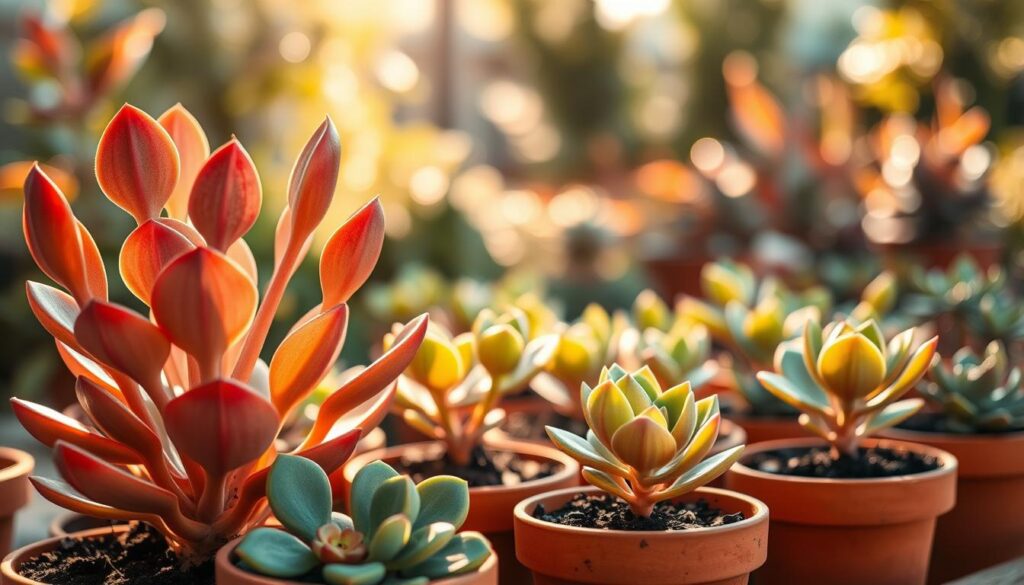
Expanding your kalanchoe orgyalis collection takes patience and the right techniques. This succulent offers several ways to grow more, each with its own challenges and benefits.
Working with offsets is the most reliable method. These small plants grow around the mother plant’s base. They make it easy to multiply your collection.
Stem cuttings are another effective way to propagate. Choose a healthy stem and cut it with clean, sterile tools. Let the cut dry for 2-3 days before planting it in a succulent mix.
| Propagation Method | Difficulty Level | Estimated Time |
|---|---|---|
| Offset Division | Easy | 4-6 weeks |
| Stem Cuttings | Moderate | 6-12 weeks |
| Leaf Propagation | Challenging | 3-6 months |
Pro tip: Leaf propagation for kalanchoe orgyalis is the most difficult. It has low success rates. Stick with offset division for better results.
Patience is key when propagating succulents—each new plant represents a small miracle of nature.
Caring for unique foliage succulents like the Kalanchoe Copper Spoons can sometimes present challenges. Understanding how to identify and resolve common problems will help you maintain a healthy and vibrant plant.
Your Copper Spoons succulent might experience several growth issues that require careful attention. Recognizing these problems early can prevent long-term damage to your unique foliage succulent.
Leggy growth occurs when your succulent doesn’t receive adequate light. This results in:
To address leggy growth, gradually move your plant to a brighter location. Avoid sudden light changes that might shock the plant.
Watch for these warning signs in your unique foliage succulents:
Proactive care and careful observation will help your Copper Spoons succulent thrive. It will transform potential problems into opportunities for learning and growth.
Learning how to care for kalanchoe copper spoons is very rewarding. It makes you better at indoor gardening. This succulent starts small but grows into a beautiful sculpture over time.
Watching it grow is a joy. The leaves turn copper and cinnamon, making it even more beautiful. Your patience will be worth it.
This plant is easy to care for. It doesn’t need much attention, making it great for busy people. Just remember to give it bright indirect light, water it sparingly, and fertilize it now and then.
As you care for your succulent, you’ll see it change. It starts small and grows tall. The leaves change color with the light, making it a living piece of art.
Enjoy the slow growth of your kalanchoe copper spoons. Your care will make it thrive. With the right care, it will be a beloved part of your plant collection for many years.