Physical Address
304 North Cardinal St.
Dorchester Center, MA 02124
Physical Address
304 North Cardinal St.
Dorchester Center, MA 02124

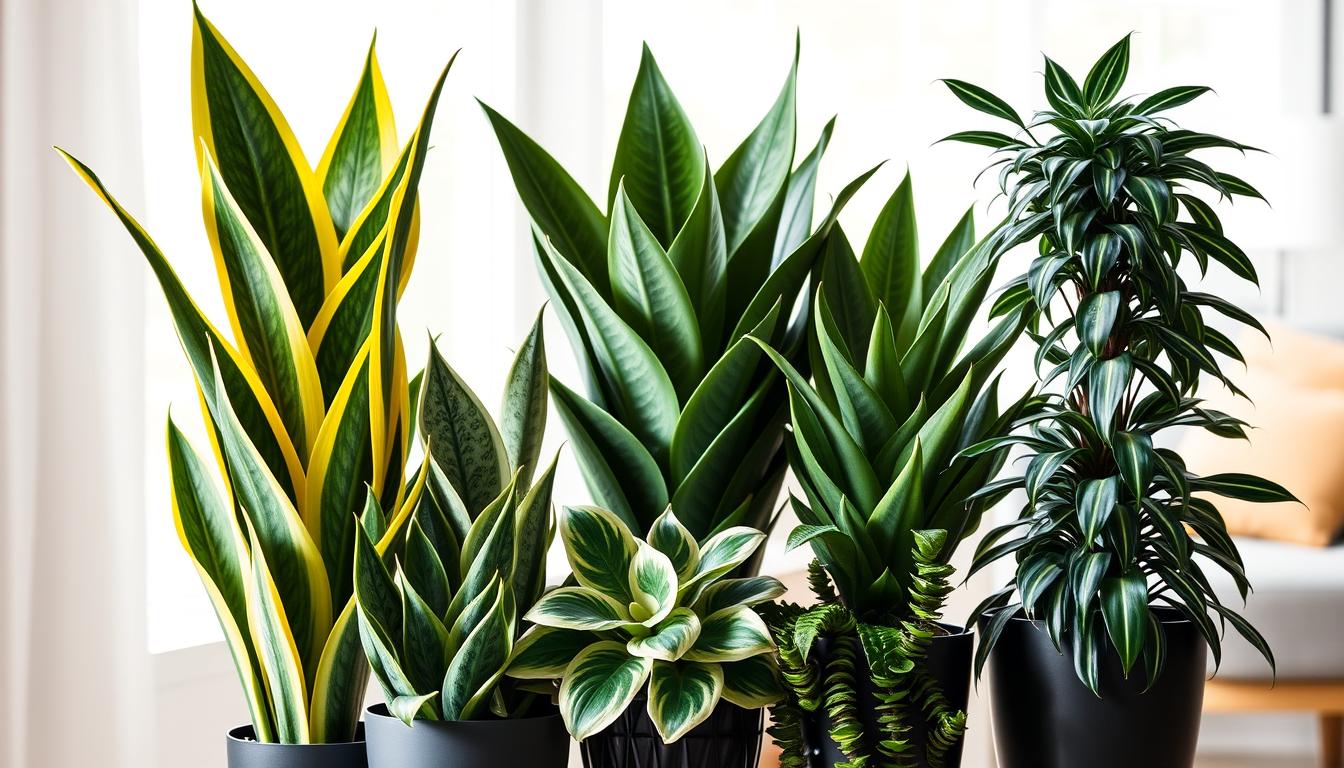
Snake Plant Varieties offer elegance and function. Imagine stepping into a room filled with elegant, architectural plants. Snake plants bring life and sophistication to your home. Now classified as Dracaena, they have become more than just houseplants. They are design statement pieces that also purify your air.
Whether you love plants or are new to indoor gardening, snake plants can make your space better. With over 70 species, they offer striking foliage and adapt well to modern homes.
Each variety has its own story, adding beauty and benefits to your home. They fit any space, from small apartments to large rooms. Snake plants are versatile and practical for every home.
Snake plants are the ultimate low-maintenance houseplants. They bring beauty and functionality to your home. These versatile green companions offer a great mix of looks and practical benefits.
Indoor plant lovers love snake plants for their adaptability. These tough plants do well in many conditions. They are perfect for both new and experienced plant owners.
Snake plants are known for their simple care. Here’s why they’re so easy to care for:
“Snake plants are the ultimate survival experts of the indoor plant world.” – Plant Enthusiast Magazine
Beyond their looks, snake plants have health benefits. They are proven to remove harmful toxins from indoor air, including:
These plants work silently at night, making your home’s air cleaner. Their beauty and air-purifying abilities make them great for bedrooms and living rooms.
The Dracaena Trifasciata ‘Laurentii’ is a beautiful snake plant that adds elegance to your home. It has yellow-green margins that stand out against its deep green leaves. This makes it a classic variegated beauty.
Here are some key traits of the ‘Laurentii’ variety:
This snake plant comes from West Africa and loves environments similar to its home. Indoor gardeners love its toughness and beauty. It’s perfect for both new and seasoned plant lovers.
If you love the ZZ’s structural look, you’ll adore the diverse forms of Snake Plants. Discover 5 stunning varieties that offer the same resilience with different silhouettes.
| Growing Characteristic | Details |
|---|---|
| Height | 3-4 feet at maturity |
| Light Requirements | Indirect bright to low light |
| Water Needs | Minimal (every 2-3 weeks) |
| Temperature Tolerance | 55-85°F (13-29°C) |
When picking a ‘Laurentii’ for your home, look for plants with crisp, upright leaves and bright colors. Its unique shape adds beauty to any room, whether it’s modern or traditional.
Plant lovers will adore the Dracaena masoniana, also known as the whale fin snake plant. It’s a standout with its unique design and leaves. It’s different from other snake plants.
The whale fin has wide, paddle-shaped leaves. They can be 4-5 inches wide and 3-4 feet tall. Each plant has just one to three of these big leaves, making a strong statement.
The leaves have a cool pattern. They are light green with darker green spots. The edges are reddish-brown to purple, adding beauty.
The whale fin needs special care because of its big leaves. Make sure it has enough room to grow without being crowded.
| Care Requirement | Recommended Conditions |
|---|---|
| Light | Bright, indirect light to maintain vibrant leaf patterns |
| Watering | Allow soil to dry completely between waterings |
| Pot | Use a sturdy pot to support heavy leaves |
This plant is rare and hard to find. You might need to look in specialty shops. Its unique look and size make it a great addition to any plant collection.
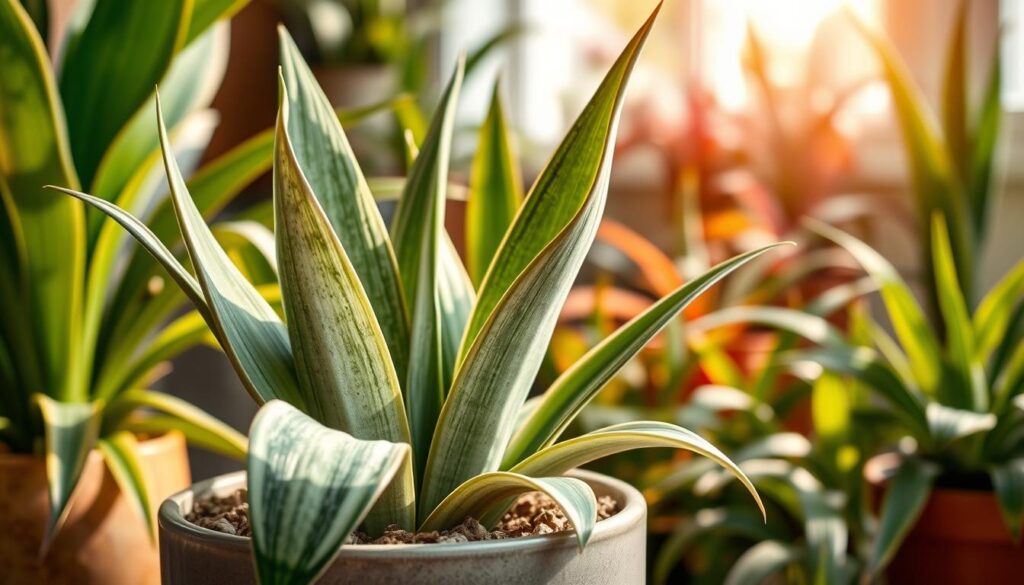
The Dracaena Trifasciata ‘Moonshine’ is a standout snake plant. Its silvery-gray to pale green leaves add elegance to any room. It fits well with modern, minimalist, and Scandinavian decor.
The leaves start almost white and turn into a beautiful silvery-green. They have darker green margins and light green striations. Moonshine grows into a compact rosette, reaching 18-24 inches tall. It’s perfect for small spaces like tabletops and shelves.
‘Moonshine’ needs bright, indirect light to keep its pale color. Here’s where to place it:
If it doesn’t get enough light, the leaves turn darker green. This loses the special silvery quality. Proper care keeps your plant looking its best.
| Characteristic | Details |
|---|---|
| Height | 18-24 inches |
| Leaf Color | Silvery-green with green margins |
| Light Requirement | Bright, indirect light |
| Best Placement | Tabletops, shelves, small spaces |
Pro tip: Ensure proper drainage to prevent root rot in the compact root system of your ‘Moonshine’ snake plant.
Snake plants come in many sizes and styles. They are great for both new plant lovers and seasoned collectors. There’s a perfect Dracaena variety for every indoor space.
Small spaces need smart plant choices. These compact snake plants are ideal for apartments, offices, and small corners:
Collectors can find unique snake plants to add to their collection. These rare varieties have special features:
Each variety adds something unique to your indoor garden. From compact designs to rare, eye-catching plants, there’s something for everyone.
The Dracaena angolensis, or African Spear plant, is a standout snake plant variety. It has unique cylindrical leaves that add a striking architectural look to any room.
Exploring the D. angolensis reveals two interesting leaf types:
This plant grows slowly. So, you’ll need patience as it develops. But, it means you won’t have to repot it often. Its leaves store water well, making it very drought-tolerant.
“A true testament to nature’s architectural design, the African Spear plant brings sculptural beauty to any room.”
Here are some care tips for your Dracaena angolensis:
If you have little space, try the ‘Boncel’ (starfish snake plant). It’s small, growing only 12 inches tall. Its leaves are short and fat, spreading out in a star shape.
Snake plants are loved for their beauty and toughness. To keep them thriving, follow a few key tips. These will help your plants do well in any indoor spot.
Watering is key for snake plants to live. The main rule is to water only when the soil is dry. This usually means watering every 2-4 weeks, based on your home’s conditions.
| Soil Component | Purpose |
|---|---|
| Perlite | Improves drainage |
| Coarse Sand | Prevents water retention |
| Pumice | Enhances soil aeration |
Snake plants can handle many environments. They do well in both low light and bright, indirect light. Each type has its own light needs, especially for color.
When it’s time to fertilize, do it lightly. Use a diluted balanced fertilizer or organic compost tea. Only fertilize once or twice during the growing season.
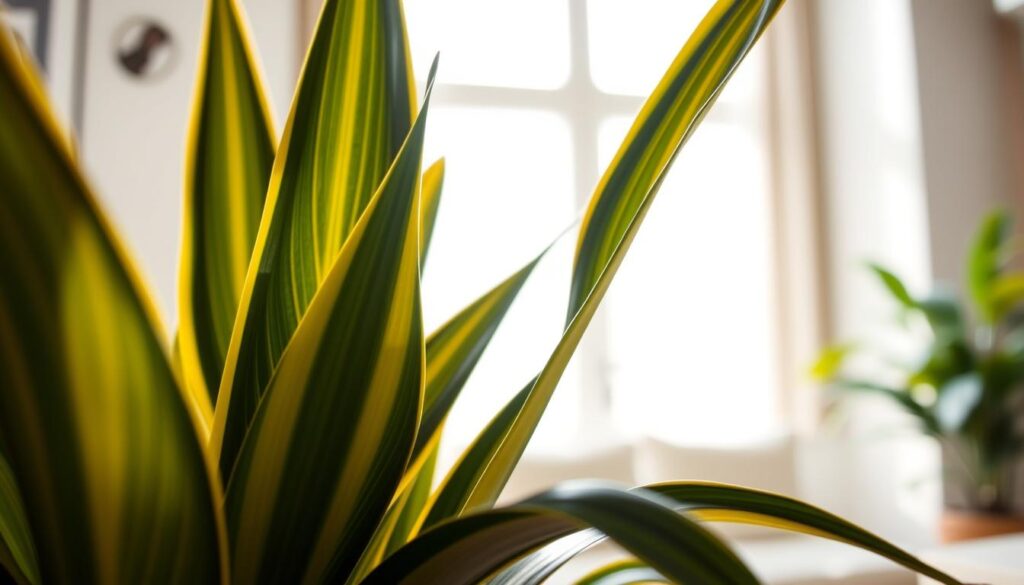
The Dracaena Trifasciata ‘Black Gold’ is a standout snake plant. Its leaves have a deep green center and golden-yellow edges that glow in the light. This makes it a stunning addition to any room.
The ‘Black Gold’ snake plant is known for its impressive growth:
To keep the gold color bright, it needs the right light. Place your ‘Black Gold’ 3-5 feet from a bright window. Use curtains to soften direct sunlight or grow lights if it’s too dark.
The right light is key for its look. Too little light makes the gold fade. Too much can burn the leaves, causing brown spots. The ‘Black Jack’ variety is smaller but just as striking, great for tight spaces.
To keep your ‘Black Gold’ looking its best, follow these tips:
Adding snake plants to your home can do more than just brighten it up. These plants can also make your space look better and feel more natural. They bring a touch of elegance to any room.
Where you put your snake plants matters a lot. It affects how they look and how well they grow. Here are some creative ways to display them:
The style of your home is key when choosing where to put your snake plants. Minimalist interiors look great with sleek plants like the Moonshine. On the other hand, bohemian spaces are perfect for a mix of different snake plants.
| Design Style | Recommended Snake Plant Variety | Planter Suggestion |
|---|---|---|
| Modern Minimalist | Dracaena Trifasciata ‘Moonshine’ | White geometric ceramic pot |
| Bohemian | Dracaena Masoniana (Whale Fin) | Terracotta or woven basket |
| Industrial Chic | Dracaena Trifasciata ‘Black Gold’ | Metal or concrete planter |
Remember to turn your snake plants now and then. This helps them grow evenly and keeps their shape. Try different heights and groupings to make your indoor space unique and stylish.
Snake plants add a stunning touch to your home with little effort. They bring beauty and clean air, making your space better. Whether you’re new to plants or have experience, they’re easy to care for.
Exploring snake plants is fun and rewarding. They’re great for busy people because they don’t need much care. You can mix different types to make your home look amazing, no matter the size.
Each snake plant has its own look, from the classic ‘Laurentii’ to the bold ‘Black Gold’. They’re easy to care for and fit well into any home. This makes them a perfect choice for anyone looking to add green to their space.
Begin your snake plant journey with confidence. These plants will make your home beautiful and healthy for years. Turn your home into a lively, green space that shows off your style and love for easy-to-care-for plants.