Physical Address
304 North Cardinal St.
Dorchester Center, MA 02124
Physical Address
304 North Cardinal St.
Dorchester Center, MA 02124

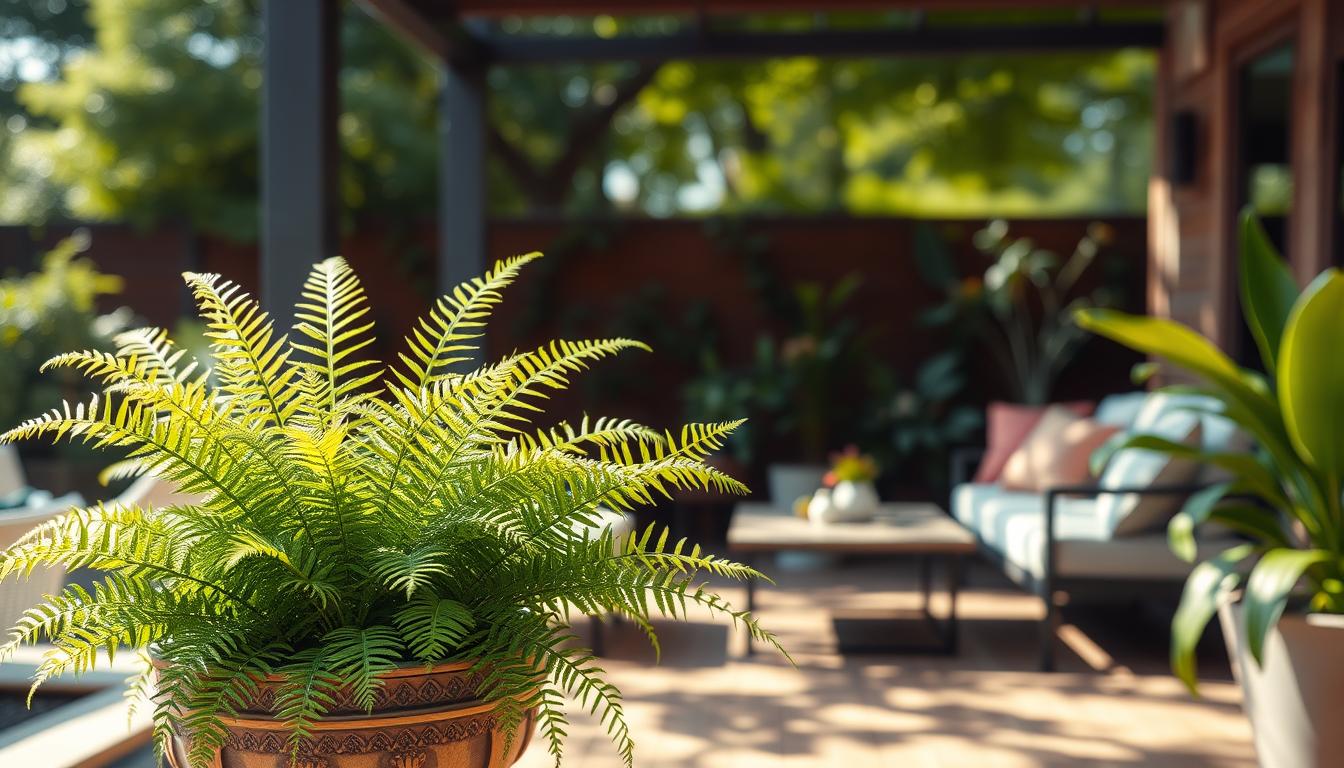
Ever wish your patio’s shaded corners could come alive? That empty spot under your roof or beneath trees doesn’t have to stay bare. Your outdoor space is ready for a lush makeover. Boston ferns are perfect for those hard-to-grow shade areas.
Picture feathery fronds spilling from hanging baskets, turning your patio into a tropical oasis. Boston ferns add elegance and movement to shaded patios. Their long, blue-green leaves create a soft, inviting atmosphere. These plants love warm, humid climates and grow best in zones 9 to 11, ideal for Southern California and Florida.
Caring for Boston ferns is easier than you think. With the right watering, location, and care, they become low-maintenance beauties. They reward your efforts with continuous growth and beauty all season long. Your patio will flourish when you meet their needs.
This guide covers everything about growing Boston ferns outdoors. You’ll learn where to place them, how to water them, and how to handle cold temperatures. By the end, you’ll be ready to create the perfect conditions for these remarkable shade plants to thrive on your patio.
A boston fern patio plant adds elegance and greenery to your outdoor areas. It’s a favorite for patios and shaded gardens. The boston fern, known as Nephrolepis exaltata, belongs to the Lomariopsidaceae family. It brings unique benefits to your home landscape.
Looking to create a peaceful spot or add color to shaded areas? Tropical ferns like the boston fern are great. They thrive in conditions where many plants struggle, making your outdoor space better.
Nephrolepis exaltata comes from tropical and subtropical forests worldwide. It grows in Central America, North America, South America, Africa, and Pacific Islands. In its natural habitat, it loves humid forests with filtered light and steady moisture.
This plant grows well under taller trees, where it gets dappled sunlight and protection. Knowing its natural habitat helps you create the perfect patio setting. In the wild, it can grow up to 7 feet tall, showing its potential.
The boston fern is perfect for outdoor spaces. It has graceful, arching fronds with delicate leaflets. When grown outdoors, it reaches 2 to 3 feet in height and width, fitting most patios well.
Shade plants like the boston fern do well in low light. They stand out from many garden plants. Tropical ferns also improve your home environment in many ways.
| Feature | Description | Benefit to Your Patio |
|---|---|---|
| Foliage Color | Bright, blue-green leaflets | Adds vibrant color to shaded areas |
| Growth Height | 2-3 feet when container-grown | Perfect size for patio arrangements |
| Light Requirements | Prefers shade and filtered light | Thrives where other plants cannot |
| Air Quality | Removes toxins from air | Improves outdoor air quality |
| Pet Safety | Non-toxic to pets and children | Safe for family and animal spaces |
| Growth Type | Herbaceous perennial | Returns year after year |
Your boston fern patio plant purifies the air in your outdoor space. It’s safe for homes with pets and children. This makes it a great choice for families looking for beautiful, safe garden additions.
The Nephrolepis exaltata is a classic shade plant that turns patios into peaceful green spots. Tropical ferns like this species add elegance and a forest-like feel to outdoor spaces. Adding a boston fern to your patio creates a stunning focal point and brings practical benefits to your home environment.
Before you bring a Boston fern to your patio, check if your area is right for it. Boston ferns need specific growing zones in the United States. Knowing your climate helps decide if your fern stays year-round or is a seasonal plant.
Boston ferns grow well in USDA hardiness zones 9 through 11. These zones include warm places like southern Florida and coastal California. If you live in these zones, your fern can stay outside all year. Frost might kill it back, but it will grow again in spring.
In zones 8 and below, treat your fern as a seasonal plant. Move it indoors in winter or grow it as an annual. This way, you can enjoy these plants no matter where you live.
Temperature and humidity are key for your fern’s health. It prefers daytime temperatures of 65-75°F. Keep it above 55°F at night. Avoid temperatures over 95°F or under 35°F, as they harm the plant.
Humidity is also crucial. Your fern likes humidity above 80%, but can manage with 60-70%. In dry areas, mist it, use humidity trays, or place it near water to increase moisture.
| Growing Condition | Ideal Range | Acceptable Range | Damaging Range |
|---|---|---|---|
| Temperature (Day) | 65-75°F | 55-95°F | Below 35°F or Above 95°F |
| Temperature (Night) | 65-70°F | Above 55°F | Below 35°F |
| Humidity Level | Above 80% | 60-70% | Below 40% |
| USDA Zones | 9-11 (Year-Round) | 8 and Below (Seasonal) | Not Applicable |
Your climate needs determine your fern’s health and growth. Check your local weather before planting. Use your USDA hardiness zone to plan. With this info, you can make your patio the perfect place for your Boston fern to thrive.