Physical Address
304 North Cardinal St.
Dorchester Center, MA 02124
Physical Address
304 North Cardinal St.
Dorchester Center, MA 02124
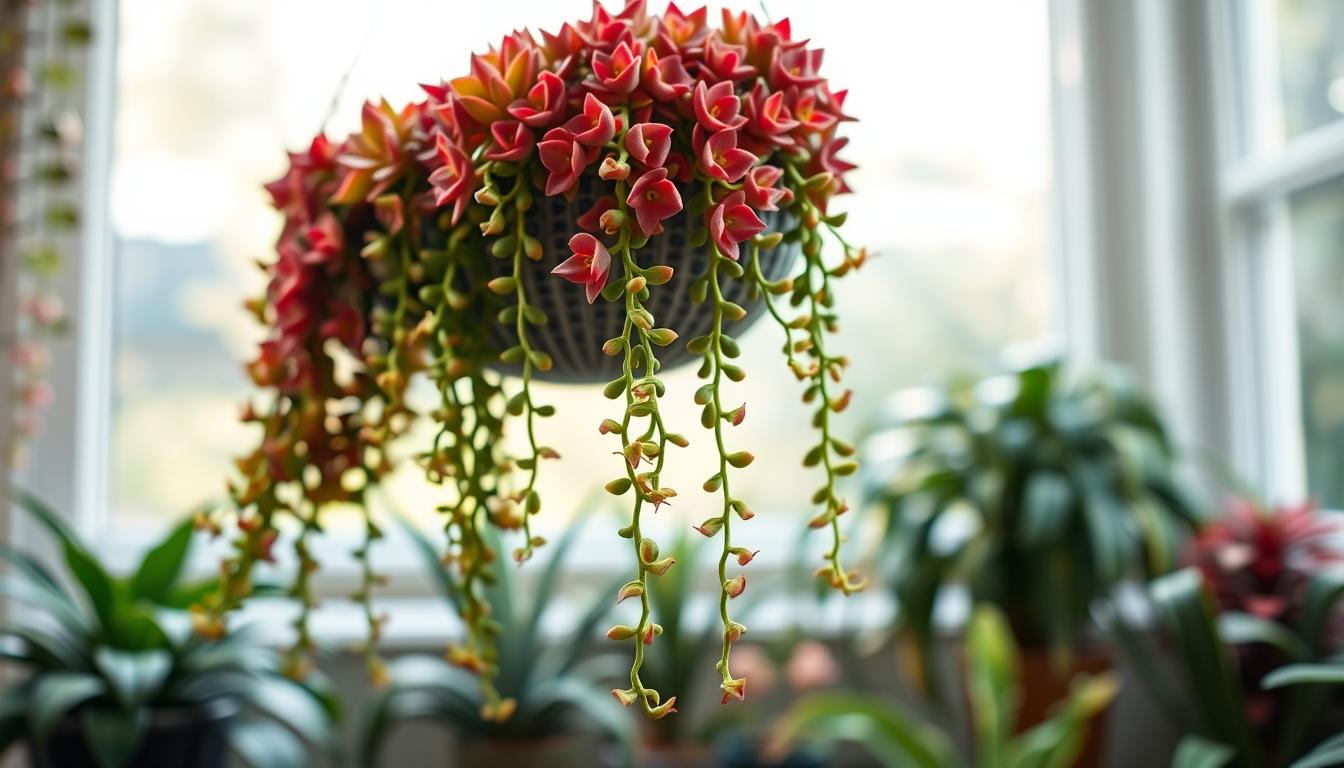
Getting the watering schedule right is key for your trailing succulents. These plants store water in their leaves and stems. So, they need a special way to get water. Water the soil well, then let it dry before watering again.
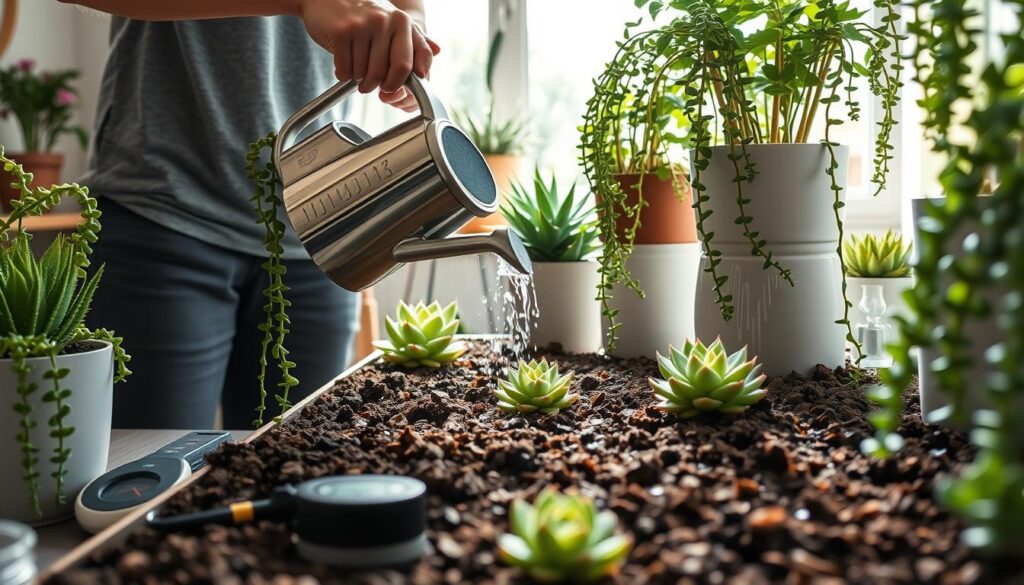
It’s important to water the soil, not the leaves. Wet leaves can cause rot and fungal issues. Water at the base of the plant to keep it healthy.
In spring and summer, your plants need more water. Water them weekly or every 5 days when it’s hot. This helps them grow well.
In fall and winter, they need less water. Water them every 2-3 weeks when it’s cold. This helps them survive the cold.
| Season | Watering Frequency | Temperature Range | Plant Activity |
|---|---|---|---|
| Spring | Weekly | 60-75°F | Active Growing |
| Summer | Every 5 days (temps above 100°F) | 75-100°F+ | Peak Growth |
| Fall | Every 10-14 days | 50-65°F | Slowing Growth |
| Winter | Every 2-3 weeks | 40-55°F | Dormancy |
Knowing when to water is important. Check soil moisture by feeling it with your finger. If it’s dry, it’s time to water.
Healthy leaves are firm and full. Look for signs of underwatering or overwatering. Underwatering causes leaves to wrinkle, while overwatering makes them mushy.
Water quality is important for your plants. Use filtered or distilled water if you can. If not, let tap water sit for 24 hours before using it.
Drainage holes in pots are crucial. They prevent water from staying at the roots. Always choose pots with drainage holes for your succulents.
“The most common mistake succulent growers make is watering too much and too often. Your plants prefer neglect over constant moisture.”
Choosing the right soil and containers is key to keeping your trailing succulents healthy. Plants like Kalanchoe Porphyrocalyx need special care. The soil affects water drainage and root growth. Containers impact how plants cascade and thrive.
Poor drainage can cause root rot, which is deadly for vining succulents. The right setup prevents moisture problems and supports root growth. Let’s look at what your plants need to thrive.
Your trailing succulents need gritty, well-draining soil that doesn’t hold water. Standard potting soil is too wet. Mix it with materials that improve drainage.
Here’s what works best for vining succulents:
| Soil Component | Purpose | Percentage |
|---|---|---|
| Potting Soil | Base nutrient medium | 40% |
| Perlite or Pumice | Drainage improvement | 30% |
| Coarse Sand | Weight and aeration | 20% |
| Orchid Bark | Air flow enhancement | 10% |
This blend keeps excess water away from roots. Roots stay dry, preventing fungal problems and rot.
Your container choice is as important as your soil blend. Drainage holes are non-negotiable for any vining succulent pot. Without them, water pools and damages roots quickly.
Select containers based on these guidelines:
Terracotta planters breathe well and help soil dry between waterings. Fabric pots are great for hanging displays. Avoid plastic-only containers that trap moisture.
Your trailing succulents will cascade beautifully from hanging planters. The right soil and container combination creates the perfect home for your vining plants to thrive.