Physical Address
304 North Cardinal St.
Dorchester Center, MA 02124
Physical Address
304 North Cardinal St.
Dorchester Center, MA 02124

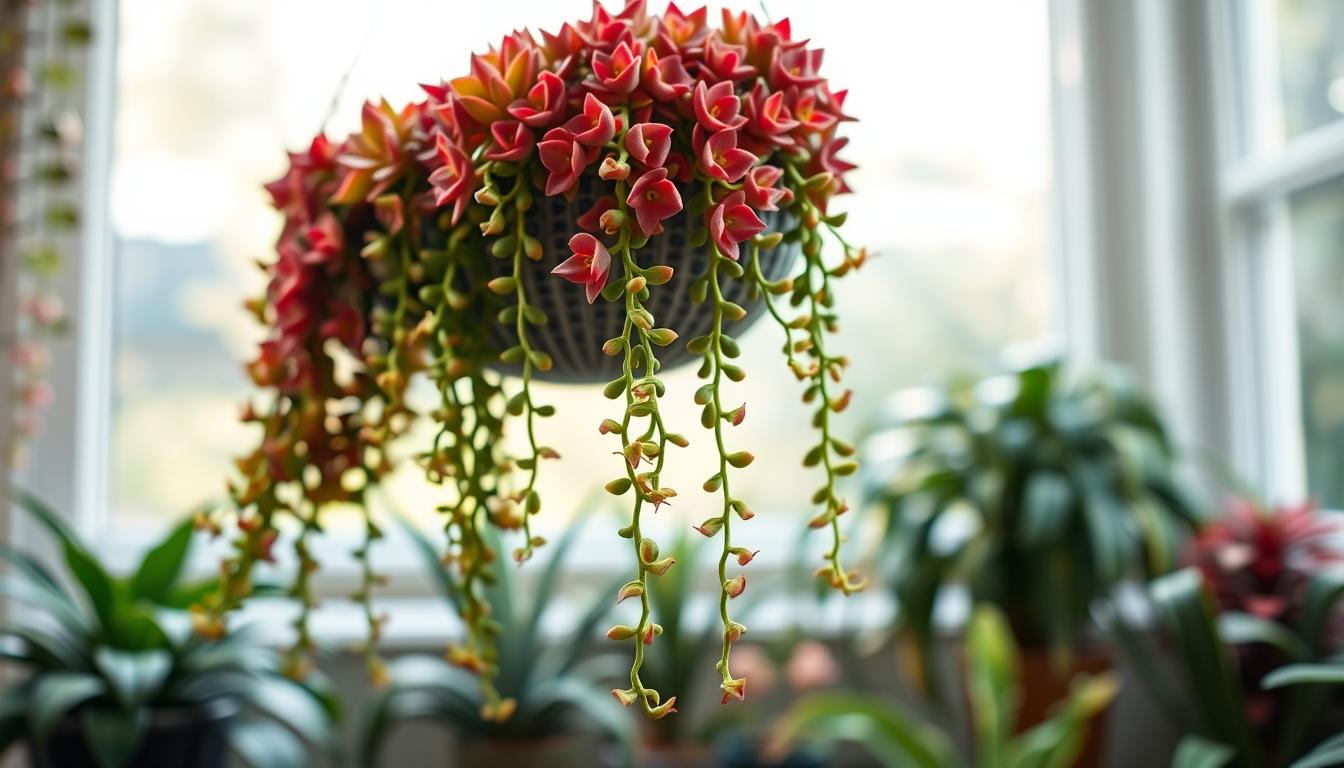
The Kalanchoe porphyrocalyx, also known as the Purple Leaf Kalanchoe, needs special care. It’s a rare trailing succulent that requires attention to thrive at home. Knowing its unique needs helps keep it healthy and vibrant.
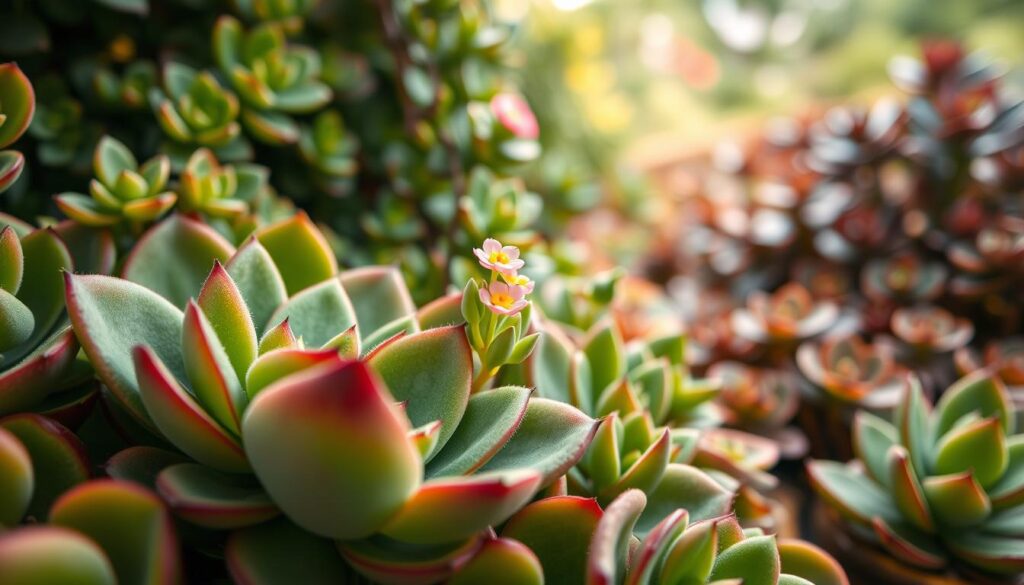
Water your Kalanchoe porphyrocalyx consistently but avoid too much. Water when the top inch of soil feels dry during the growing season. In winter, water much less since it’s dormant. Too much water can cause root rot, a common issue.
Keeping the right temperature is key for your Kalanchoe’s health. It likes daytime temperatures between 65°F and 75°F. Avoid cold drafts and temperatures under 50°F to prevent damage and slow growth.
Here are key care points for your vining Kalanchoe porphyrocalyx:
Humidity is important for this succulent. Make sure there’s good air circulation around it to avoid fungal problems. With the right conditions, your Kalanchoe porphyrocalyx will show off its stunning purple-tinged foliage.
Creating a stunning collection of trailing succulents turns your home into a green oasis. Each variety adds its own unique look to your hanging displays. Knowing about these popular options helps you pick plants that fit your home’s style and your gardening skills.
The varieties below are easy to grow and look amazing. They’re perfect for hanging displays and collections.
String of Pearls has tiny, round leaves that look like beads. It grows fast and creates beautiful cascades in months. Its leaves store water, making it great for beginners.
String of Bananas has small, banana-shaped leaves in soft green. It grows a bit slower but makes fuller cascades. Both need bright light and less water to thrive.
Burro’s Tail has thick, fleshy leaves in tight rosettes along stems. Its leaves turn pink and red in bright light. It grows long and makes stunning hanging displays.
This plant needs careful watering because its leaves hold a lot of moisture. Be gentle with it, as its leaves fall off easily when bumped or waterlogged.
Ruby Necklace has heart-shaped leaves that turn deep red in bright light. It’s beautiful and hardy, tolerating temperature changes and occasional neglect.
String of Dolphins has dolphin-shaped leaves in blue-green. It grows slower but is worth the wait for its unique charm. Both plants add beauty to any collection and look great together.
| Variety Name | Leaf Shape | Growth Speed | Light Needs | Water Frequency |
|---|---|---|---|---|
| String of Pearls | Round, bead-like | Fast | Bright indirect | Every 2-3 weeks |
| String of Bananas | Banana-shaped | Moderate | Bright indirect | Every 2-3 weeks |
| Burro’s Tail | Plump, rosette | Moderate | Bright direct | Every 3-4 weeks |
| Ruby Necklace | Heart-shaped | Moderate | Bright direct | Every 3 weeks |
| String of Dolphins | Dolphin-shaped | Slow | Bright indirect | Every 3-4 weeks |
Starting with these varieties is a great way to begin your vining succulent collection. Each plant adds its own special touch while being easy to care for. Mix different types in your displays for depth and texture.
Creating new trailing succulents from existing plants is rewarding and budget-friendly. It lets you expand your collection and fill in sparse areas. Most vining succulents propagate easily with the right steps and timing.
Start by choosing healthy stem cuttings from your plant. Look for stems that are firm and plump. Avoid damaged or diseased areas.
Use clean, sharp scissors or pruning shears to prevent disease. Cut 3-4 inches from the growing tip. This gives you enough material and keeps the parent plant healthy.
Don’t plant your cuttings right away. Let the cut ends dry and form a callus for 24-48 hours. This prevents rot and encourages root growth.
Keep the cuttings in a warm, dry spot away from sunlight. You’ll see them transform from wet to dry. This callus is key to success.
You have several ways to root your cuttings:
Soil propagation creates strong roots. Water propagation is great for those who want to see progress. Choose based on your preference and plant type.
Spring and early summer are the best times to propagate. Plants have more energy for growth. Avoid winter when growth slows.
| Season | Success Rate | Rooting Time | Best Plants |
|---|---|---|---|
| Spring | 90-95% | 2-3 weeks | All vining succulents |
| Early Summer | 85-90% | 2-4 weeks | String of Pearls, String of Bananas |
| Fall | 60-70% | 4-6 weeks | Hardy varieties only |
| Winter | 30-40% | 8+ weeks | Not recommended |
Proper care is key during the rooting period. Provide bright, indirect light and minimal watering. Avoid direct sun and excess moisture.
Roots should develop in 2-4 weeks. String of Pearls roots fast in water, while thicker-stemmed varieties take longer in soil. Be patient and avoid overwatering.
“Regular pruning and propagation became part of my maintenance routine. I prune my String of Bananas twice yearly to prevent excessive length and thickness, then use those cuttings to start new plants or fill in sparse areas.”
Make propagation a regular part of your routine. Save cuttings from pruning to create new plants. This approach controls plant size and growth.
It works well for vigorous varieties like String of Bananas. Twice-yearly pruning becomes a chance to multiply your plants without extra cost.
Start your propagation journey today. Choose healthy stems, wait for the callusing period, and pick your method. Watch as new roots emerge. You’ll find propagation easy and rewarding with practice.
Vining succulents add beauty to your home, but they can face challenges. Knowing these common issues helps keep your plants healthy. Most problems come from wrong care, like watering or light.
Fortunately, you can solve many issues with simple changes. This keeps your plants looking great.
Leggy growth means your plants stretch out with big gaps. This usually comes from insufficient light. Plants stretch towards light, making stems weak.
Move your plants to a brighter spot with more sunlight. This helps fix leggy growth.
Leaf drop is when your plants lose leaves fast. It can be caused by:
To stop leaf drop, check your watering and make sure soil drains well. Let the soil dry out completely between waterings.
Pests can harm your plants indoors. Watch for mealybugs, spider mites, and scale insects. These pests weaken your plants by sucking sap.
| Pest Type | Signs of Infestation | Treatment Method |
|---|---|---|
| Mealybugs | White cottony clusters on stems and leaves | Spray with neem oil or rubbing alcohol solution |
| Spider Mites | Fine webbing and yellowing leaves | Increase humidity and apply insecticidal soap |
| Scale Insects | Brown bumps on stems and undersides of leaves | Remove manually or treat with horticultural oil |
Check your plants often for pests. Early detection makes treatment easier. Keep affected plants away from others to stop the spread.
Vining succulent plants add beauty and ease to any home. You’ve learned how to care for them. They need bright, indirect light indoors or partial shade outdoors. Watering them right, using the soak-and-dry method, prevents root rot.
Using well-draining soil in containers keeps them happy all year. Keeping the right temperature protects them from stress. This care makes them thrive.
Trailing succulents are perfect for plant lovers. They’re easy to care for, so you can enjoy them more. They resist pests and can survive neglect thanks to their water storage.
They look amazing in hanging displays, turning your home into a green oasis. You can try different varieties like String of Pearls or the rare Kalanchoe Porphyrocalyx. Each one adds its own charm to your space.
General care works for many vining succulents, making it easy to care for several at once. They’re great for beginners and experienced plant lovers alike. Propagation is a fun way to grow your collection or share with others.
Be patient with your plants as they grow. Trailing succulents take time to reach their full beauty. But, your care will be rewarded with stunning displays that make your home feel like nature.