304 North Cardinal St. Dorchester Center, MA 02124
Bird’s Nest Fern Care: Your Guide to Growing Lush, Textural Fronds
Troubleshooting: Solving Common Bird’s Nest Fern Problems
Your bird’s nest fern might show signs of trouble. It’s important to know what these signs mean. This way, you can fix the problem fast and keep your plant healthy.
Dealing with Yellowing and Discolored Fronds
Yellow fronds often mean too much light or too much fertilizer. Your fern likes bright, indirect light. If fronds turn yellow, move it to a shadier spot. Also, flush the soil with water and cut back on fertilizer.
Pale or bleached leaves can be due to low humidity, bad tap water, or not enough water. To fix this, use a humidifier or pebble tray. Also, switch to filtered water and water your fern right, keeping the soil moist but not wet.
Brown, Mushy Fronds and Crown Rot
Brown, mushy fronds mean you’re watering too much or there’s crown rot. Cut back on water and water only around the pot’s edge. Never water the crown to avoid rot.
Leaf Shape and Light Issues
Flat leaves mean not enough light. Move your fern to a brighter spot. On the other hand, too much light makes leaves crinkly. Move it to a shadier area to fix this.
Stunted Growth and Development Problems
Stunted growth can be due to a few reasons:
Pot-bound roots—repot the plant into a larger container with fresh soil
Insufficient nutrients—apply dilute fertilization every four weeks during growing season
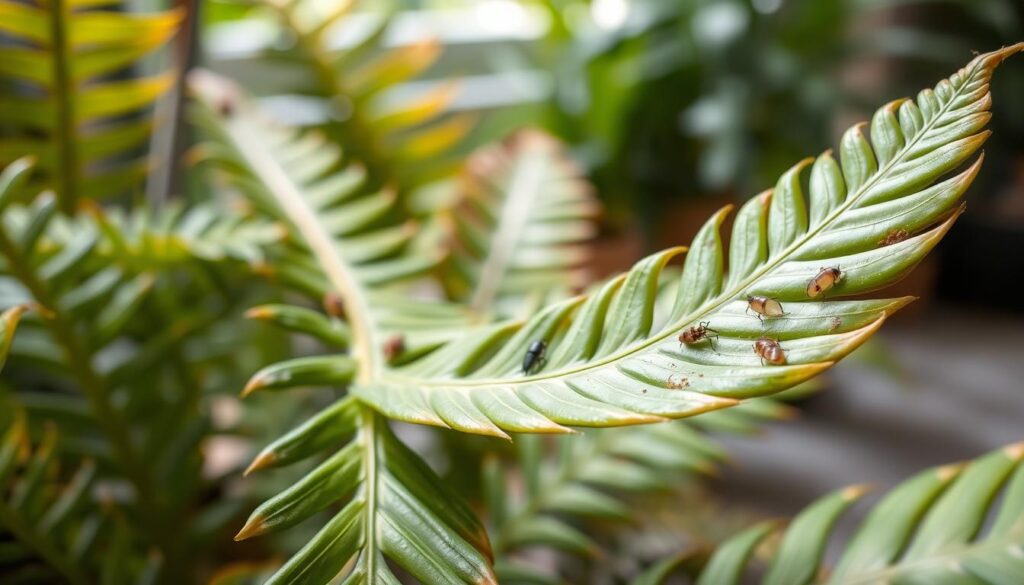
Pest infestation—inspect the undersides of leaves and treat immediately if pests are present
Sticky Residue and Pest Damage
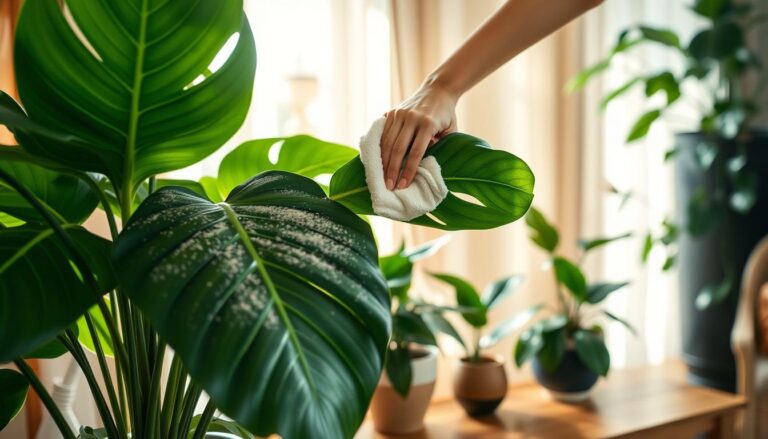
Sticky leaves are from scale insects or aphids. This attracts mold and harms your plant. Use neem oil or insecticidal soap to treat it. Clean leaves with a soft cloth.
Identifying Leaf Spot Diseases
Leaf spots can be different. Knowing the type helps you treat it right:
Spot Type
Appearance
Solution
Bacterial Blight
Reddish-purple margins with yellowing centers
Remove affected fronds and improve air circulation
Fungal Spots
Brown or black spots with yellow halos
Apply fungicide and reduce humidity slightly
Physical Damage
Irregular marks without defined patterns
No treatment needed—damage won’t spread
Acting quickly on these problems prevents them from spreading to healthy fronds. Regularly check your bird’s nest fern. This catches issues early, making fixes easier and faster. Your care will make your fern vibrant and healthy.
Conclusion
Growing a bird’s nest fern is all about a few key steps. Make sure it gets bright indirect light or shade, never direct sun. Water it by soaking the soil when it feels dry, but avoid getting water on the crown. Use a potting mix that drains well to avoid root rot.
Keep the humidity around your fern moderate by misting or using pebble trays. Fertilize it just 2-3 times during the growing season. These simple steps are the key to caring for your bird’s nest fern.
Bird’s nest ferns are known for being easy to care for. They can handle lower humidity and occasional missed waterings. This makes them great for beginners or those who’ve had trouble with other ferns.
Watch your fern’s leaves for signs of what it needs. If they’re too pale, it’s getting too much light. If they’re too flat, it needs more light. Brown tips mean low humidity or bad water. Spots could be disease or pests.
By paying attention to these signs, you can adjust your care to keep your fern happy. Your bird’s nest fern will tell you what it needs if you listen.
Follow the care tips in this guide, and your bird’s nest fern will thrive for years. It will add a touch of tropical beauty to your home. These ferns are unique with their wavy, nest-like leaves. They’re a great addition to any indoor plant collection.
FAQ
What is a bird’s nest fern and why is it called that?
A bird’s nest fern, known as Asplenium nidus, grows like a bird’s nest. It has fronds that form a circle. This fern grows on trees in rainforests, making it a great choice for homes.
How much light does your bird’s nest fern need to thrive?
Your bird’s nest fern likes bright, indirect light. Place it near an east or west window. If your home is dark, use a grow light to help it grow.
What is the correct watering schedule for your bird’s nest fern?
Water your fern when the top inch of soil feels dry. This is usually once to twice a week. More water is needed in spring and summer. Don’t overwater, as this can harm the roots.
How should you water your bird’s nest fern to prevent disease?
Use room-temperature, filtered water when watering. Water at the base to avoid fungal infections. Make sure the pot drains well to prevent root rot.
What type of soil mix works best for bird’s nest fern care?
Use a well-draining, loose soil mix. A mix of orchid bark, sphagnum moss, perlite, and potting soil works well. This mix helps prevent root rot.
What humidity level does your bird’s nest fern require?
Your fern needs high humidity levels to thrive. Mist it 2-3 times a week or use a humidifier. Grouping plants also helps maintain humidity.
What temperature range is ideal for your bird’s nest fern?
Keep your fern in a spot with temperatures between 60-75°F (15-24°C). Avoid cold drafts and sudden temperature changes.
How often should you fertilize your bird’s nest fern?
Fertilize monthly in spring and summer. Use a balanced, diluted liquid fertilizer for ferns. Avoid over-fertilizing to prevent damage.
When and how should you repot your bird’s nest fern?
Repot every 2-3 years in early spring. Choose a slightly larger pot. Use a fern potting mix and handle the fronds carefully.
Can you mount your bird’s nest fern like other epiphytic plants?
Yes, you can mount it on cork bark, driftwood, or wooden boards. Use fishing line or wire to secure it. This method adds beauty and improves air circulation.
What pests commonly affect your bird’s nest fern?
Watch out for scale insects, mealybugs, spider mites, and fungus gnats. Treat infestations with neem oil or insecticidal soap. Keep the plant away from other plants to prevent pest spread.
How do you identify and treat bacterial blight on your bird’s nest fern?
Bacterial blight shows as dark, water-soaked lesions on fronds. Remove affected fronds and improve air circulation. Use a fungicide if the infection persists.
What causes brown tips on your bird’s nest fern fronds?
Brown tips often mean low humidity, mineral-heavy tap water, or underwatering. Increase humidity and use filtered water. Trim brown tips and monitor new growth.
Why are your bird’s nest fern fronds turning yellow?
Yellow fronds usually mean overwatering, poor drainage, or inadequate light. Check soil moisture and light conditions. Nutrient deficiencies can also cause yellowing.
How do you revive a struggling bird’s nest fern?
First, check soil moisture, light, humidity, and frond health. Adjust watering, light, and humidity as needed. Trim damaged fronds and move the plant to a better spot. Recovery takes time and consistent care.
Is your bird’s nest fern toxic to pets?
No, your bird’s nest fern is completely non-toxic to cats, dogs, and other pets. It’s safe for homes with pets. Place it where pets can’t reach it.
Can you propagate your bird’s nest fern from cuttings?
No, bird’s nest ferns can’t be propagated from cuttings. Use spores or by dividing plantlets that grow at the base. Spore propagation is hard for home gardeners. Wait for plantlets to grow and separate them carefully.
How long does it take for your bird’s nest fern to reach maturity?
A bird’s nest fern takes 2-3 years to mature. It grows slowly. Consistent care and the right conditions help it grow faster.
What’s the difference between bird’s nest ferns and other fern varieties?
Bird’s nest ferns are epiphytic, growing on trees. They need looser soil and higher humidity than other ferns. They have larger fronds in rosette patterns, unlike most ferns.