Physical Address
304 North Cardinal St.
Dorchester Center, MA 02124
Physical Address
304 North Cardinal St.
Dorchester Center, MA 02124

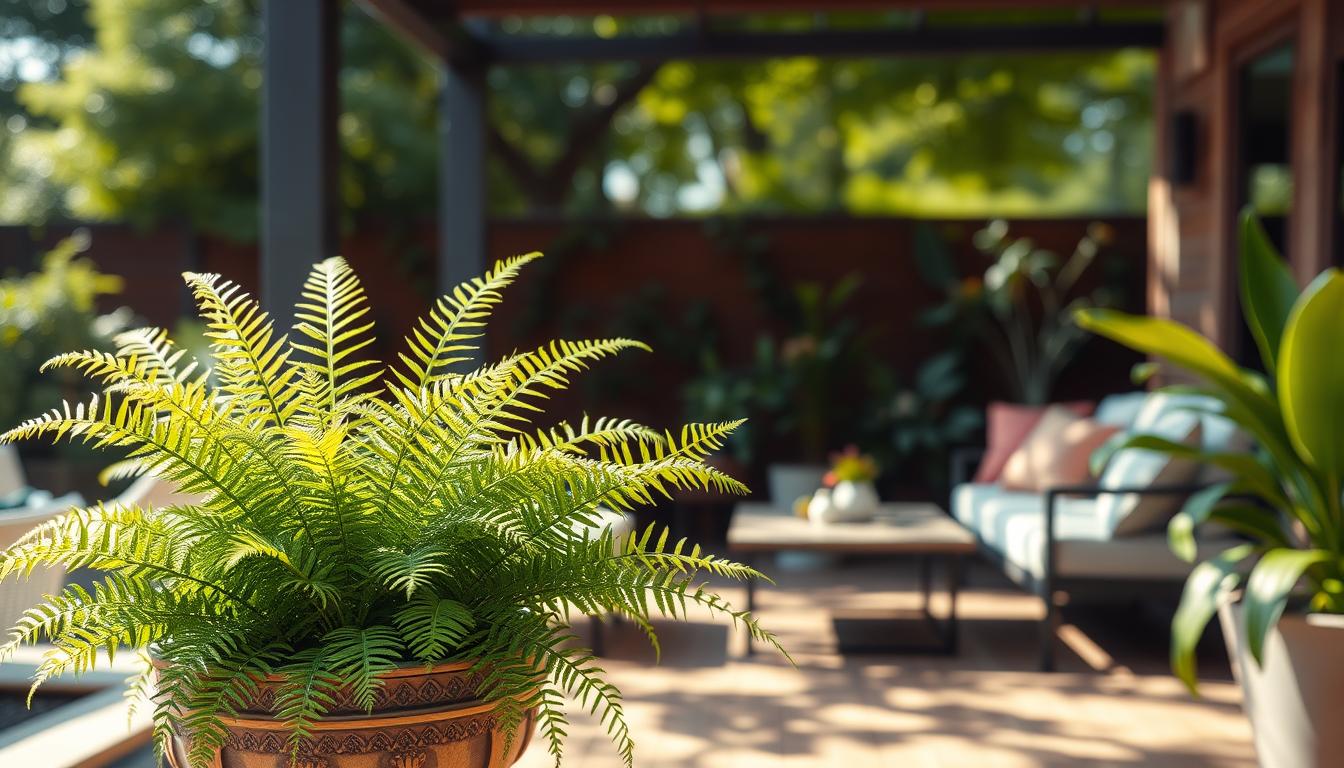
Finding the right spot for your Boston fern is crucial. The location will affect whether your fern grows well or not. Boston ferns need bright light but not direct sunlight.
Think of your outdoor space as having different light zones. You want to find a spot that’s bright but not harsh. A covered porch, the space under a pergola, or under trees are good options. These places offer the gentle, indirect light your fern needs.
Boston ferns do best with bright, indirect light. Morning sun is gentle and good, but afternoon sun can harm the fronds. Your plant needs enough light for strong growth but too much direct sunlight will burn the fronds.
The best setup gives your fern filtered light. This means sunlight that passes through something before reaching the plant. A north-facing patio is often ideal because it gets softer light all day. Avoid direct afternoon sun in hot summer months.
Boston ferns are great for shade. They do well in areas with partial shade or dappled light. Choosing the right location is key to their care.
Here are some strategies for your patio:
Watch your fern’s appearance to know if the location is working. Healthy fronds are green and full. If fronds look pale or growth slows down, it may need brighter conditions. If fronds turn brown or papery, move the plant to a shadier spot away from direct afternoon sun.
The partial shade environment is exactly what Boston ferns need. This balance of bright, indirect light with afternoon protection creates the perfect outdoor home for your shade plant. Take time to evaluate different areas of your patio before planting, and your fern will reward you with beautiful, lush growth throughout the growing season.
Getting your soil right is key in boston fern care outdoors. These plants need special conditions to thrive. The right growing medium from the start makes them grow lush and vibrant.
Boston ferns love organically rich, loamy soil that drains well. The soil pH should be between 5.0 and 5.5, slightly acidic. This helps them absorb nutrients better and grow healthy fronds.
For container-grown ferns, the right potting mix is crucial. A peat-based mix is a good start. Add about 25% organic soil to it for nutrients and structure.
Perlite improves drainage and prevents root rot. A well-draining mix ensures water flows through without harming the roots. Make sure your container has drainage holes to avoid waterlogging.
For garden bed planting, amend your soil. Ferns love organic matter, which many soils lack. Add several inches of compost, leaf mulch, or finely chopped bark to improve structure.
Peat moss is great for increasing acidity and water retention. Mix it into the top 8 inches of your bed before planting. This creates a moist environment for strong roots and beautiful fronds.
| Soil Component | Purpose | Percentage or Amount |
|---|---|---|
| Peat-based potting mix | Primary growing medium | Base layer |
| Organic soil or compost | Nutrient supply | 25% of total mix |
| Perlite | Drainage improvement | 10-15% of total mix |
| Leaf mulch or bark | Organic enrichment | 3-4 inches in garden beds |
Test your soil pH before planting if possible. If it’s too alkaline, add sulfur to lower it. Your Boston fern will thank you with lush growth when you prepare the perfect soil.
Water is essential for your outdoor Boston fern. Getting the watering schedule right is crucial. Boston ferns need consistent moisture, especially during the growing season. Learning how to water them properly will keep your plant healthy and vibrant.
The moisture needs of your fern change with the seasons and climate. In spring and summer, it grows fast and drinks water quickly. In cooler months, it grows slower and needs less water. It’s important to check the soil before watering, not just follow a schedule.
Your fern’s watering needs depend on its location. Potted ferns need more water than those in the ground. In hot summer months, potted ferns might need water every day. On very hot days, they might need it twice.
In-ground ferns usually need water three to four times a week. But this can change based on rainfall and temperature.
The finger-test method is a great way to avoid guessing. Stick your finger two to three inches into the soil. If it’s dry, it’s time to water. If it’s moist, wait a day or two.
You can water your fern in two ways. Top-watering means watering the soil without getting the fronds wet. This prevents fungal problems. Bottom-watering involves soaking the soil until it’s damp. This method pulls water up evenly and reduces disease risk.
Your Boston fern will show signs if it’s not getting enough or too much water. Spotting these signs helps you adjust your watering schedule.
| Problem | Signs to Watch For | What to Do |
|---|---|---|
| Underwatering | Drooping fronds, dry soil, brown crispy leaf edges, fronds fall off | Water more frequently, check soil daily, add mulch to retain moisture |
| Overwatering | Yellowing fronds, musty soil smell, soft discolored leaves, root rot | Water less often, improve soil drainage, let soil dry slightly between waterings |
Underwatered ferns have droopy fronds and dry soil. Leaves turn brown and crispy. The plant may drop fronds to save energy.
Overwatered ferns have yellow fronds and soggy soil. The roots rot in water, killing the plant. Soft, discolored leaves mean serious root problems.
Adjust your watering based on weather and season. Humid areas need less water than dry ones. During rainy periods, skip watering in-ground ferns. In dry areas, mist your ferns lightly on hot days. Mulch helps keep the soil moist without being too wet, balancing moisture all year.