Physical Address
304 North Cardinal St.
Dorchester Center, MA 02124
Physical Address
304 North Cardinal St.
Dorchester Center, MA 02124

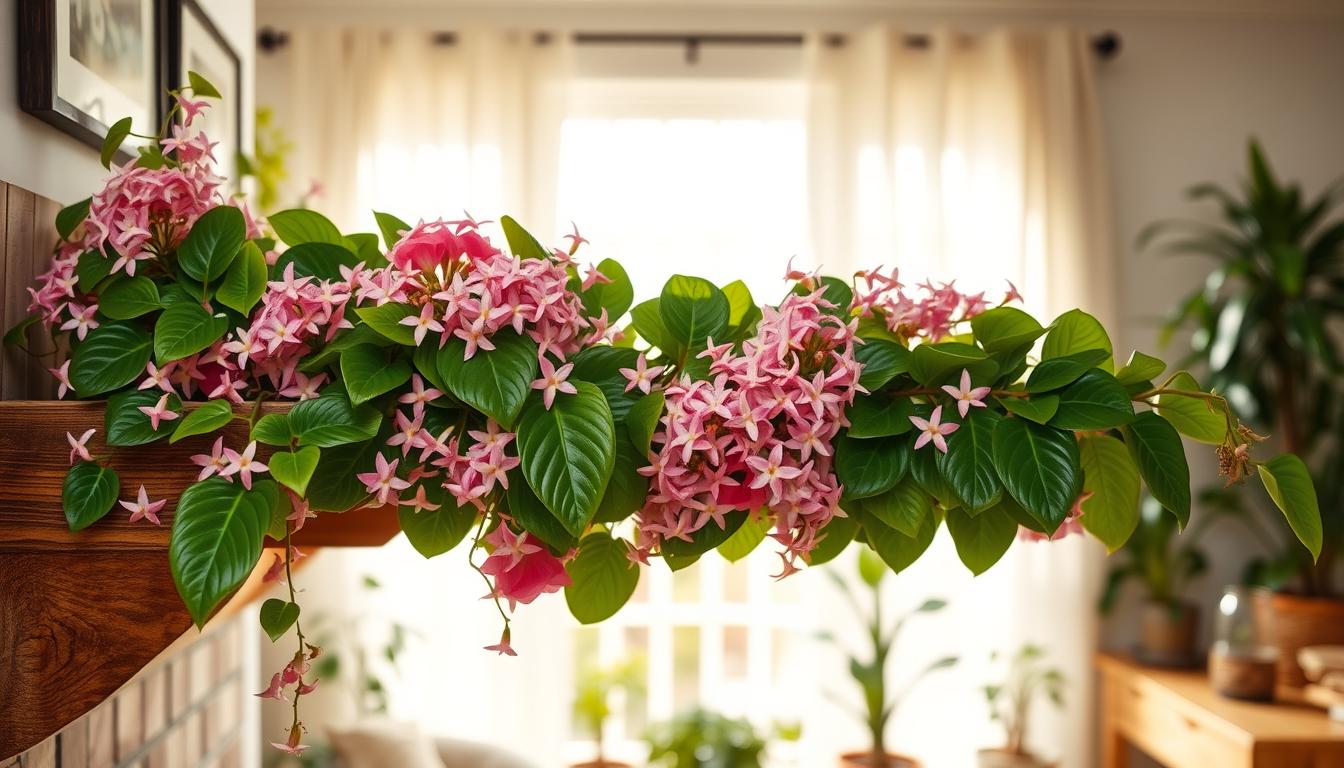
To make your summer blooming houseplant thrive, you need to know about temperature and humidity. Hoyas love warm, moist places, just like their natural home. This is key to getting those beautiful flowers.
Temperature is very important. Hoyas do best in temperatures between 68-75°F. This is perfect for growth and flowers in the summer. But, if it gets too hot, your plant might get stressed and stop blooming.
Don’t forget about the cold. Hoyas don’t like it when it’s below 50°F. Keep them away from cold air and use fans for good air flow.
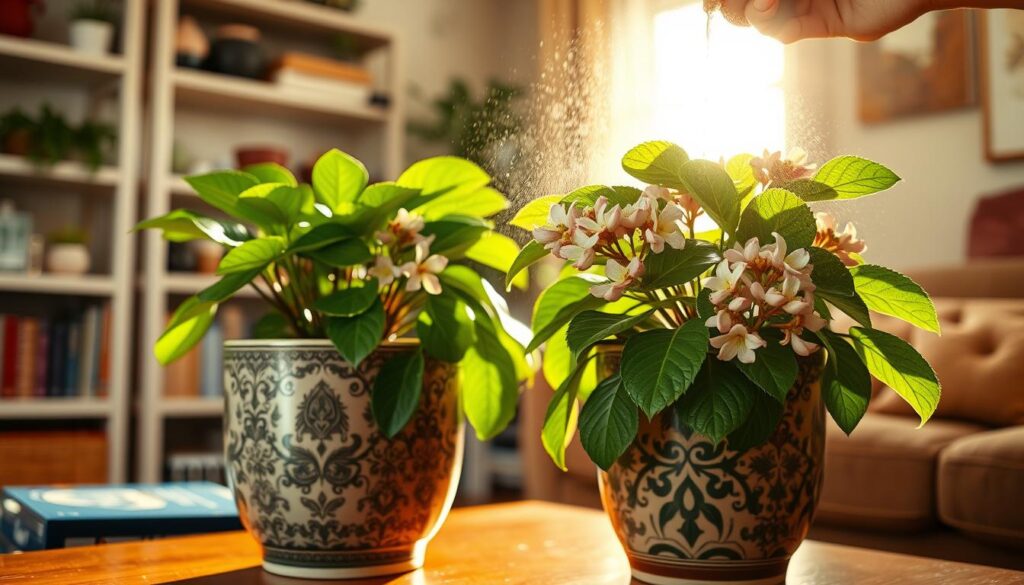
Humidity is another challenge. Hoyas need 60-80% humidity to grow well. If it’s too dry, your plant won’t bloom. Here are some ways to increase humidity:
Summer presents unique challenges because air conditioning removes moisture from indoor air. The warmer temperatures can hold more moisture, yet AC units work against humidity. Use different methods to keep humidity up. Thin-leaved hoya varieties especially need consistent humidity to prevent stress and encourage summer blooming.
Getting your hoya to bloom is a dream for many plant lovers. Your hoya can bloom from spring to fall, with the most flowers in June to September. Knowing what makes it bloom is key during the warmest months.
Your hoya may take 2 to 7 years to bloom. Young plants need time to grow strong enough to flower. This wait tests your patience, but the beauty of the blooms is worth it.
Your hoya blooms from special structures called peduncles and spurs. These stalks are permanent and bloom again and again. It’s important: never remove these peduncles, even if they look dead.
Peak blooming happens when your plant gets the right conditions. The flowering cycle needs several key elements:
Some varieties, like Hoya carnosa, need a dry spring. Reducing water for 4 to 5 weeks signals them to bloom. This stress response triggers flowering as a survival mechanism.
Your fertilizing approach affects how to get hoya to bloom. Hoyas are not heavy feeders, but the right nutrition during growing season boosts flower production.
| Fertilizer Type | NPK Ratio | Best Use | Application Frequency |
|---|---|---|---|
| Balanced Fertilizer | 10-10-10 or 20-20-20 | Spring and summer growth | Monthly during active season |
| Bloom Booster | 10-30-20 | When flower buds appear | Every 2-3 weeks during blooming |
| Fish Emulsion | 5-1-1 | Gentle organic option | Every 4 weeks, diluted |
Phosphorus is key for blooming. It supports flower and root growth. Switch to a bloom booster when buds appear. Always dilute liquid fertilizer to half strength to avoid root damage.
Apply fertilizer to moist soil in the morning. This allows your hoya to absorb nutrients during daylight. Never fertilize dry soil, as it can damage roots and prevent blooming.
Avoid over-fertilizing. Too much fertilizer promotes leaf growth at the expense of flowers. Your goal is balanced nutrition for both foliage and blooms. With proper fertilizing and care, your hoya will bloom beautifully all summer.
Summer is the best time to shape your hoya vine. Your hoya plant grows fast in warm months. This means it heals quickly from pruning cuts.
This active growth makes summer great for new training patterns. Knowing your hoya’s natural growth helps you care for it better.
Different hoyas grow in different ways. Some climb, while others trail or grow upright. Knowing how your hoya grows helps you prune it right.
The key rule for hoya care is simple: never cut off the peduncles or spurs where flowers emerge. These spots are where your hoya blooms year after year. Cutting them off delays blooms and wastes energy.
You can cut off dead stems anytime. Also, trim healthy stems back to leaf nodes for size control.
| Pruning Action | What to Do | What to Avoid |
|---|---|---|
| Dead Stems | Remove completely | Leaving diseased growth |
| Healthy Growth | Trim back to nodes | Cutting flower peduncles |
| Long Tendrils | Leave them to grow | Removing searching vines |
| Leaf Stalks | Train around supports | Cutting flowering spurs |
When you cut your hoya, milky latex sap will come out. This is normal and safe for your plant. Some people use glue or cinnamon powder to stop too much sap.
This helps keep your hands clean and makes less mess.
Summer is when your hoya grows the most. It’s also the best time to train it. Here are some tips:
Watch for long tendrils with sparse leaves. These vines are searching for surfaces or light. Let them be—once they find what they need, they’ll grow full-sized leaves.
Proper training improves air circulation around your plant. This reduces pest and disease risk and ensures all parts get enough light for better flowering.
Understanding summer pruning makes caring for your hoya easier. With active growth, proper training, and respect for flowering structures, your hoya will thrive. It will reward you with stunning blooms season after season.