304 North Cardinal St. Dorchester Center, MA 02124
Hoya Plant Care: The Summer Guide for a Blooming Wax Vine
Propagating Hoyas in Summer Heat
Summer is the best time to grow more hoyas. The warm weather and long days help roots grow. It’s fun to make new plants from cuttings.
Before starting, get these things ready:
Clean, sharp pruning shears or scissors
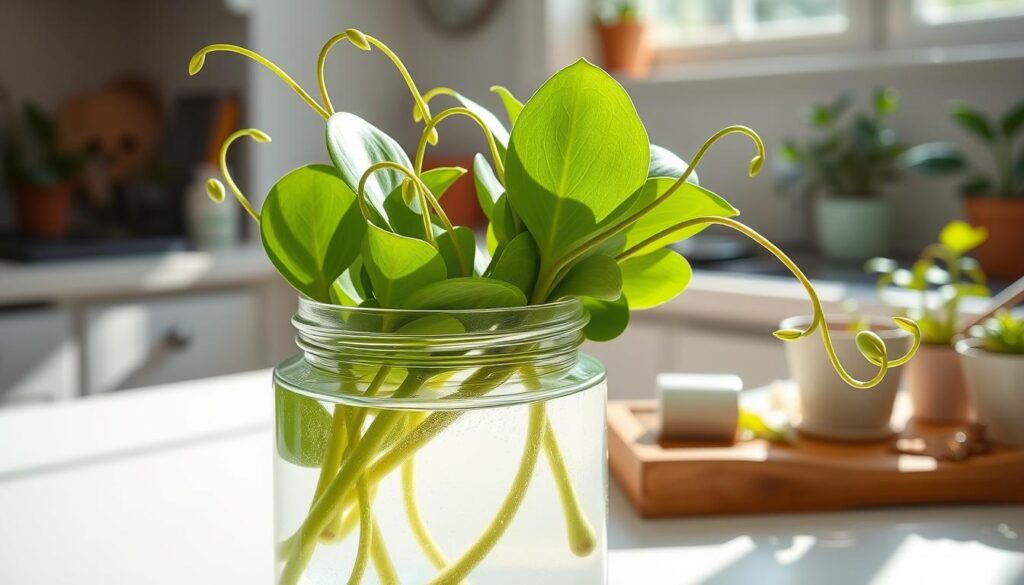
Clear glass or jar for water propagation
Well-draining propagation mix or sphagnum moss
Optional rooting hormone powder or gel
Plastic bag or humidity dome
Step-by-Step Cutting Propagation
Choose a healthy stem with two to three nodes. Cut it at a 45-degree angle just below a node. This helps roots grow better.
Remove lower leaves, leaving only the top one to two. This reduces moisture loss.
Next, dip the cut end in rooting hormone if you want. It can help your cutting grow roots faster. Put your cutting in water or moist sphagnum moss. Cover it with a plastic bag to keep it humid.
Place your cutting in bright, indirect light at 70–80°F. Check it every week. Roots should show up in 2–4 weeks.
Rooting Medium
Advantages
Timeline
Filtered Water
Watch root development easily
2–4 weeks
Sphagnum Moss
Eliminates transplant shock
3–5 weeks
Propagation Mix
Faster transition to soil
3–6 weeks
Some hoyas, like Hoya carnosa, show roots quickly. These roots appear in one to two weeks. But, fuzzy or thin-leaved varieties need more patience and humidity.
“Summer propagation not only expands your collection but also lets you rejuvenate leggy mother plants through strategic pruning.”
Watch for problems like yellow leaves or rot. Yellow leaves mean too much light or low humidity. Black or mushy stems need a new cutting.
When roots are strong, plant your cutting in the same soil as mature hoyas. Water lightly and keep it humid for a week. Then, slowly get it used to normal care over two to three weeks.
Common Summer Pests and Problems
Summer brings warm weather and high humidity, perfect for pests and diseases on houseplants. Hoyas are tough, but knowing common summer threats helps protect them. Keeping your hoya healthy means watching closely and acting fast when problems show up.
Three main pests can harm your hoya in summer. Sap-sucking insects weaken plants by taking their fluids.
Aphids cluster on new growth and flower buds, attracted to nectar-rich varieties like Hoya kerrii
Mealybugs appear as white, cottony masses hidden in leaf axils and along stems
Spider mites create fine webbing and cause stippling or bronzing of leaves, especially in hot, dry conditions
Start by isolating the affected plant. Use a strong water spray to remove pests. Then, spray neem oil or horticultural oil weekly for three to four weeks. Clean any leftover pests with a soft cloth.
Fungal infections are another risk in summer. Botrytis blight shows as fuzzy gray patches on leaves and flowers. Root rot comes from too much water or poor soil, showing as blackened, mushy roots and yellowing leaves.
Problem
Cause
Solution
Yellowing, drooping leaves
Overwatering
Allow soil to dry more between waterings
Shriveling leaves
Underwatering or low humidity
Water consistently and increase humidity
Leaf burn or reddening
Excessive sun exposure
Move away from direct light or filter with sheer curtains
Stringy, elongated growth
Insufficient light
Move closer to light source or add grow lights
Stem dieback and blackened leaves
Waterlogged compost or cold temperatures
Improve drainage and maintain warmth above 60°F
Prevention is key in hoya care. Check your plants weekly in summer, water right, and keep air moving. Quarantine new plants before adding them to your collection. Some yellowing is normal as your hoya grows older—it’s not a disease.
Summer’s heat means problems pop up fast, but healthy plants bounce back quickly. Cut off sick parts, improve air flow, and repot in fresh soil when needed. Quick action stops small issues from becoming big problems for your wax plant’s growth.
Popular Hoya Varieties for Summer Growing
Summer is the perfect time to add new hoyas to your collection. These plants love the warm weather. Each hoya has its own special traits, fitting different spaces and skill levels. You can find a hoya that suits your style, whether it’s a trailing vine or a compact plant.
For a plant that’s tough but rewards you with stunning blooms, consider a Hoya. While many are easy-going, they need specific summer care to flower. Here’s how to make your Wax Vine bloom.
Hoya Carnosa and Its Cultivars
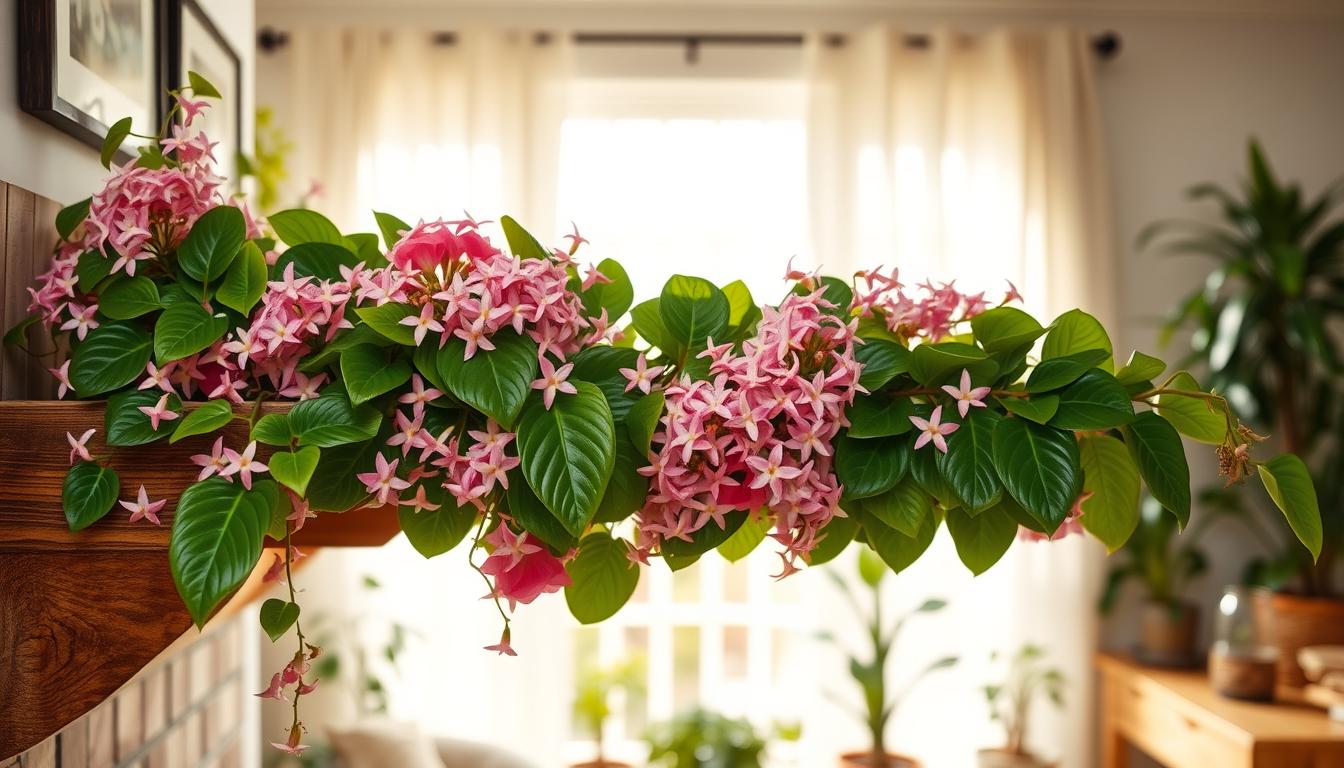
Hoya carnosa is a top pick for summer growers. It’s known as the “wax plant” for its thick, waxy leaves. These leaves are dark green and grow on vines that climb or trail beautifully indoors.
For summer, give your hoya carnosa bright, indirect light and well-draining soil. It produces stunning light pink flowers with darker centers. These blooms smell sweet, especially at night. The plant can handle cooler temperatures, making it great for beginners.
Hoya carnosa ‘Compacta’ (Indian Rope) has twisted, curly leaves that look like a rope. It has pale pink flowers and is attractive even without blooms.
Hoya carnosa ‘Krimson Queen’ has green leaves with cream or pink edges for beautiful variegation.
Hoya carnosa ‘Krimson Princess’ shows variegation in the center of leaves instead of edges.
Hoya carnosa ‘Tricolor’ has green, cream, and pink tones throughout the foliage.
These cultivars need the same care as the species plant. Variegated types grow slower but offer stunning beauty all year.
Other Easy-Care Summer Bloomers
There are other varieties worth considering for summer blooms.
Variety
Growth Style
Flowers
Best For
Hoya pubicalyx
Vigorous climbing vine
Deep burgundy to pink clusters
Fast growers wanting reliable blooms
Hoya bella
Small pendant type
White with purple centers
Hanging baskets with higher humidity
Hoya australis
Climbing vine
Fragrant white flowers
Adaptable growers in most conditions
Hoya kerrii (Sweetheart Plant)
Vining growth
Yellow to orange blooms
Plants that tolerate bright light
Hoya multiflora
Upright bushy habit
Cream with reflexed petals
Shadier spots in your home
Hoya pubicalyx grows fast and blooms in rich colors. It has thick stems and thrives with standard summer care. Hoya bella is great in hanging baskets but needs more humidity than typical hoya carnosa care.
Hoya australis has fragrant white flowers and adapts to most indoor conditions. Hoya kerrii has heart-shaped leaves and produces lots of nectar that may attract ants. Hoya multiflora prefers shadier spots and has exotic-looking flowers with curved petals.
Choosing the right variety for your growing conditions ensures summer success. Some hoyas love sunlight, while others prefer shade. Knowing these preferences helps you create the perfect environment for blooms and growth all summer.
Conclusion
Summer is the best time for hoya care. Your tropical wax vine grows well in the warm weather. Make sure it gets bright, indirect light for 4 to 6 hours a day.
Water it well but let the soil dry before watering again. Use a soil mix that drains well. These steps help your hoya bloom with fragrant flowers every year.
Following the hoya care guide helps you care for your plant all year. Keep the temperature between 68 and 75 degrees Fahrenheit. Also, maintain humidity levels of 60 to 80 percent.
Feed your hoya monthly with a balanced fertilizer. This helps it bloom. Protect the peduncles, as they produce flowers for many years. Watch out for pests and enjoy your plant’s growth.
Hoyas can live up to 30 years indoors with the right care. They may take a few years to bloom, but it’s worth the wait. Each hoya is unique, responding differently to its environment.
These plants are forgiving and adapt to your care. Hoyas are popular for their beautiful, fragrant flowers. They have stunning leaves and grow in interesting ways.
Summer is a great time to start good hoya care habits. Follow what you’ve learned and watch your plant thrive. Enjoy the journey to abundant blooms and years of flowering from your hoya wax vine.
FAQ
What is the ideal light exposure for my hoya plant during summer?
Your hoya loves bright, indirect light. It needs 1500-2000 foot candles for 2-6 hours daily. Place it in an east or northeast window for gentle morning sun. Or, put it 1-4 feet back from south or west windows with sheer curtains.Insufficient light makes your hoya grow leggy. It won’t bloom without enough bright light. But, protect it from intense summer sun with sheer curtains or move it farther from windows in June-August.
How often should I water my hoya during the summer months?
Water your hoya until water drains from the holes. Then, wait until the soil dries out before watering again. This usually means watering every 7-14 days in summer.Check if your hoya needs water by feeling the soil 2-3 inches deep. If it’s dry, it’s time to water. Hoyas prefer dry periods and can handle underwatering better than overwatering.Signs of overwatering include yellow leaves and a rotting smell. Underwatering causes shriveled leaves and stunted growth.
What soil composition works best for hoya carnosa and other wax plants?
Standard potting soil is not good for hoyas. They need a mix of peat moss, perlite, and orchid bark. This mix mimics their natural growing conditions.Peat or coco coir retains moisture and nutrients. Perlite prevents compaction. Orchid bark keeps the mix loose and well-draining. Hoyas prefer slightly acidic to neutral soil.For beginners, a 1:1 mix of potting soil and orchid mix is a simpler option.
When is the best time to repot my hoya, and how often should I do it?
Repot your hoya every 2-3 years or when it’s severely pot-bound. Early summer is the best time for repotting. Choose a pot only 1-2 inches larger than the current one.Use sterilized pots and fresh potting mix to prevent disease. Gently loosen the root ball and position the plant at the same depth. Avoid watering immediately after repotting if the soil is moist.
What temperature range does my hoya prefer during summer?
Hoyas prefer temperatures between 68-75°F. They can tolerate up to 80°F but may stress at higher temperatures. Use air conditioning to maintain consistent temperatures.Avoid placing your hoya near heat sources during peak hours. Ensure good air circulation with fans. Be cautious of temperatures below 50°F, as hoyas are sensitive to cold.
What humidity levels should I maintain for optimal hoya blooming?
Hoyas prefer humidity levels of at least 60%, ideally 60-80%. Summer presents both opportunities and challenges for humidity management. Use a humidifier or mist your plants daily to increase humidity.Group plants together to create a microclimate of increased humidity. Place pots on pebble trays or use a humidifier. Recognize signs of insufficient humidity, such as brown leaf edges and slow growth.
Why isn’t my hoya blooming, and what can I do to encourage flowers this summer?
Hoyas bloom from spring to fall, peaking in summer. If your hoya isn’t blooming, check for adequate light, proper stress, and humidity. Hoyas can take 2-7 years to bloom.Never remove or cut off the woody peduncles. Use a balanced fertilizer monthly during spring and summer. For Hoya carnosa, create a 4-5 week dry period in late spring to trigger blooming.
Can I cut the peduncles on my hoya when pruning, and what should I never remove?
Never cut off the peduncles where flowers emerge. These are permanent structures that produce blooms year after year. You can safely cut back dead or damaged stems at any time.Trim healthy stems back to a node to control size or encourage branching. Hoyas produce a milky latex sap when cut, which is normal. Apply glue or cinnamon powder to seal the cut and prevent sap loss.
What is the best method to propagate my hoya during summer?
Summer is the best time for stem cutting propagation. Identify a healthy stem with at least 2-3 nodes and make a clean cut just below a node at a 45-degree angle. Remove lower leaves, keeping only the top 1-2 leaves.Dip the cut end in rooting hormone to speed up root development. Place the cutting in water or moist sphagnum moss. Maintain high humidity and bright, indirect light. Roots will appear within 2-4 weeks during summer.
What are the most common summer pests affecting hoyas, and how do I treat them?
The most common pests are aphids, mealybugs, and spider mites. Use a three-step treatment approach: isolate the plant, use a strong spray of water, and apply horticultural oil or neem oil spray. Repeat weekly for 3-4 weeks to catch newly hatched pests.For fungal diseases like Botrytis blight, remove affected parts, improve air circulation, and reduce humidity slightly. Apply fungicide if necessary. Prevention is key: regularly inspect your plants, maintain proper cultural conditions, and ensure good air circulation.
Is Hoya carnosa a good choice for beginners, and what are its characteristics?
Hoya carnosa is excellent for beginners. It features thick, waxy leaves and produces beautiful light pink to white flowers. It prefers bright, indirect light and well-draining soil.It’s one of the easiest hoyas to grow, tolerating a wider range of conditions. Popular cultivars include ‘Compacta’, ‘Krimson Queen’, ‘Krimson Princess’, and ‘Tricolor’. These cultivars have the same care requirements as the species but may grow slightly more slowly.
What are some other easy-to-grow hoya varieties suitable for summer growing?
Several hoya varieties are rewarding for summer growing. Hoya pubicalyx is extremely vigorous, producing abundant clusters of flowers. Hoya bella is a smaller, pendant species perfect for hanging baskets.Hoya australis is a climbing species with rounded leaves and intensely fragrant white flowers. Hoya kerrii, the Sweetheart Plant, features heart-shaped leaves and produces clusters of yellow to orange flowers. Hoya multiflora has an upright, bushy growth habit and produces exotic-looking flowers.Approach with caution as a beginner: Hoya linearis has delicate, fuzzy leaves that cascade beautifully but requires high humidity and cooler night temperatures.
How does hoya summer care differ from care during other seasons?
Summer is the peak growing and blooming season for hoyas. It’s the most critical time to optimize your care routine. Hoyas thrive in warm summer months when you can more easily replicate their native conditions indoors.Successful summer hoya care revolves around five key elements: appropriate light exposure, proper watering techniques, well-draining soil composition, adequate temperature and humidity levels, and strategic fertilization. These elements work together synergistically.
How long does it take for a hoya to mature and begin producing flowers?
Hoyas can take 2-7 years to reach flowering maturity. Once mature, they bloom from spring to fall, peaking in summer. The timeline varies by variety: Hoya carnosa typically matures relatively quickly, while some species may take longer.Once your hoya reaches maturity and produces flowers, the unique flowering structure means blooms will continue reliably year after year from the same peduncles. Protecting those peduncles is critical.
What does it mean that hoyas are epiphytic plants, and how does this affect their care?
Epiphytic plants naturally grow on other plants in tree canopies rather than in soil. Hoyas are epiphytes in their native habitats across subtropical and tropical Asia, Australia, and the Pacific islands. This natural growth pattern explains their need for well-draining soil.Understanding this explains why hoyas require well-draining soil mixes with components like orchid bark and perlite rather than standard potting soil. This also explains why hoyas can withstand some drought periods and why they’re adapted to periods between watering.
Why does my hoya have brown or crispy leaf edges, and how do I fix this?
Brown, crispy leaf edges on your hoya typically indicate insufficient humidity. This common issue manifests when humidity falls below the 60% threshold that hoyas prefer. To fix this problem, implement humidity-increasing